
Method
25 Greek Stews and Ladera
Ladera means cooked in oil, and it defines a whole category of vegetable dishes simmered slowly until sweet. Alongside them sit stifado, kokkinisto and giouvetsi.
Ladera means cooked in oil. It is a whole family of vegetable dishes simmered slowly in olive oil, often with tomato, until they turn sweet: green beans, okra, courgettes, artichokes with peas.
Next to them are the meat stews. Stifado is beef with whole small onions, red wine vinegar, cinnamon and bay. Lamb and beef are each braised in tomato. Corfu braises veal in garlic and vinegar with no tomato at all. Cyprus braises pork in red wine and coriander seed.
Rice gets the same slow treatment: spanakorizo with spinach, dill and lemon, and leeks with rice for winter. None of this cooking can be hurried.
Every recipe on Kalliopi's Kitchen carries the dish's Greek name and a pronunciation, its region where that is meaningful, ingredient quantities in both metric and imperial, and an honest note on what commonly goes wrong. Nutrition figures are calculated estimates and are labelled as such.
1. Veal in Garlic and Vinegar Sauce
Sofrito · Σοφρίτο · so-FREE-toh
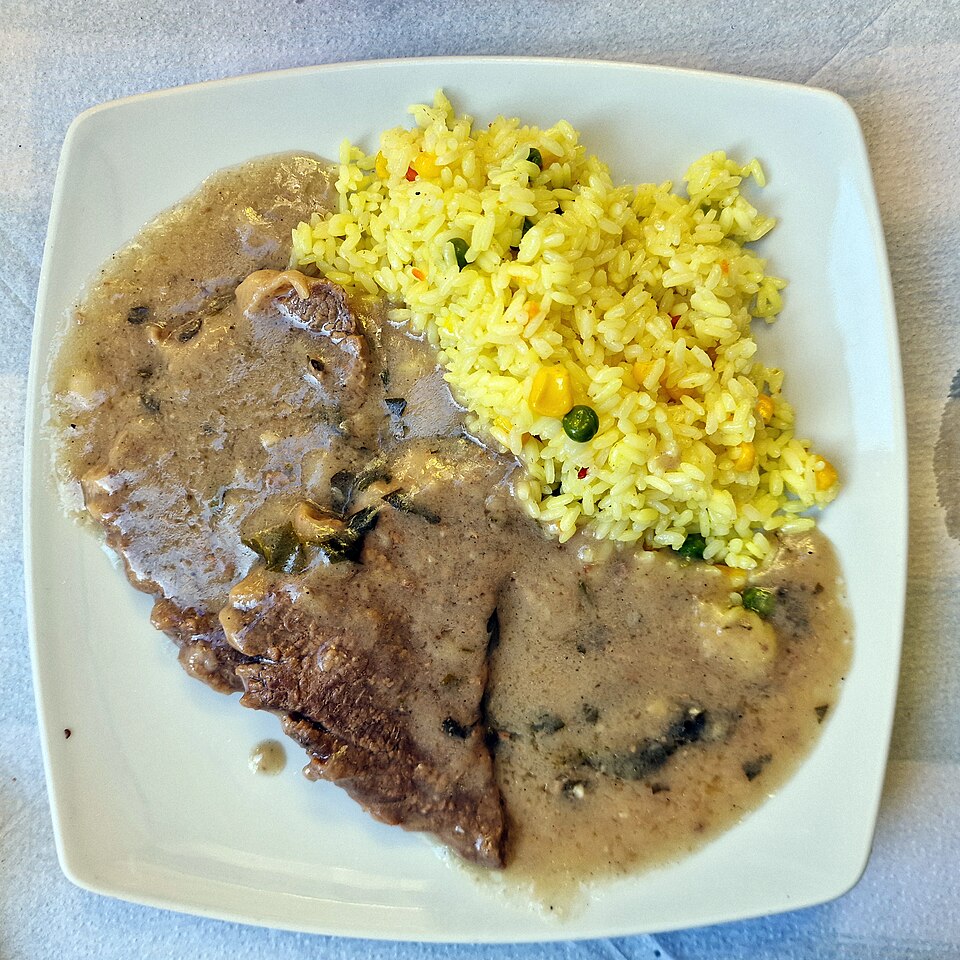
Venice ruled Corfu for four hundred years and the Ottomans never took it. This is how that tastes. No tomato, no cinnamon, no oregano: thin veal braised in white wine, vinegar, a great deal of garlic and parsley. Three dishes define Corfiot cooking: pastitsada, bourdeto and this, the most delicate of them.
Yiayia’s tip: Do not brown too hard. Sofrito's sauce should stay pale. Deep browning gives a darker, heavier sauce that belongs to a different dish.
Make Veal in Garlic and Vinegar Sauce2. Stifado
Στιφάδο · stee-FAH-thoh
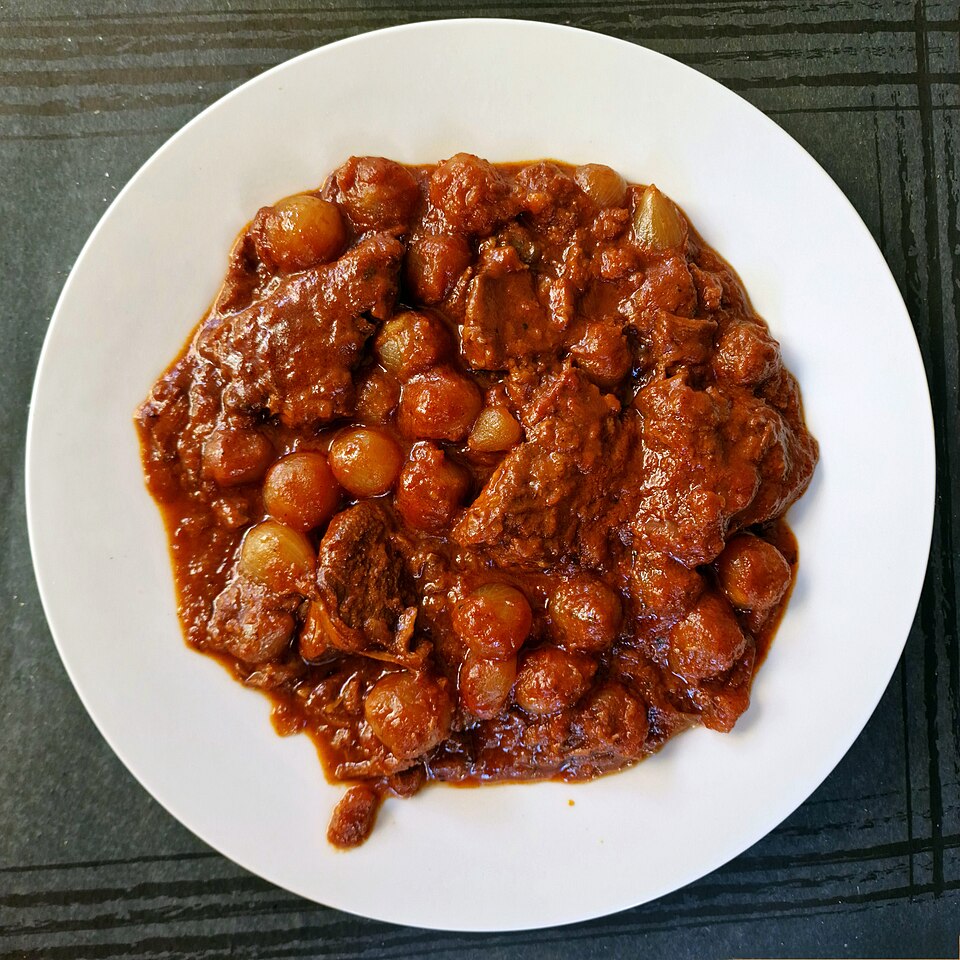
A stew defined by its onions. They go in whole, a kilo of them to a kilo of meat, and come out sweet and translucent. Red wine vinegar gives it a sharpness no other Greek stew has, with cinnamon, clove and bay behind it. Beef is usual. Rabbit is arguably the more traditional choice.
Yiayia’s tip: Blanch the onions to peel them. One minute in boiling water then into cold, and the skins slip off. Saves half an hour and a lot of unpleasantness.
Make Stifado3. Cypriot Pork in Red Wine and Coriander
Afelia · Αφέλια · ah-FEH-lee-ah
Pork, red wine, coriander seed and time. The list barely goes further, and nothing else cooked in Greece or Cyprus tastes like it. The seed flavours it, not the fresh leaf. The pork is marinated, browned and braised until the wine is a thick, dark, sticky sauce, with the lid off or half on.
Yiayia’s tip: Crush the seed fresh. Pre-ground coriander loses its aromatic oils quickly. Crushing whole seed just before cooking is what gives afelia its real character.
Make Cypriot Pork in Red Wine and Coriander4. Spanakorizo
Σπανακόρυζο · spah-nah-KOH-ree-zoh
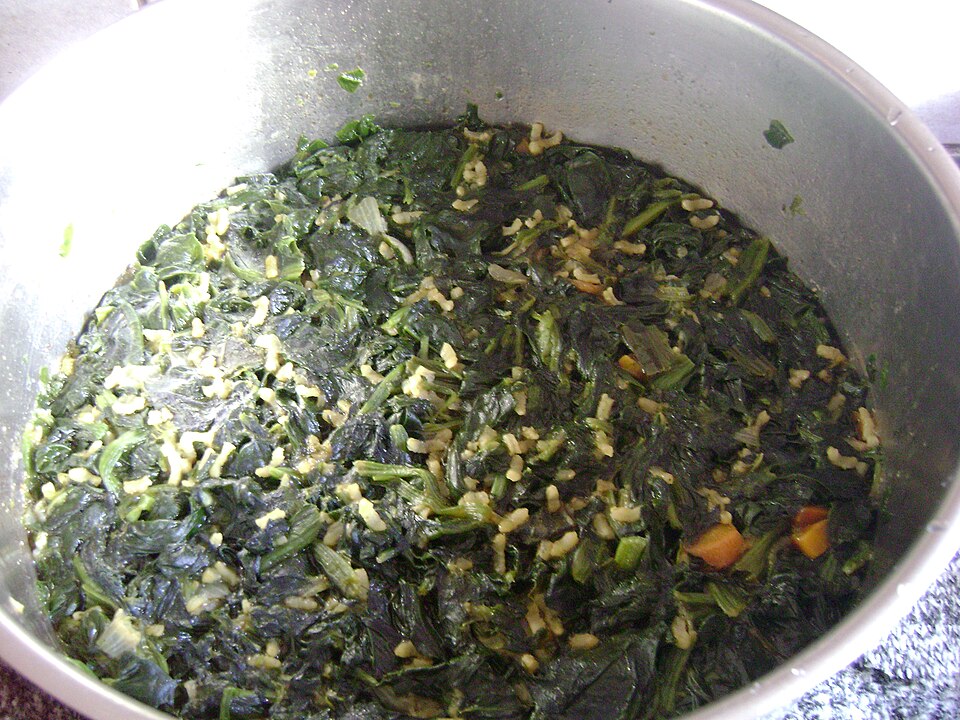
Spinach and rice cooked in one pot until the rice has taken on the green. It is one of the ladera dishes, where the olive oil becomes part of the sauce, and among the quickest. Keep it wetter than a pilaf, loose enough for a spoon. Dill and lemon go in at the end.
Yiayia’s tip: Do not underestimate the spinach quantity. It reduces to roughly a quarter of its raw volume once wilted. What looks like too much going in is exactly right.
Make Spanakorizo5. Leek and Rice
Prasorizo · Πρασόρυζο · prah-SOH-ree-zoh
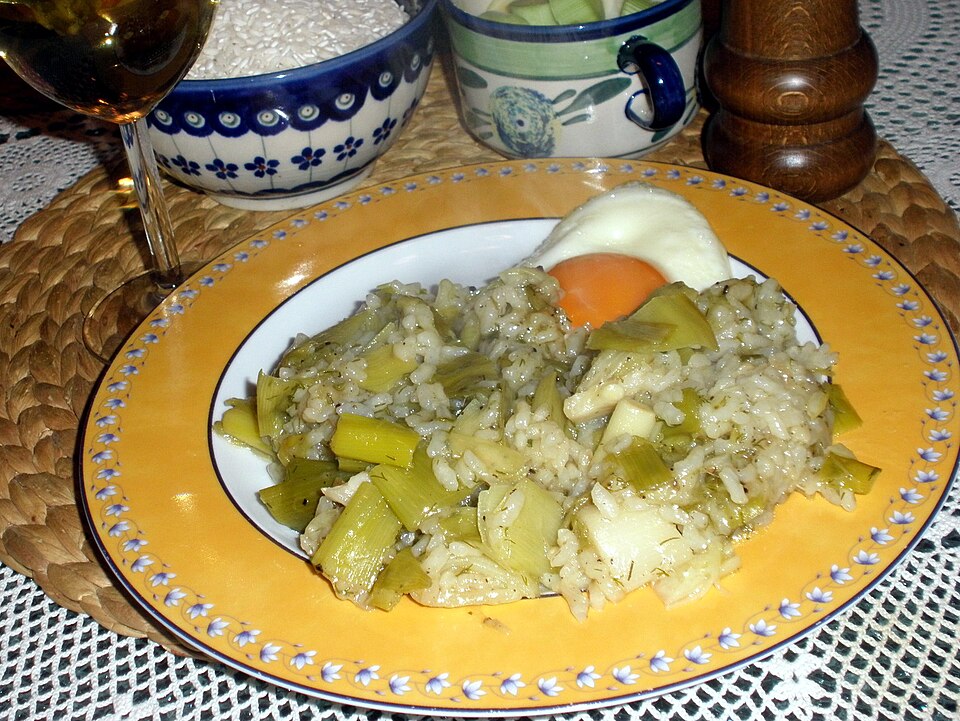
A winter pot, for the season when leeks are best. They soften over a low heat in a good deal of olive oil until sweet and almost jammy, then simmer with rice into something halfway between risotto and soup. Same method as spanakorizo, but paler and sweeter. Lemon goes in off the heat.
Yiayia’s tip: Wash sliced, not whole. Slicing the leeks before washing exposes the grit trapped between the layers, which a quick rinse of a whole leek can miss entirely.
Make Leek and Rice6. Corfu Beef and Pasta in Spiced Tomato Sauce
Pastitsada · Παστιτσάδα · pah-stee-TSAH-thah
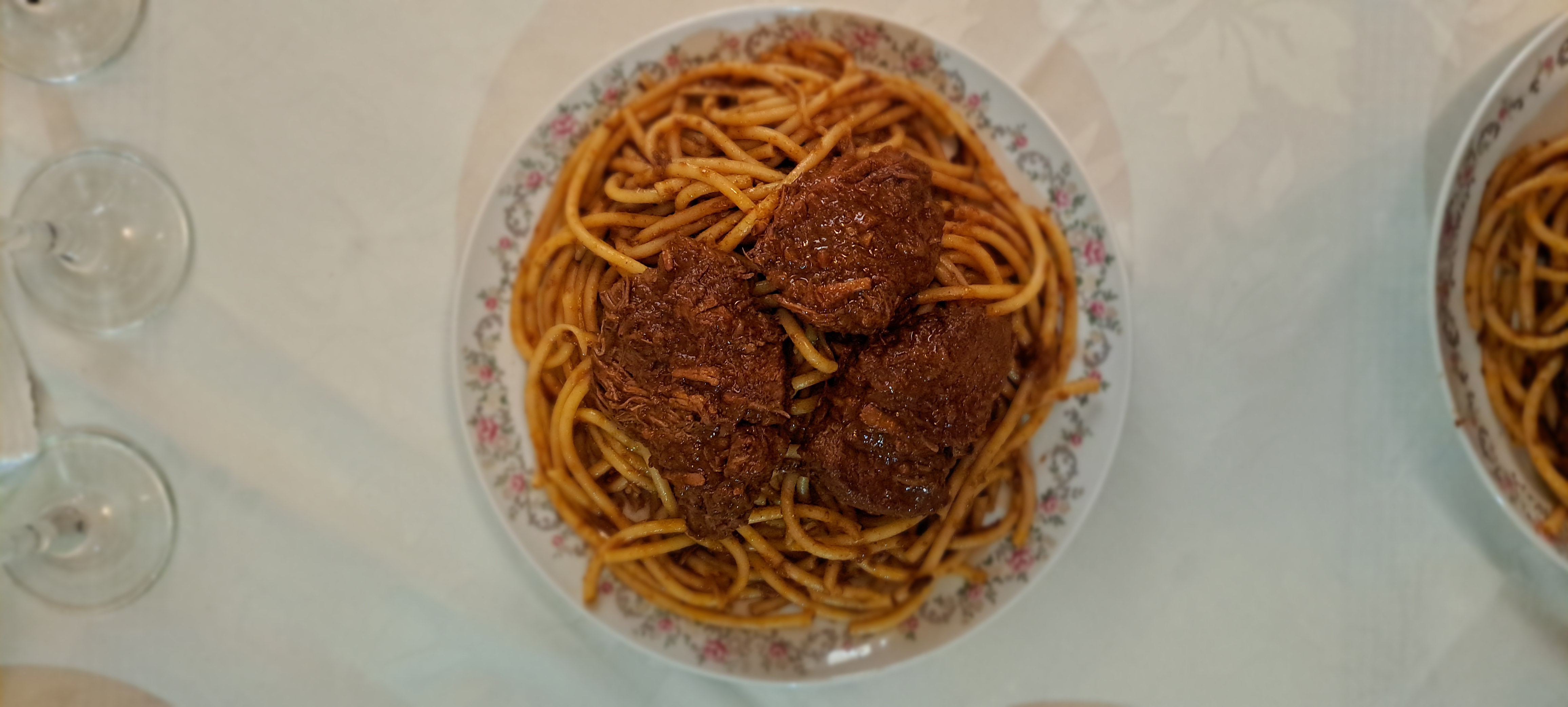
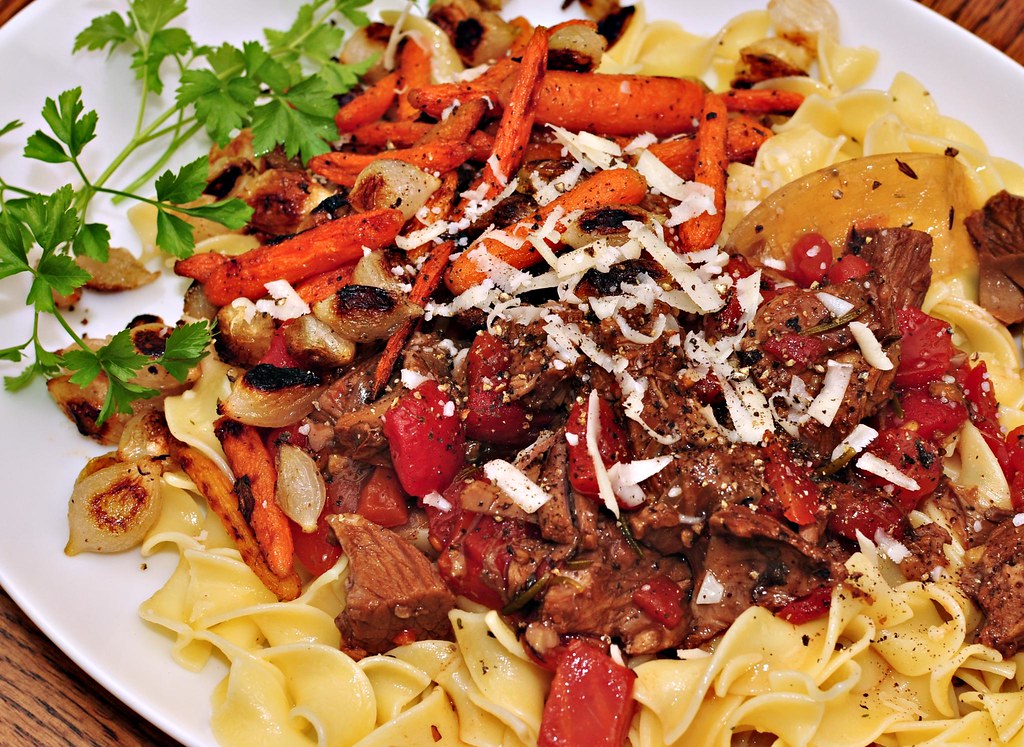
Corfu spent centuries under Venice, and this is where it shows. Beef braises for close to three hours in tomato with cinnamon, cloves, allspice and bay, nothing like the oregano and lemon of the mainland, then goes onto thick tubular pasta under grated hard cheese. Make it a day ahead, because the sauce deepens overnight.
Yiayia’s tip: Brown the beef properly first. This step builds much of the sauce's depth over what is otherwise a long, gentle braise. Do not rush or skip it.
Make Corfu Beef and Pasta in Spiced Tomato Sauce7. Corfu Spicy Fish Stew
Bourdeto · Μπουρδέτο · boor-DEH-toh
The hottest of Corfu's spiced dishes, and red from paprika, not tomato. A generous amount of sweet paprika and a careful amount of hot are cooked into the onions first. Scorpionfish is traditional, and any firm white fish works. Paprika scorches and turns bitter in a very hot pan, so lower the heat first.
Yiayia’s tip: Cook the onions properly. A full fifteen minutes over low heat is what builds the sweetness that stands in for the tomato most other Greek fish stews rely on.
Make Corfu Spicy Fish Stew8. Northern Greek Preserved Confit Pork
Kavourmas · Καβουρμάς · kah-voor-MAHS
Pork cooked slowly in its own fat, then stored sealed under that same fat. Refugees from Asia Minor and the Pontus brought the method to northern Greece after 1922, as a way to keep meat through winter before anyone had a fridge. It is the same idea as French confit, reached separately.
Yiayia’s tip: Do not skimp on the fat. It is both the cooking medium and the preserving seal. A cut that is too lean will not render enough to do either job.
Make Northern Greek Preserved Confit Pork9. Mani Cured and Smoked Pork
Syglino Maniatiko · Σύγκλινο Μανιάτικο · SEEN-glee-no mah-nyah-TEE-koh
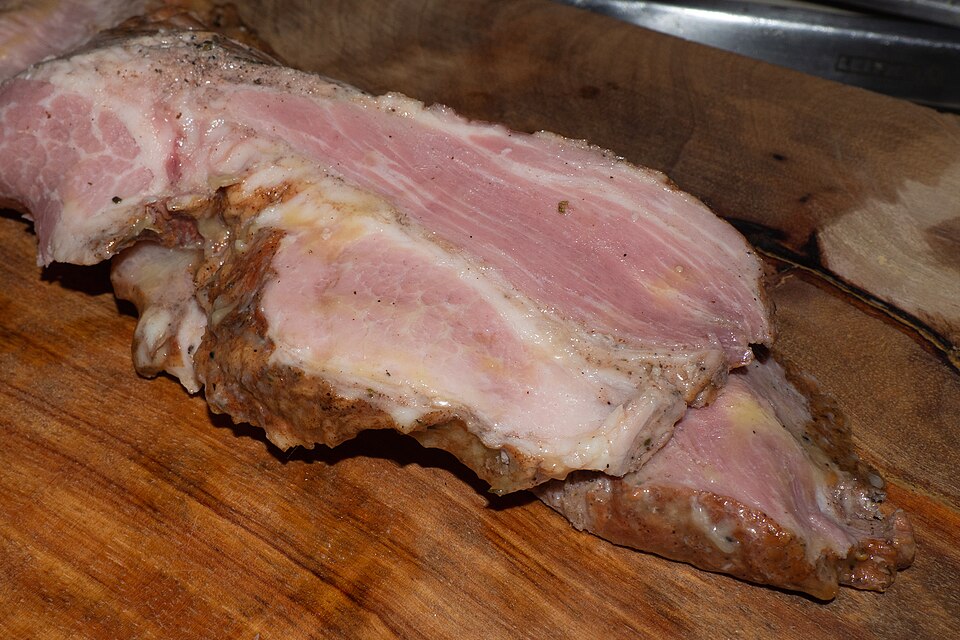
Cured pork from the Mani, and the orange peel and fennel seed are what make it Maniot. The meat is salted, smoked over aromatic wood, simmered, then sealed beneath its own fat, which is how a household kept pork through the year before refrigeration. Smoking is traditional, but an unsmoked version is legitimate.
Yiayia’s tip: Remove the bitter white pith from the orange peel. Only the coloured zest carries the fragrant oils. The pith beneath it is bitter and will carry through into the fat.
Make Mani Cured and Smoked Pork10. Smyrna-Style Cumin Meatballs in Tomato Sauce
Soutzoukakia · Σουτζουκάκια · soo-joo-KAH-kyah
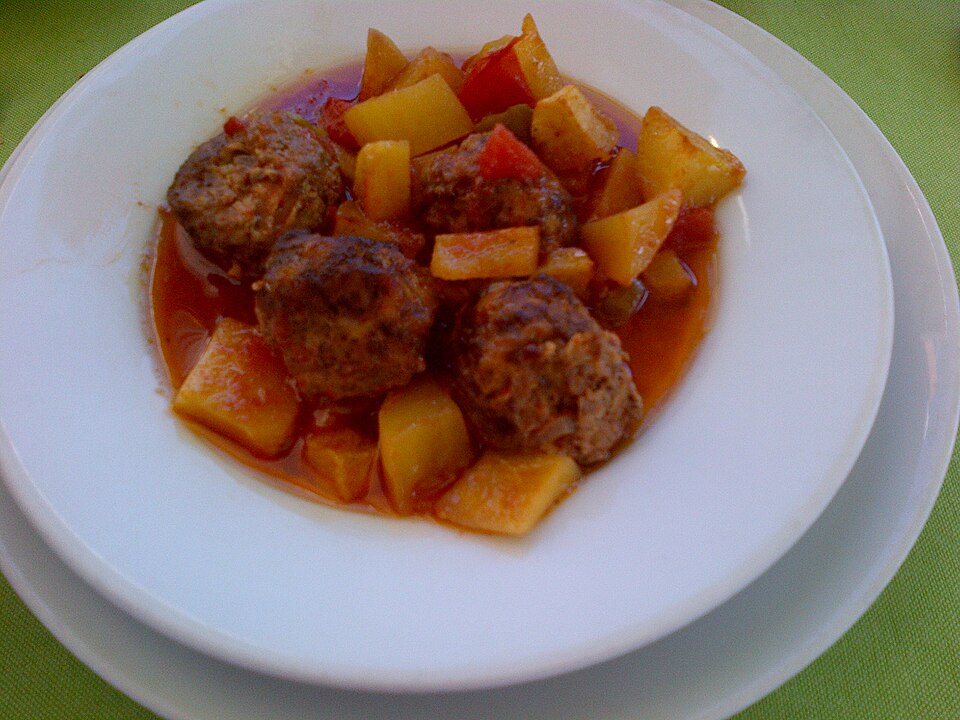
Refugees from Smyrna and the Asia Minor coast brought these after 1922, and Greece has long since made them everyday food. They are oval, not round, which browns them more evenly. Sear them hard, then let them finish in the tomato sauce so the inside stays moist. Rice or mashed potato goes with them.
Yiayia’s tip: Do not skip the cumin. It is genuinely the flavour that defines soutzoukakia and separates it from a standard Greek keftes. Use a generous amount.
Make Smyrna-Style Cumin Meatballs in Tomato Sauce11. Green Beans in Tomato and Olive Oil
Fasolakia lathera · Φασολάκια λαδερά · fah-soh-LAH-kyah lah-theh-RAH
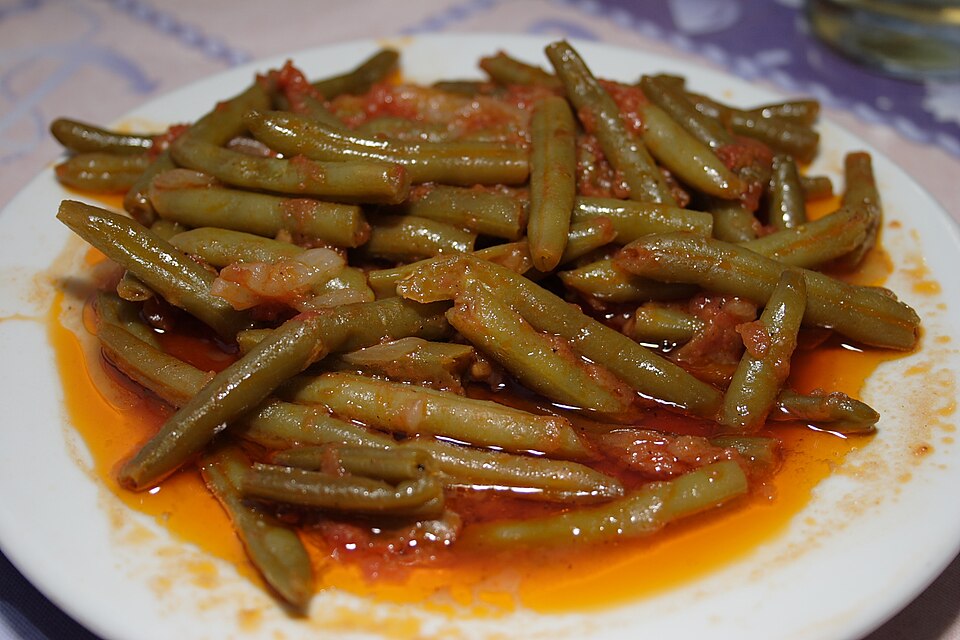
Green beans, with potato and onion, cooked far past the point where other cuisines stop, on purpose. A bean cooked ladera, in olive oil and tomato, is meant to be soft all the way through, never crisp. Finish it uncovered so the sauce thickens. Summer food, often a light main with bread and feta.
Yiayia’s tip: Do not skimp on the olive oil. It becomes part of the sauce itself over the long simmer. A ladera dish made with too little oil is a noticeably thinner, less satisfying dish.
Make Green Beans in Tomato and Olive Oil12. Okra in Tomato and Olive Oil
Bamies latheres · Μπάμιες λαδερές · BAH-myes lah-theh-RES
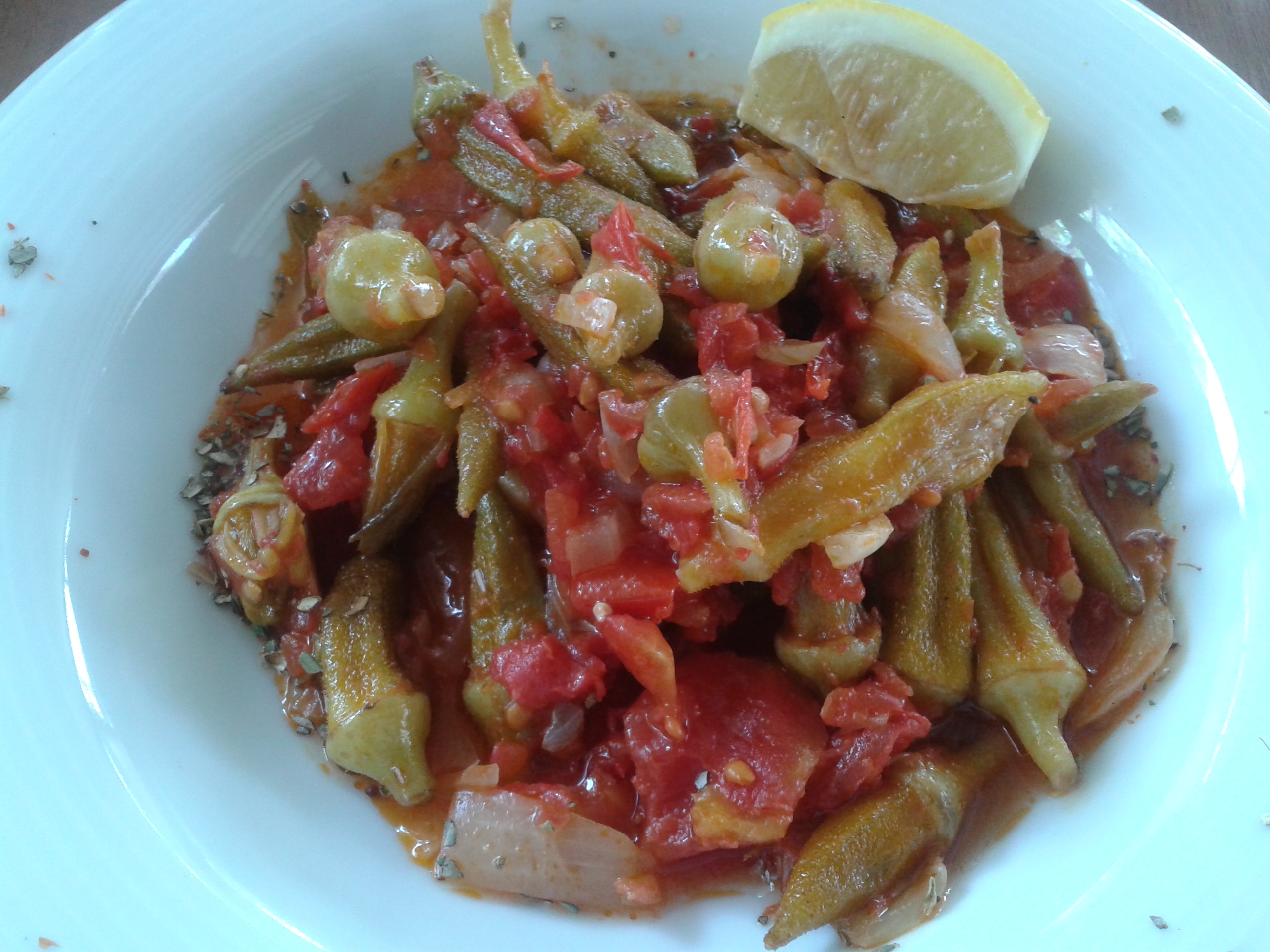
Okra frightens cooks because it can turn slimy. The traditional answer is a short soak in vinegar before the pods go near the pot. After that it is an ordinary ladera dish, simmered slowly in tomato and plenty of olive oil until the oil becomes the sauce. Shake the pan, do not stir.
Yiayia’s tip: Do not cut into the pods when trimming. Only trim the woody stem end. Exposing the interior releases the sticky substance that causes sliminess.
Make Okra in Tomato and Olive Oil13. Constantinople-Style Braised Artichokes
Anginares ala polita · Αγκινάρες αλά πολίτα · an-gee-NAH-res ah-lah poh-LEE-tah
A la polita means in the style of Poli, which is Constantinople to Greeks with roots there, and the dish came from that community. Artichoke hearts braise in a lemony broth with potato, carrot, dill and spring onion. No meat goes in, and the egg thickener is lighter than a full avgolemono.
Yiayia’s tip: Cut the vegetables to a similar size. This ensures the potato, carrot and artichoke all finish tender at roughly the same time.
Make Constantinople-Style Braised Artichokes14. Basic Greek Tomato Sauce
Saltsa domatas · Σάλτσα ντομάτας · SAHL-tsah doh-MAH-tas
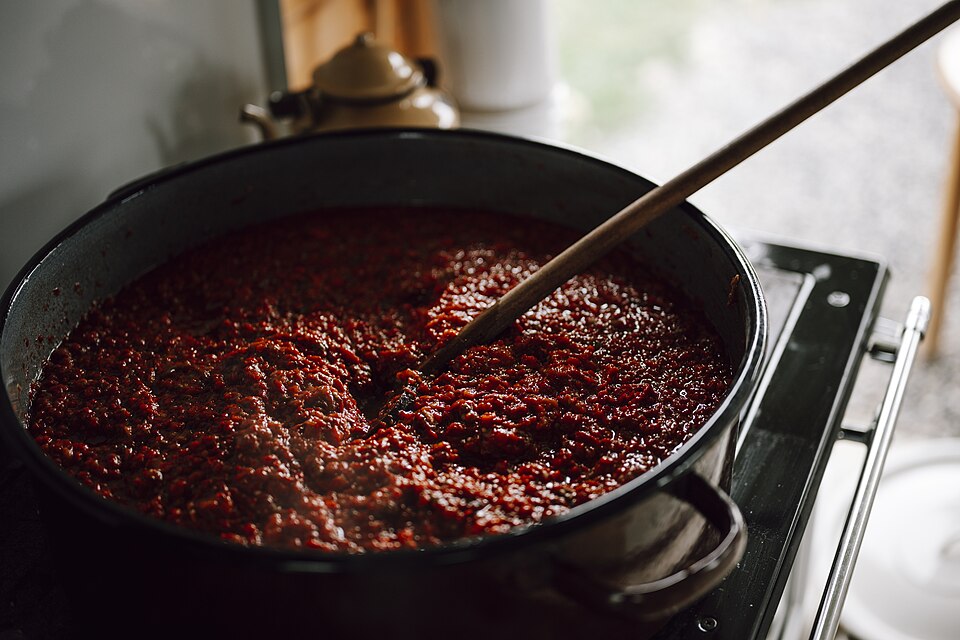
Not a dish, but the thing under dozens of them: soutzoukakia, giouvetsi, papoutsakia. Onion, garlic, olive oil, tomato and a bay leaf. The spicing is plain on purpose, with cinnamon or cumin added only when a dish wants it. It makes more than one meal needs, because it freezes for up to three months.
Yiayia’s tip: Do not rush the onion. A genuine eight minutes over medium-low heat softens it properly. High heat browns rather than softens, giving a sharper flavour.
Make Basic Greek Tomato Sauce15. Corfu White Fish Stew
Bianco · Μπιάνκο · bee-AHN-koh
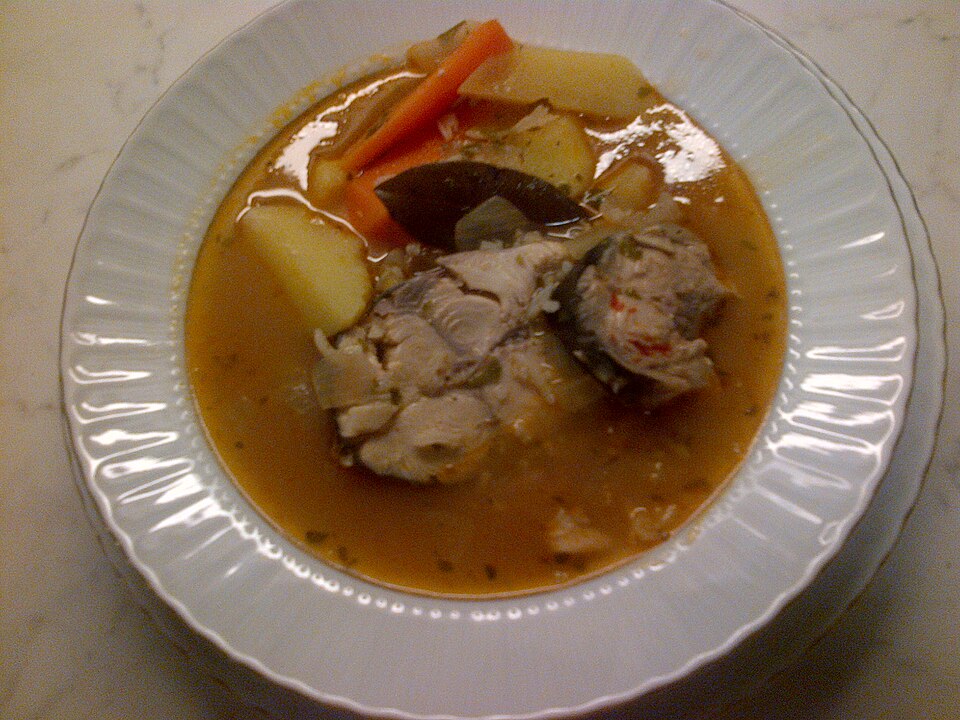
The name is Italian for white, a trace of Corfu's Venetian past, and it tells you what is missing: tomato. Where bourdeto and pastitsada are bold and spiced, this is firm white fish braised gently with garlic, olive oil and potato in a pale broth. The lemon at the end wakes it up.
Yiayia’s tip: Do not let the garlic brown. Cooked too hot or too long, it turns bitter, which this pale, delicate stew has nowhere to hide.
Make Corfu White Fish Stew16. Lamb Braised in Tomato
Arni kokkinisto · Αρνί κοκκινιστό · ar-NEE koh-kee-nee-STOH
Kokkinisto means reddened, and that is the idea: lamb braised slowly in tomato with a bay leaf, a stick of cinnamon and a little wine. It does without stifado's heavy onion base and pastitsada's spicing. This is the plain Sunday braise of Greek households, closer to a pot roast than a stew.
Yiayia’s tip: Brown the lamb properly. This is a genuinely plain dish, so the initial sear does real work building the depth the rest of the sauce relies on.
Make Lamb Braised in Tomato17. Chunky Aubergine and Tomato Stew
Melitzanes yahni · Μελιτζάνες γιαχνί · meh-leed-ZAH-nes yah-NEE
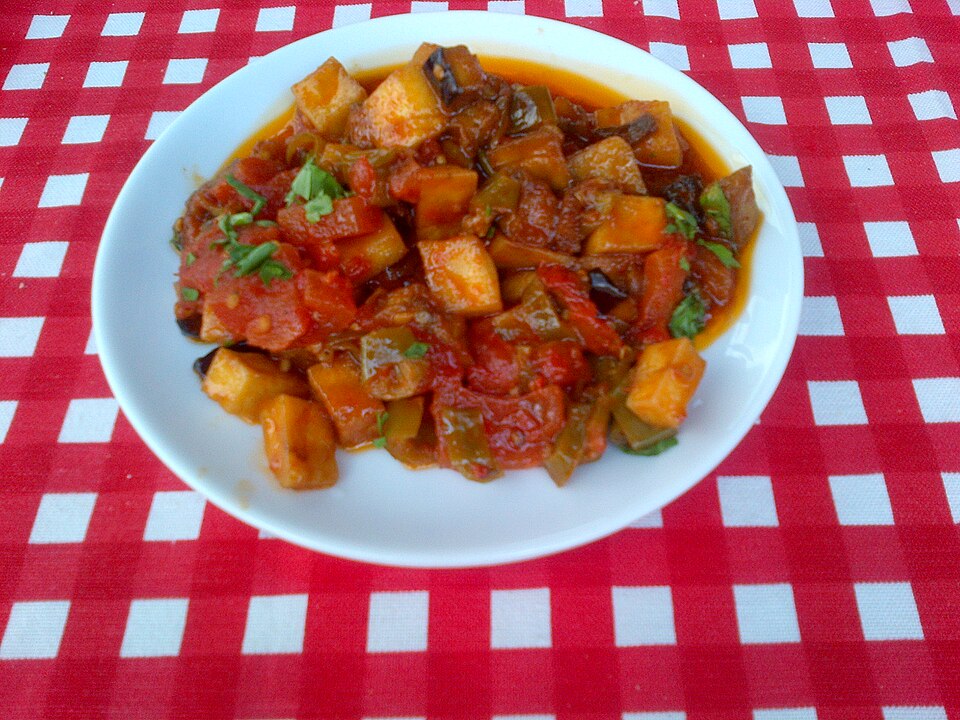
The word yahni names a method, not a dish: onion and garlic softened, then tomato, simmered until thick. Greek cooks put several vegetables through it. With aubergine in chunks it is the weeknight answer to melitzanes imam, with no splitting and stuffing. It keeps a couple of days and wants bread and feta.
Yiayia’s tip: Colour the aubergine before saucing. A brief fry builds real depth of flavour before the long simmer, rather than adding raw aubergine directly to the sauce.
Make Chunky Aubergine and Tomato Stew18. Courgette in Tomato Sauce
Kolokithakia yiahni · Κολοκυθάκια γιαχνί · koh-loh-kee-THAH-kyah yah-NEE
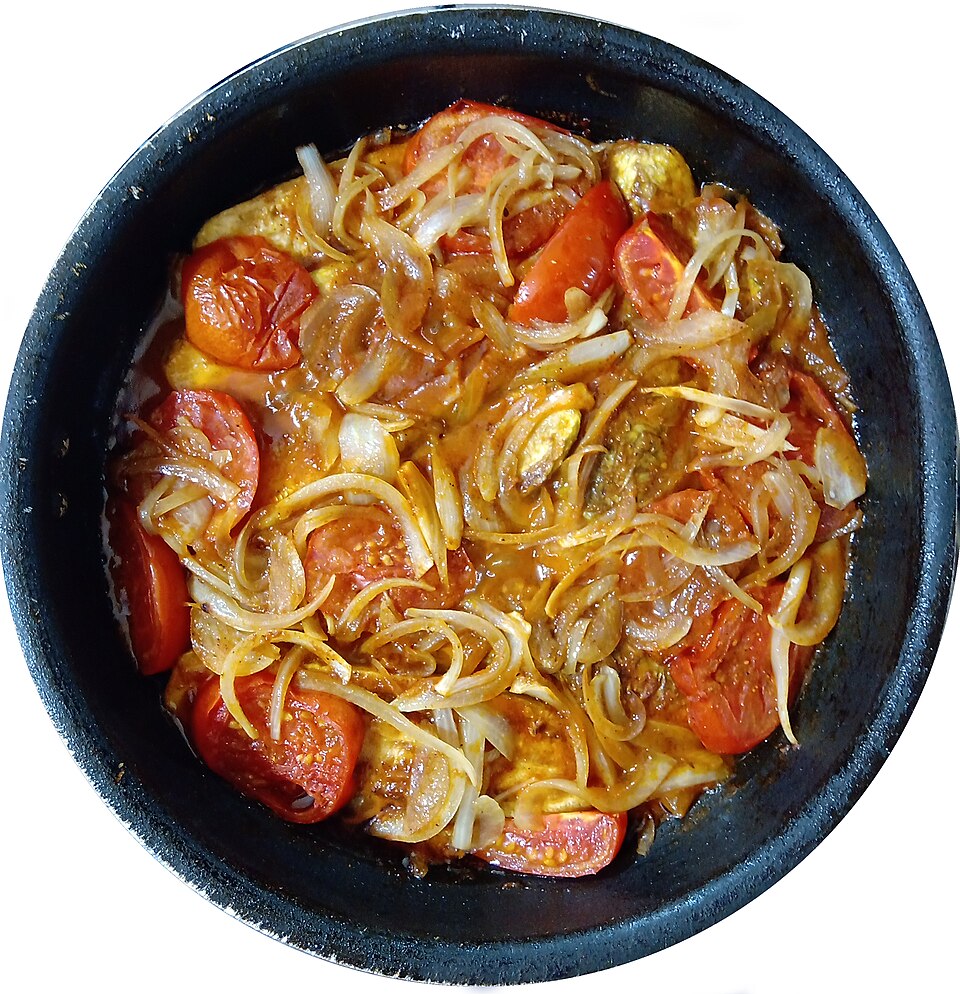
The onion and tomato braise Greeks give to green beans and aubergine, applied to courgette. Courgette cooks much faster than either, so few ladera dishes are ready sooner, and few are easier to overcook: check early and often. It is eaten warm or cooled, with feta and bread.
Yiayia’s tip: Cut thick, not thin. Thin slices disintegrate too quickly in the sauce. Thick chunks hold their shape through the simmer.
Make Courgette in Tomato Sauce19. Artichokes with Peas
Anginares me araka · Αγκινάρες με αρακά · an-gee-NAH-res meh ah-rah-KAH
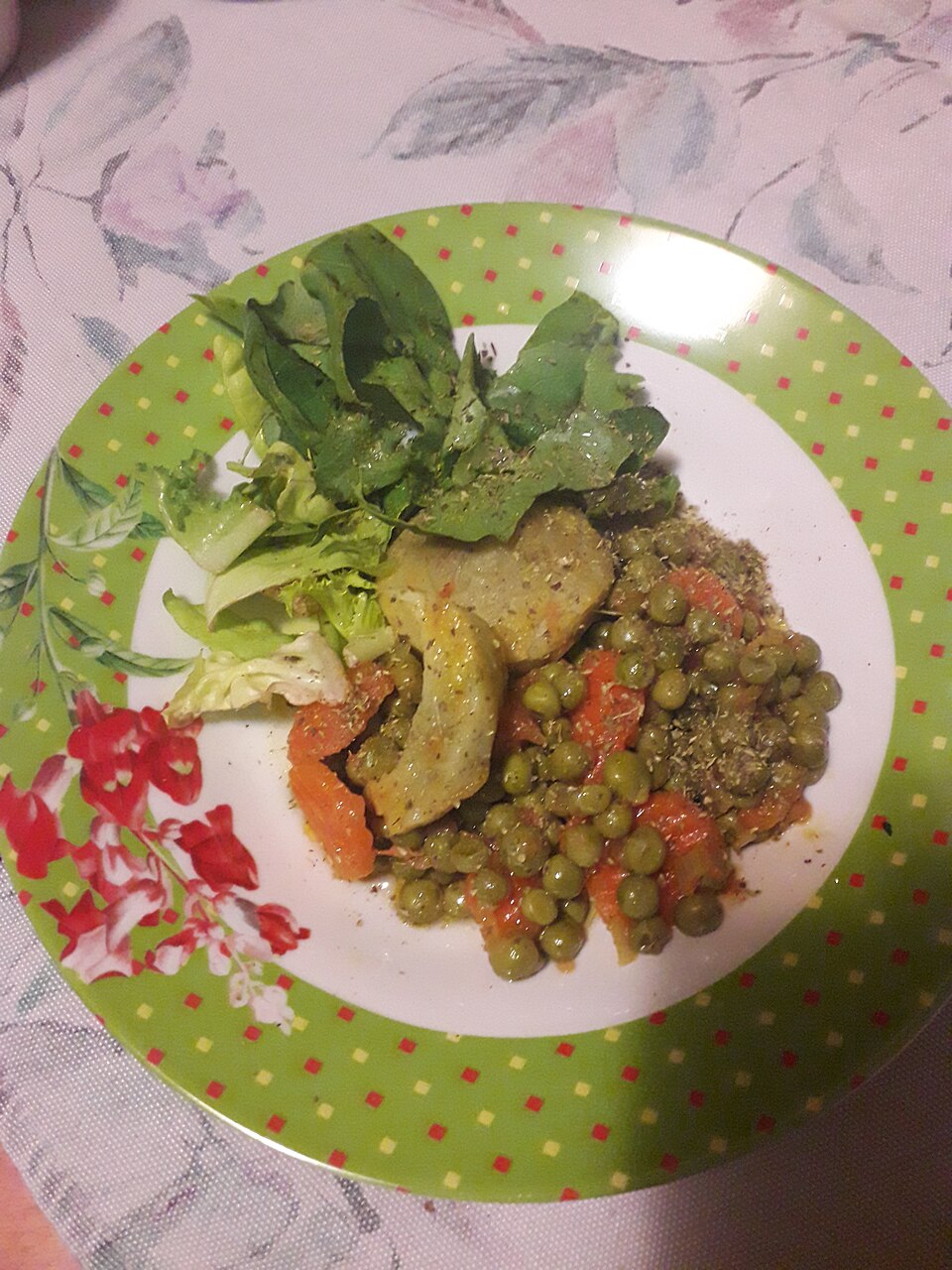
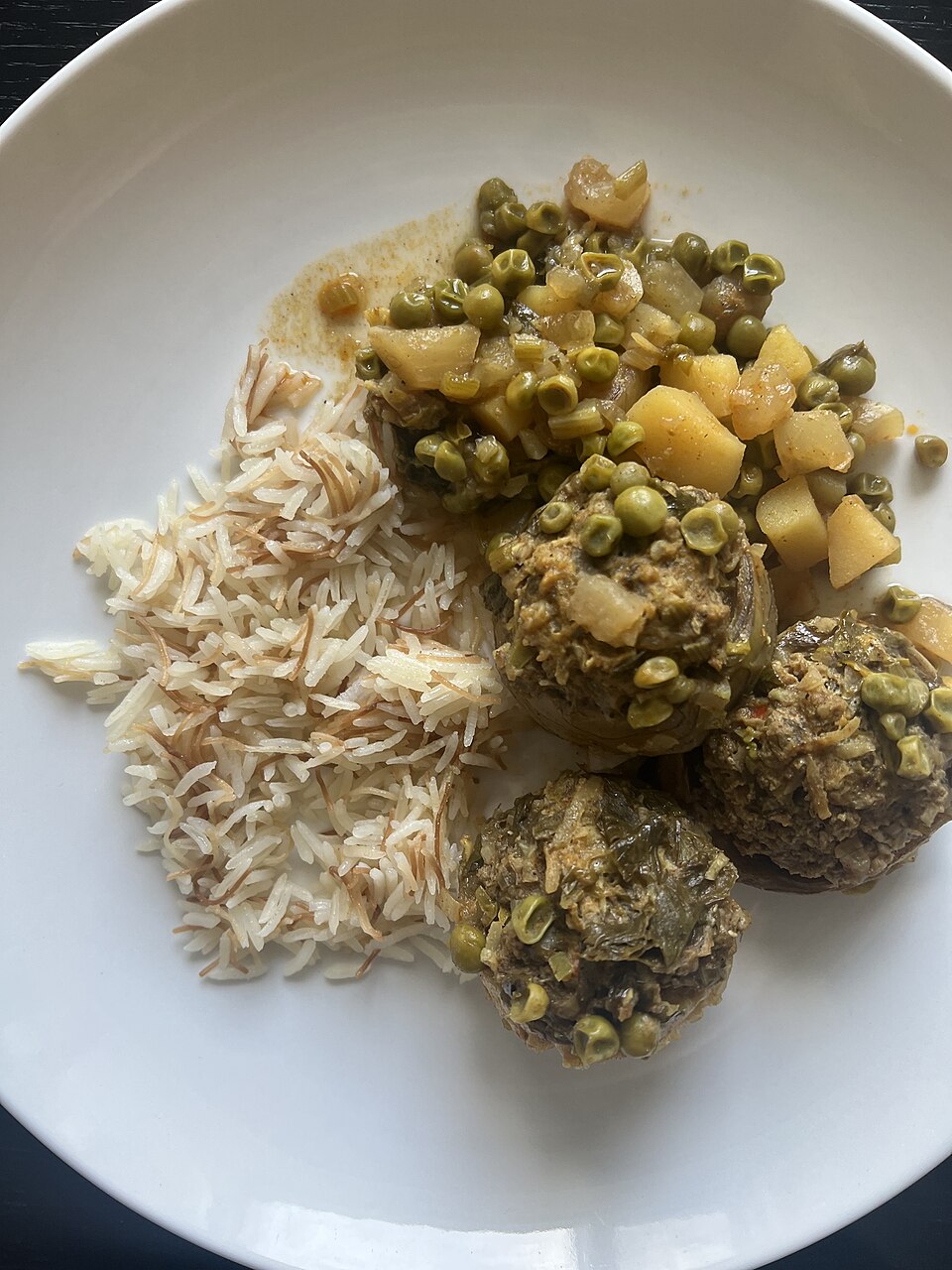
Artichokes and peas peak at the same point in spring, and cook together in olive oil with dill, spring onion and lemon. It has the flavours of lamb and artichoke fricassee with the meat left out, and stands as a vegan main course. The oil becomes the sauce, so use a good one.
Yiayia’s tip: Give the artichokes a head start. They need considerably longer than fresh peas to cook through. Add the peas only once the artichokes are nearly tender.
Make Artichokes with Peas20. Lobster with Pasta
Astakomakaronada · Αστακομακαρονάδα · ah-stah-koh-mah-kah-roh-NAH-thah
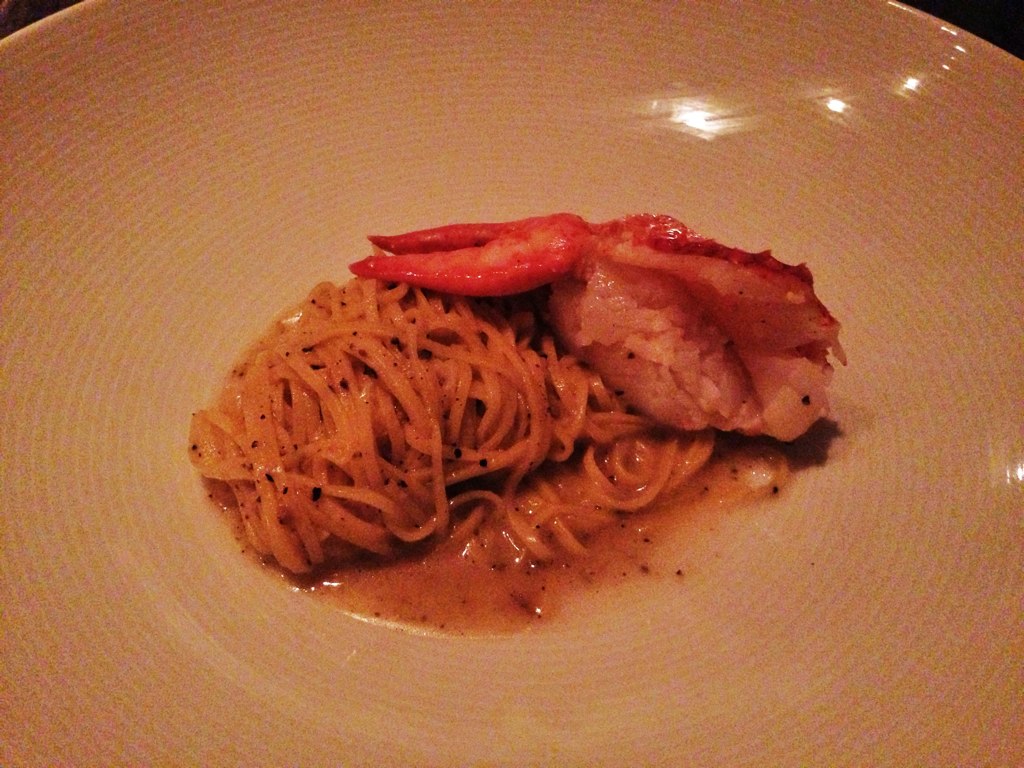
The showpiece of the Cyclades, and of Mykonos above all, where the taverna price follows what lobster costs that season. The name joins astakos, lobster, to makaronada, pasta. At home a smaller lobster, frozen tails or langoustines will do. The lobster needs eight to ten minutes in the sauce, no more, or it turns rubbery.
Yiayia’s tip: Do not rush the tomato sauce. A full twenty-five to thirty minutes is what gives it the rich, concentrated depth this showpiece dish needs.
Make Lobster with Pasta21. Sausage Braised in Wine
Loukaniko krasato · Λουκάνικο κρασάτο · loo-KAH-nee-koh krah-SAH-toh
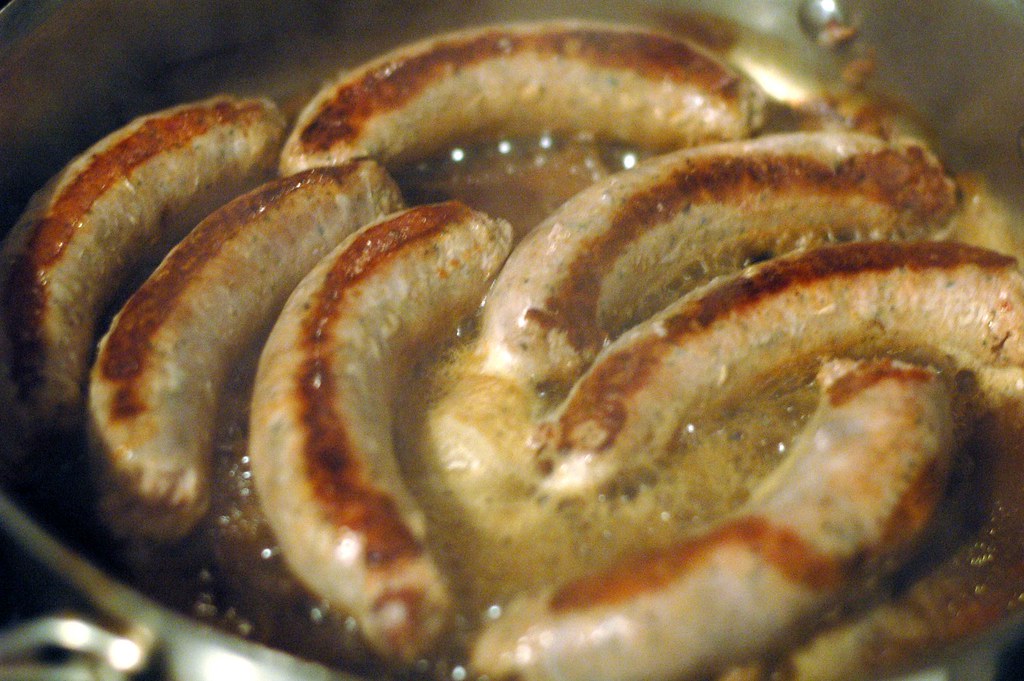
Loukaniko fried with eggs is breakfast. Simmered in red wine with bay and some orange peel, it is dinner. The orange is not a whim: good loukaniko is already seasoned with citrus and fennel, and the peel picks that up. Keep the simmer gentle, because a hard boil splits the casing.
Yiayia’s tip: Brown the sausage properly first. This step builds real depth into the sauce and should not be skipped or rushed.
Make Sausage Braised in Wine22. Beef Braised in Tomato
Moschari kokkinisto · Μοσχάρι κοκκινιστό · moh-SHAH-ree koh-kee-nee-STOH
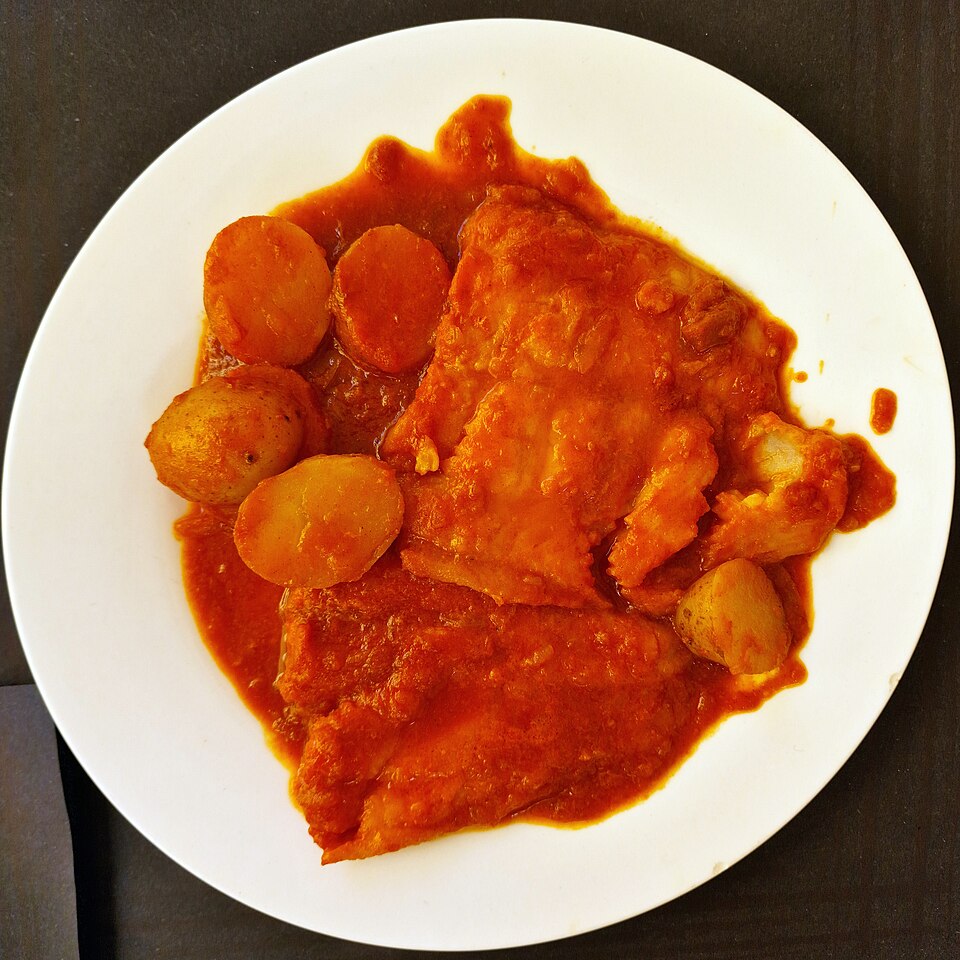
Say kokkinisto in a Greek house and this is the version people picture: beef or veal, not lamb. The sauce is plain and red, with bay and a touch of cinnamon, made to go over pasta or rice. Beef needs longer than lamb, at least two hours, and is better made a day ahead.
Yiayia’s tip: Choose a cut with real connective tissue. Chuck, shin or shoulder become genuinely tender over a long braise. A leaner cut like sirloin dries out rather than softening properly.
Make Beef Braised in Tomato23. Stuffed Whole Squid
Kalamari gemisto · Καλαμάρι γεμιστό · kah-lah-MAH-ree yeh-mee-STOH
The opposite of fried calamari rings. Each squid tube is kept whole, filled with herbs, rice and its own chopped tentacles, then braised in tomato and wine until tender. It is a main course, not a starter, and patient work. The sauce picks up sweetness from the squid as it simmers.
Yiayia’s tip: Do not overfill the tubes. Rice expands considerably as it finishes cooking inside the squid. Filling two-thirds full leaves room for this, avoiding splitting.
Make Stuffed Whole Squid24. Cypriot Jute Mallow Stew
Molehiya · Μολόχα · moh-leh-HEE-yah
This reached Cyprus from elsewhere in the eastern Mediterranean and stayed, as a village favourite. Dried jute mallow leaves, left whole, cook gently with onion, tomato and either chicken or pork. Lemon is the thing to understand. It goes in during cooking and in quantity, so the meat never makes the stew heavy.
Yiayia’s tip: Stir as little as possible. The Cypriot version prizes whole, separate leaves rather than a smooth slippery sauce. Too much stirring breaks them down and changes the texture entirely.
Make Cypriot Jute Mallow Stew25. Lamb on Smoked Aubergine Puree
Hounkiar begienti · Χουνκιάρ μπεγιεντί · hoon-KYAR beh-yen-DEE
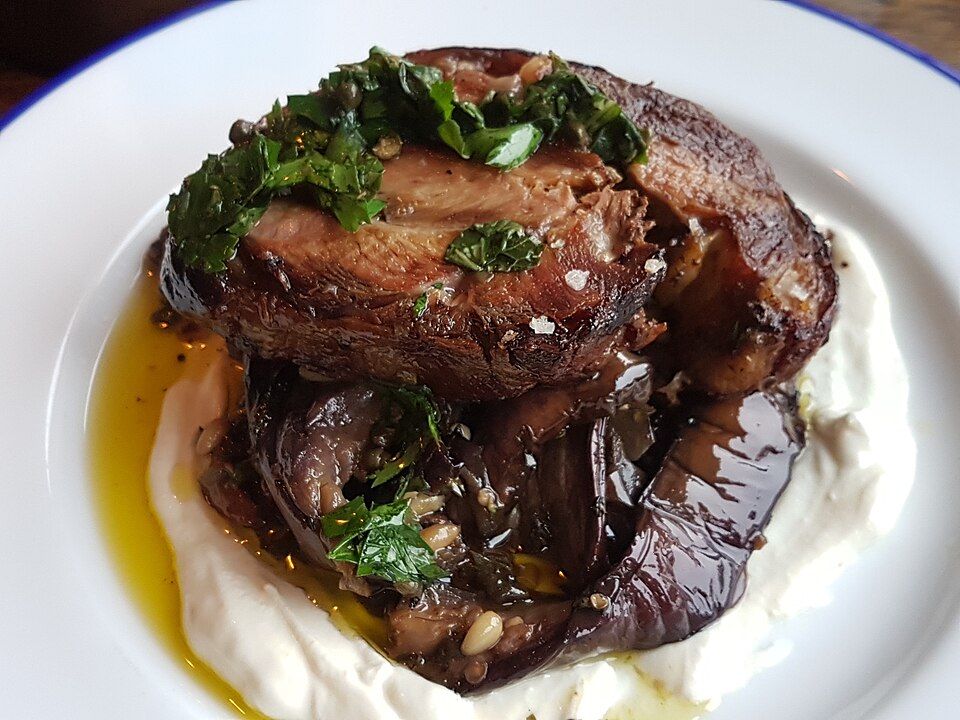
The name means, roughly, that the sultan approved. Refugees brought it to Greece in 1922, and it is the showpiece of Constantinople Greek cooking. It is two recipes on one plate: lamb or veal stewed soft with onion and tomato, over a puree of charred aubergine folded into bechamel with kefalotyri.
Yiayia’s tip: Char, do not roast. Direct flame on the skin is what produces the smoke that defines this dish. An oven gives you soft sweet aubergine and a puree that could be anything.
Make Lamb on Smoked Aubergine Puree
More Greek Stews and Ladera
17 more, 42 in all.
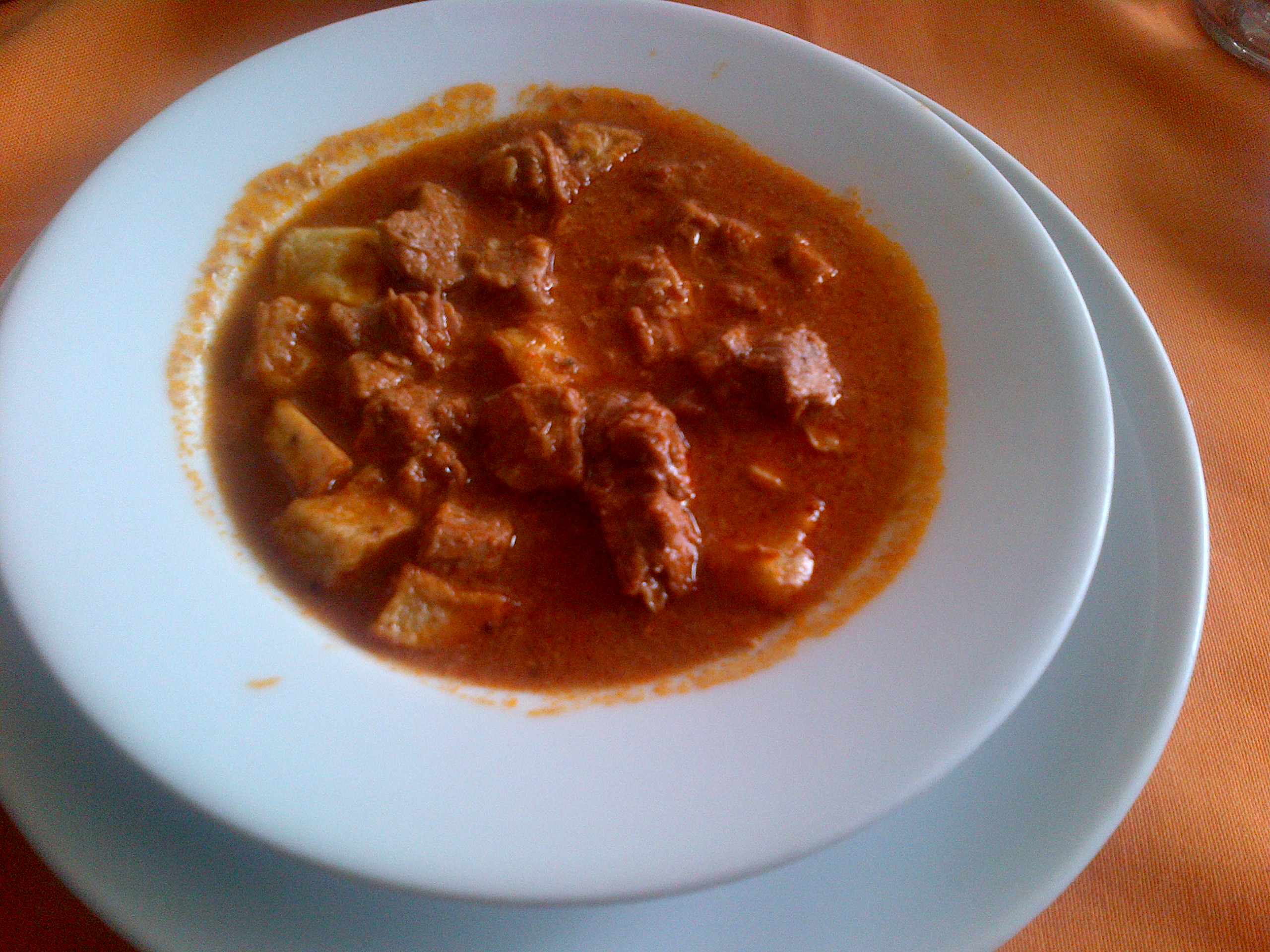 Politiko Spiced Beef StewTas kebap Τας κεμπάπMain Courses · 2h 20m · serves 6
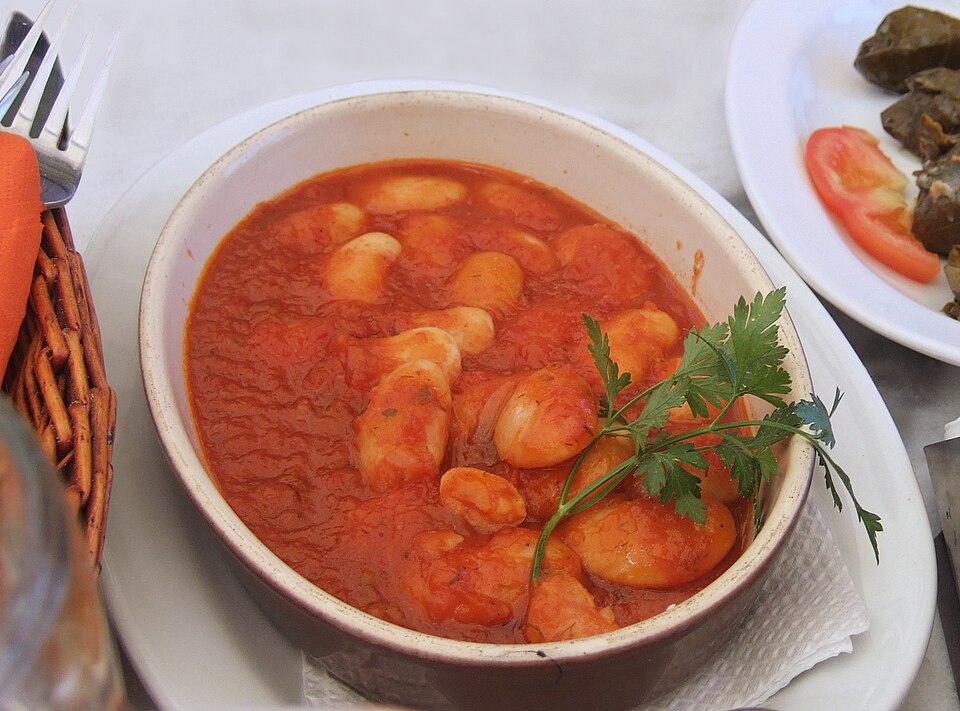 Baked Giant Beans in TomatoGigantes plaki Γίγαντες πλακίMain Courses · 2h 5m · serves 6
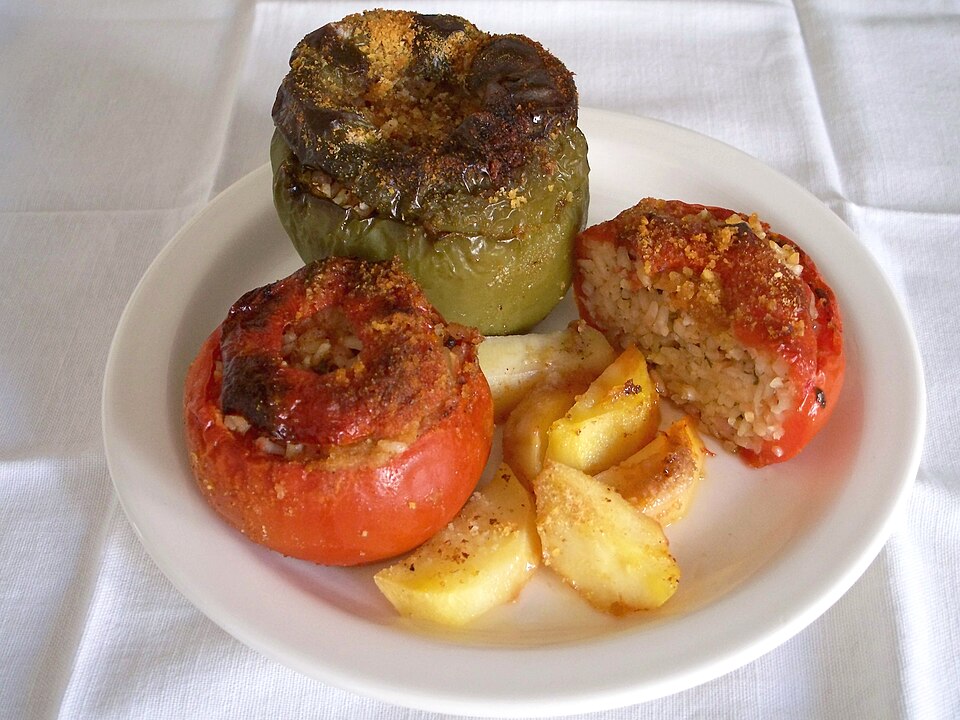 GemistaGemista ΓεμιστάMain Courses · 2h 10m · serves 6
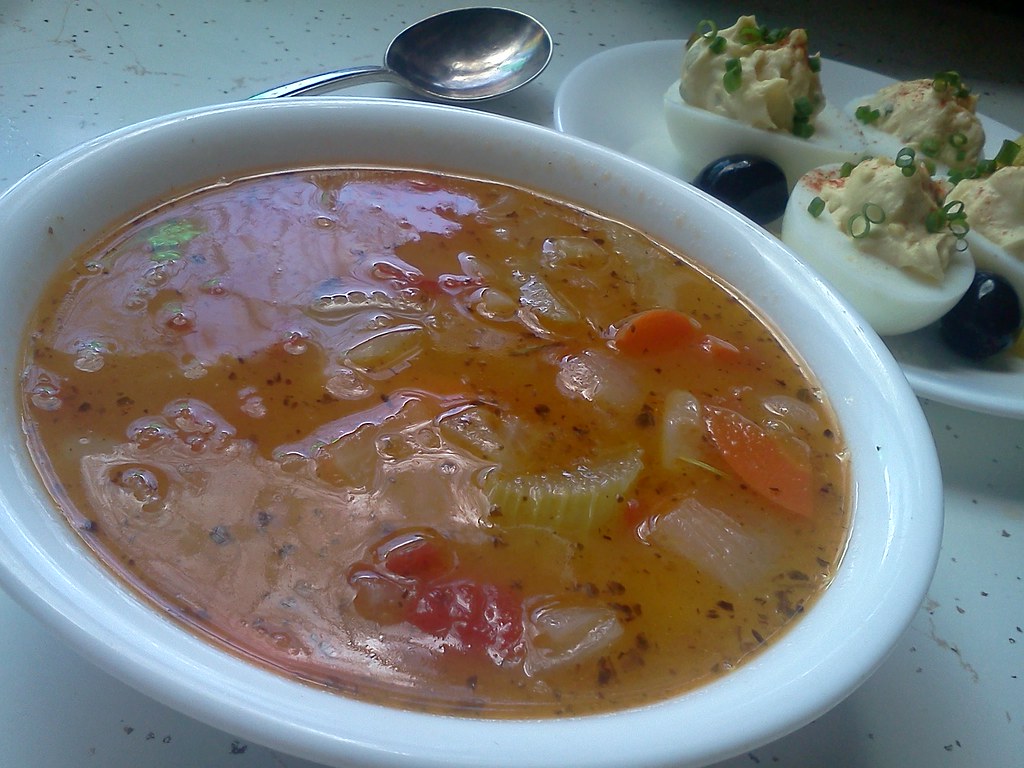 FasoladaFasolada ΦασολάδαSoups · 1h 45m · serves 6
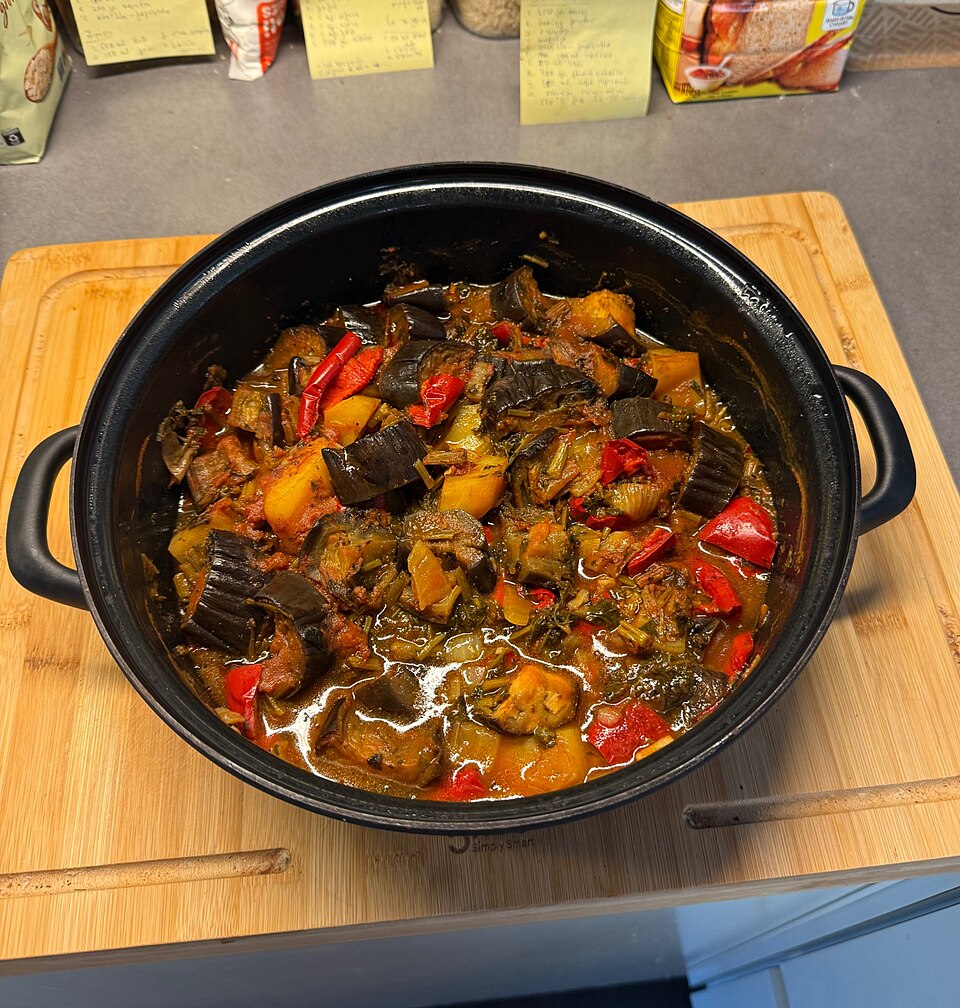 BriamBriam ΜπριάμMain Courses · 2h · serves 6
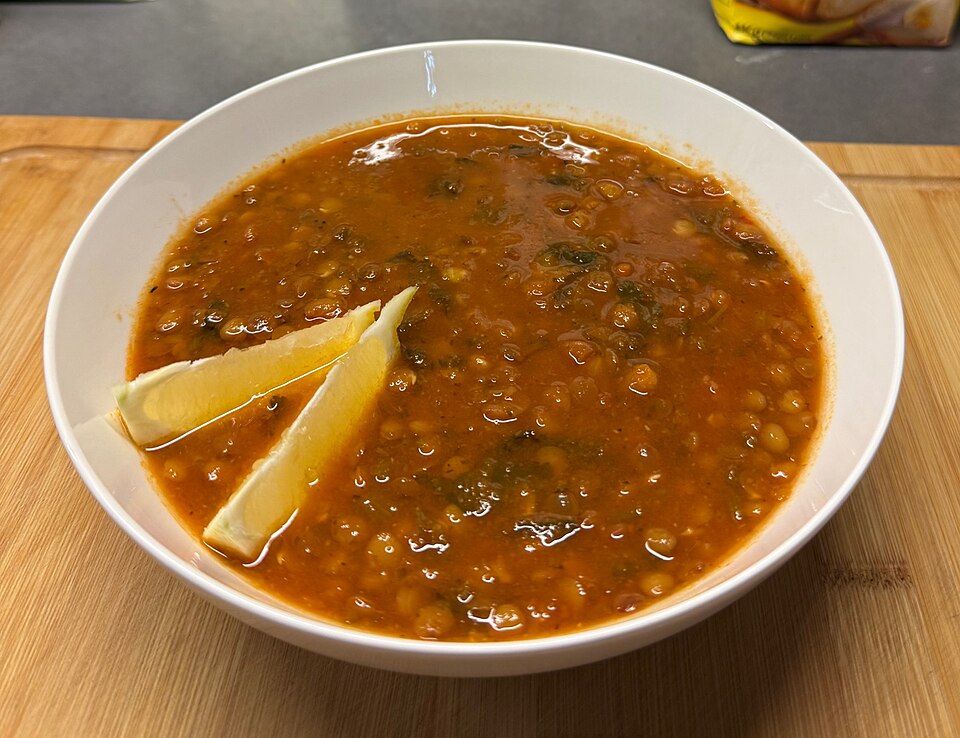 Lentil Soup with VinegarFakes ΦακέςSoups · 1h 7m · serves 6
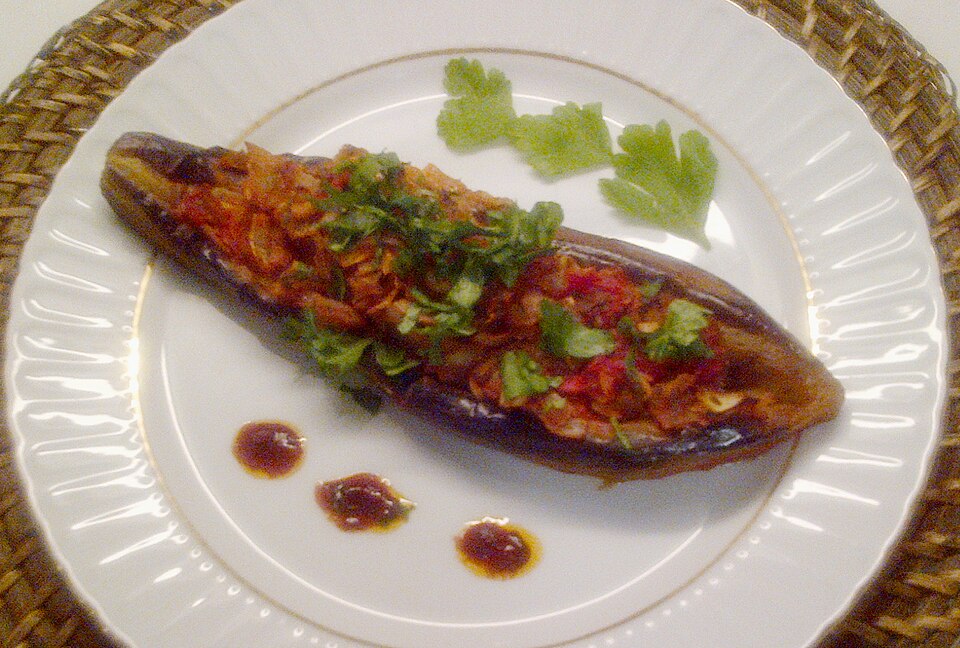 Aubergine Baked with Onion and TomatoMelitzanes imam Μελιτζάνες ιμάμMain Courses · 1h 20m · serves 4
Get one proper Greek recipe a week
No round-ups, no filler, no fifteen-ingredient shortcuts. One dish, written out in full, with the reasoning included.
One email a week. Unsubscribe from any of them.