
Region
17 Asia Minor and Pontic Greek Recipes
Brought to Greece by refugees after 1922 and now fully naturalised. Soutzoukakia, peinirli, and a taste for cumin and hot pepper that the rest of Greece did not have.

This cooking came to Greece with the refugees after 1922 and is now fully part of it. It brought a taste for cumin and hot pepper that the rest of the country did not have.
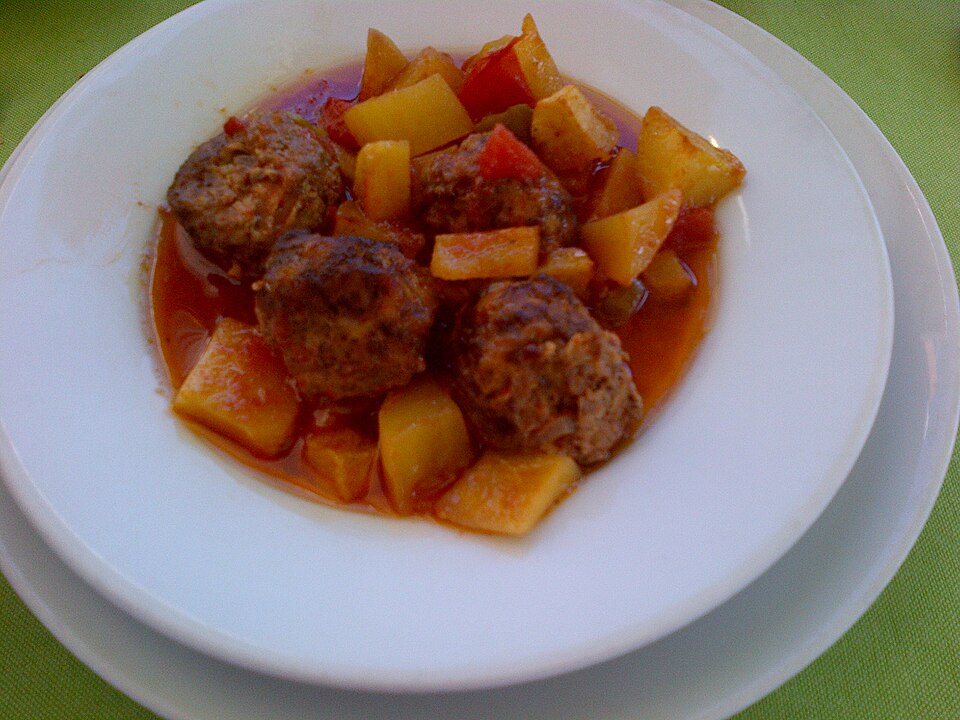
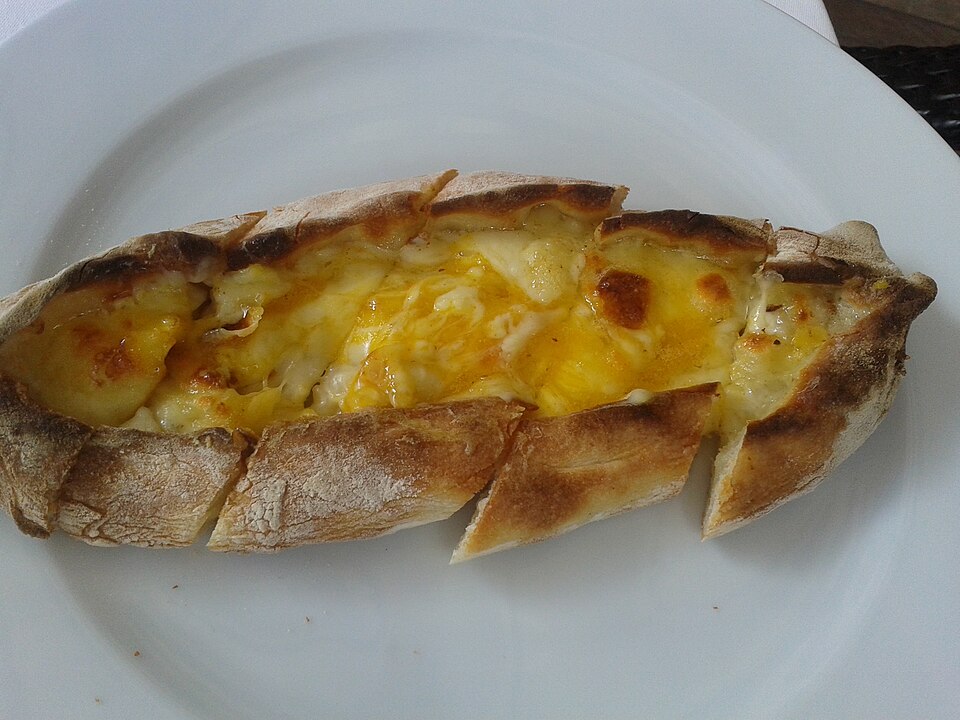
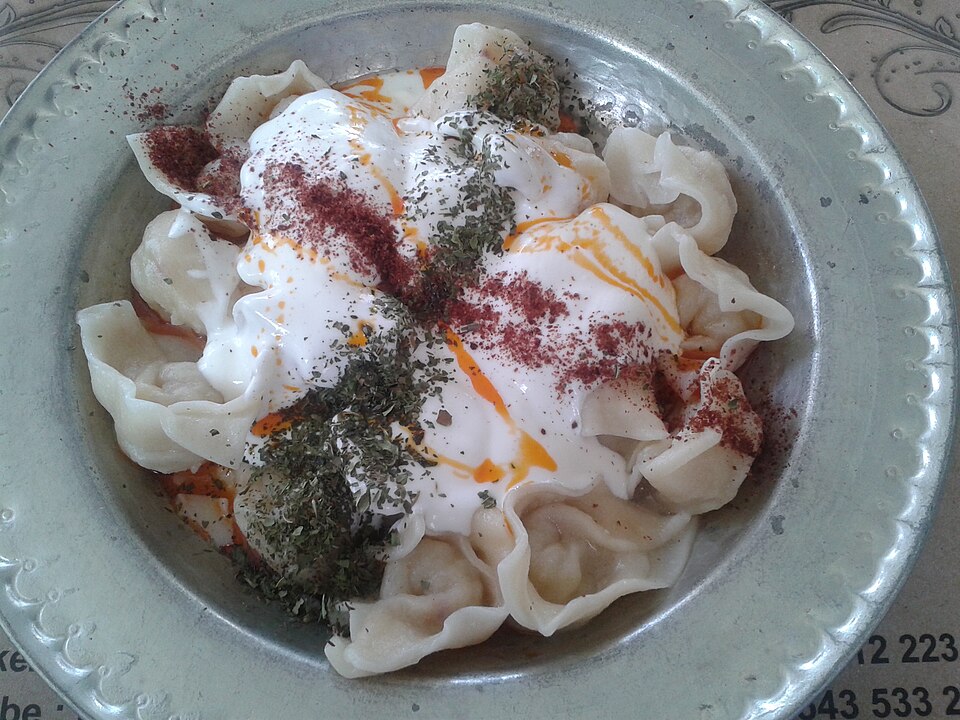
Soutzoukakia are oval, cumin-spiced meatballs simmered in tomato sauce. Peinirli is an open, boat-shaped bread from Pontic baking, filled with cheese. Manti are tiny hand-folded dumplings under garlic yogurt and paprika butter.
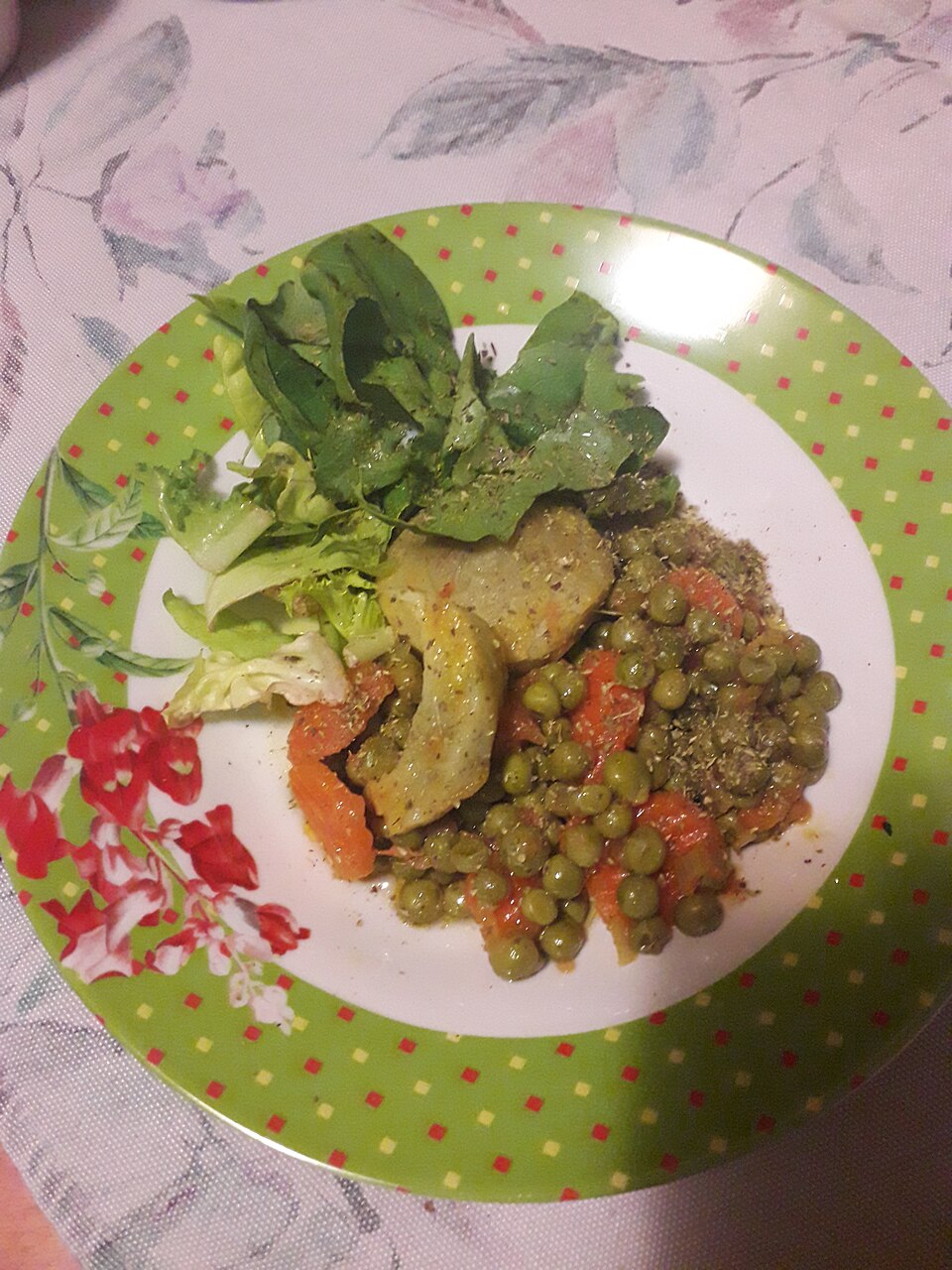
Constantinople has its own corner of the list: artichokes braised with potato, carrot and dill, a spiced beef stew, and the cabbage slaw. The cured spiced beef and the bulgur pilaf came the same way. Baklava, bougatsa and dolmades belong to this tradition as much as to the mainland.
Every recipe on Kalliopi's Kitchen carries the dish's Greek name and a pronunciation, its region where that is meaningful, ingredient quantities in both metric and imperial, and an honest note on what commonly goes wrong. Nutrition figures are calculated estimates and are labelled as such.
1. Smyrna-Style Cumin Meatballs in Tomato Sauce
Soutzoukakia · Σουτζουκάκια · soo-joo-KAH-kyah
Refugees from Smyrna and the Asia Minor coast brought these after 1922, and Greece has long since made them everyday food. They are oval, not round, which browns them more evenly. Sear them hard, then let them finish in the tomato sauce so the inside stays moist. Rice or mashed potato goes with them.
Yiayia’s tip: Do not skip the cumin. It is genuinely the flavour that defines soutzoukakia and separates it from a standard Greek keftes. Use a generous amount.
Make Smyrna-Style Cumin Meatballs in Tomato Sauce2. Pontic Boat-Shaped Cheese Bread
Peinirli · Πεϊνιρλί · peh-nir-LEE
An open boat of leavened bread, brought to Thessaloniki and other northern cities by Pontic Greek refugees after 1922. The top stays open so the cheese bubbles and colours in the oven's heat. Cheese alone is the classic filling, though ham, sausage or an egg are common. It wants the hottest oven setting there is.
Yiayia’s tip: Pinch the ends firmly. A loose seal at the points lets the melted filling leak out during baking. Press and pinch properly to close them.
Make Pontic Boat-Shaped Cheese Bread3. Constantinople-Style Braised Artichokes
Anginares ala polita · Αγκινάρες αλά πολίτα · an-gee-NAH-res ah-lah poh-LEE-tah
A la polita means in the style of Poli, which is Constantinople to Greeks with roots there, and the dish came from that community. Artichoke hearts braise in a lemony broth with potato, carrot, dill and spring onion. No meat goes in, and the egg thickener is lighter than a full avgolemono.
Yiayia’s tip: Cut the vegetables to a similar size. This ensures the potato, carrot and artichoke all finish tender at roughly the same time.
Make Constantinople-Style Braised Artichokes4. Pontic Greek Dumplings in Yogurt and Garlic
Manti pontiako · Μαντί ποντιακό · man-DEE pon-dee-ah-KOH
Pontic Greek cooking, carried from the Black Sea coast by refugees who arrived after 1922 and settled mostly in Macedonia. The dumplings belong to a family that runs from the Caucasus to Central Asia. Boiled, they go under garlic yogurt with red paprika butter poured over last. Folding dozens by hand is group work.
Yiayia’s tip: Keep the filling genuinely small. Manti are meant to be tiny, bite-sized dumplings. Overfilling them makes them difficult to seal and changes the intended texture.
Make Pontic Greek Dumplings in Yogurt and Garlic5. Aubergine in Yogurt Sauce
Melitzanes se saltsa giaourtiou · Μελιτζάνες σε σάλτσα γιαουρτιού · meh-leed-ZAH-nes seh SAHL-tsah yah-oor-TYOO
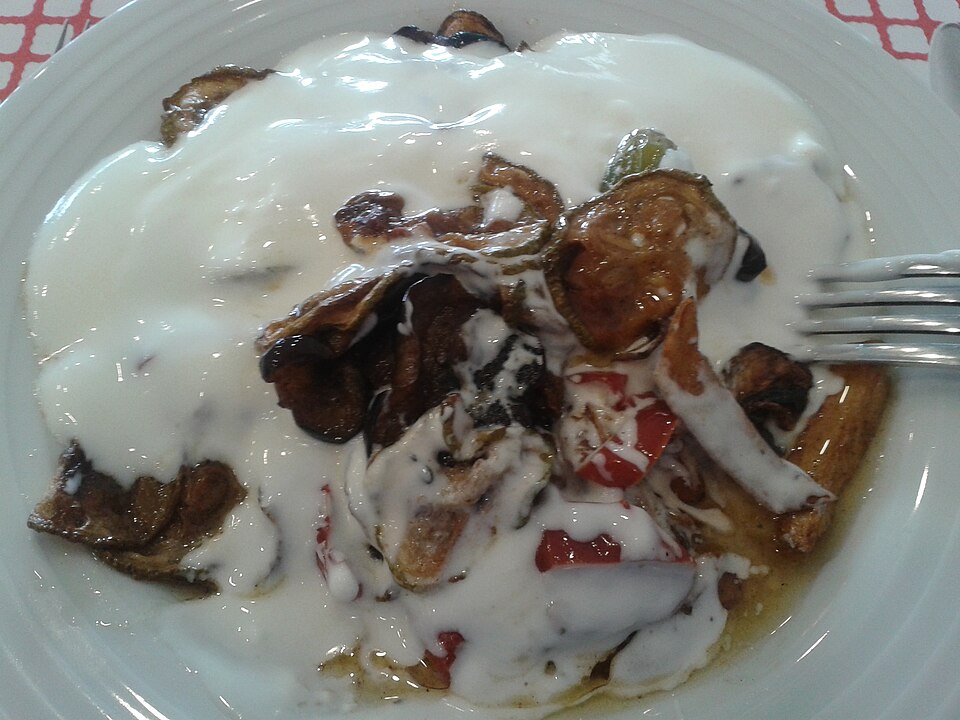
Aubergine and yogurt on one plate, a crossover between Greek cooking and the wider eastern Mediterranean, as manti and imam bayildi are. Fried slices, crisp at the edge and soft inside, go under thick garlic yogurt, and paprika butter is poured over last. Serve with bread, or as part of a meze.
Yiayia’s tip: Keep the yogurt properly cold. The contrast between cold sauce and hot aubergine and butter is exactly what this dish is built around.
Make Aubergine in Yogurt Sauce6. Cured Spiced Beef from Asia Minor
Pastourmas · Παστουρμάς · pah-stoor-MAHS
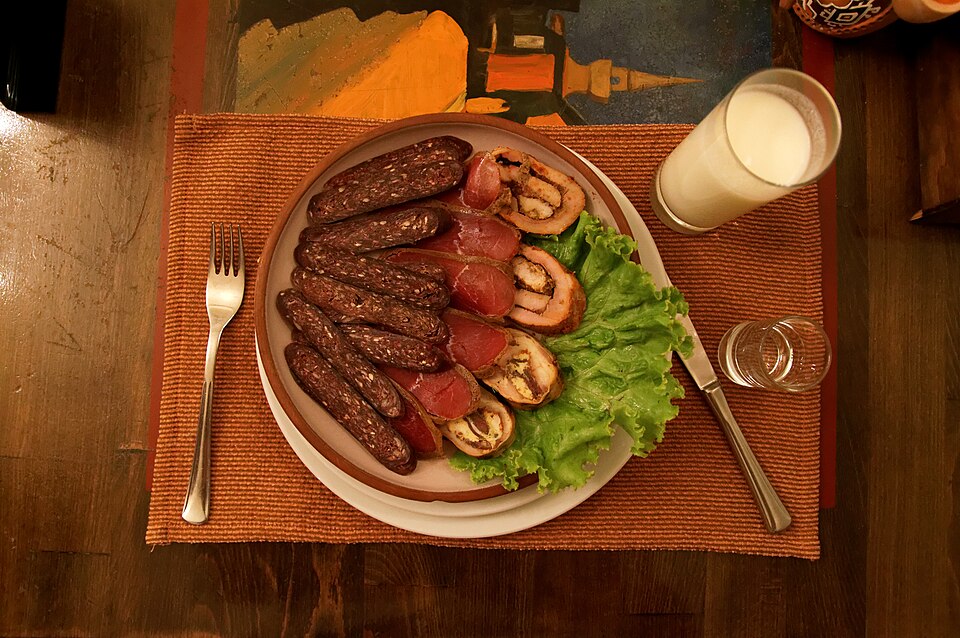
Beef, not pork like lountza, louza, noumboulo or apaki. What defines it is cemen, a thick, pungent red paste of fenugreek, garlic and paprika, packed onto the meat once it has cured. It came from Asia Minor and Cappadocia with the refugee communities. Slice it very thin, because a thick slice is too much.
Yiayia’s tip: Do not skip the pressing stage. It gives pastourma its characteristic dense, compact texture and is genuinely part of what separates it from a simple cured beef.
Make Cured Spiced Beef from Asia Minor7. Walnut and Grape Must Candy
Soutzouki · Σουτζούκι · soo-JOO-kee
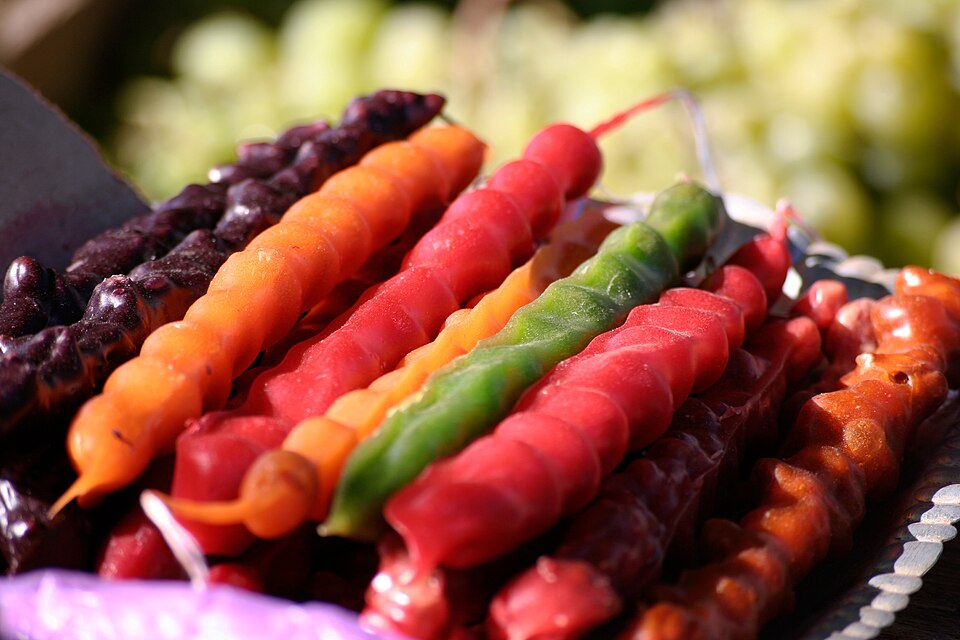
Nothing to do with the cured meat of a similar name. This is a sweet: walnut halves threaded on cotton string and dipped over and over in grape must, spiced and thickened, until a firm, chewy coat builds up. It is made at the autumn grape harvest and arrived with Greeks from Asia Minor.
Yiayia’s tip: Leave real time between dips. Rushing the drying stage means each new layer slides off the last rather than building up properly. Twenty to thirty minutes between dips is genuinely necessary.
Make Walnut and Grape Must Candy8. Pontic Greek Wheat and Meat Porridge
Keskek · Κεσκέκ · kes-KEK
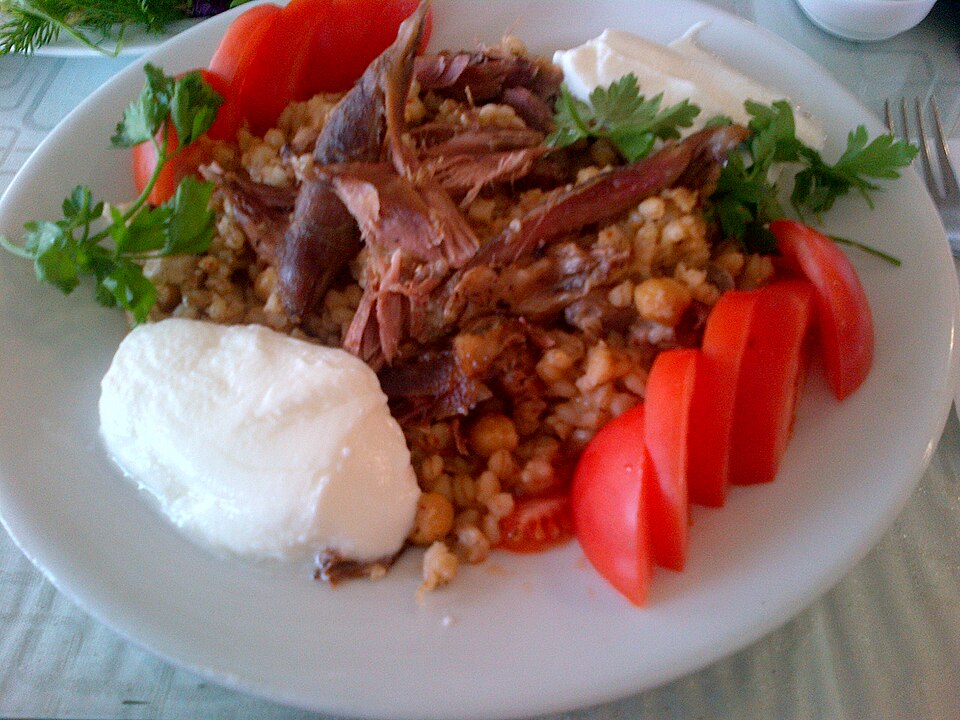
Wedding food among Pontic Greeks, made in large quantities, and the labour is part of the occasion. Wheat berries go in whole with chicken or lamb and simmer for many hours until both fall apart. Then it is beaten hard, traditionally with a heavy wooden tool, into a smooth, thick porridge that almost stretches.
Yiayia’s tip: Soak the wheat overnight without fail. Unsoaked wheat berries take considerably longer to soften and may never break down properly within a reasonable cooking time.
Make Pontic Greek Wheat and Meat Porridge9. Lamb on Smoked Aubergine Puree
Hounkiar begienti · Χουνκιάρ μπεγιεντί · hoon-KYAR beh-yen-DEE
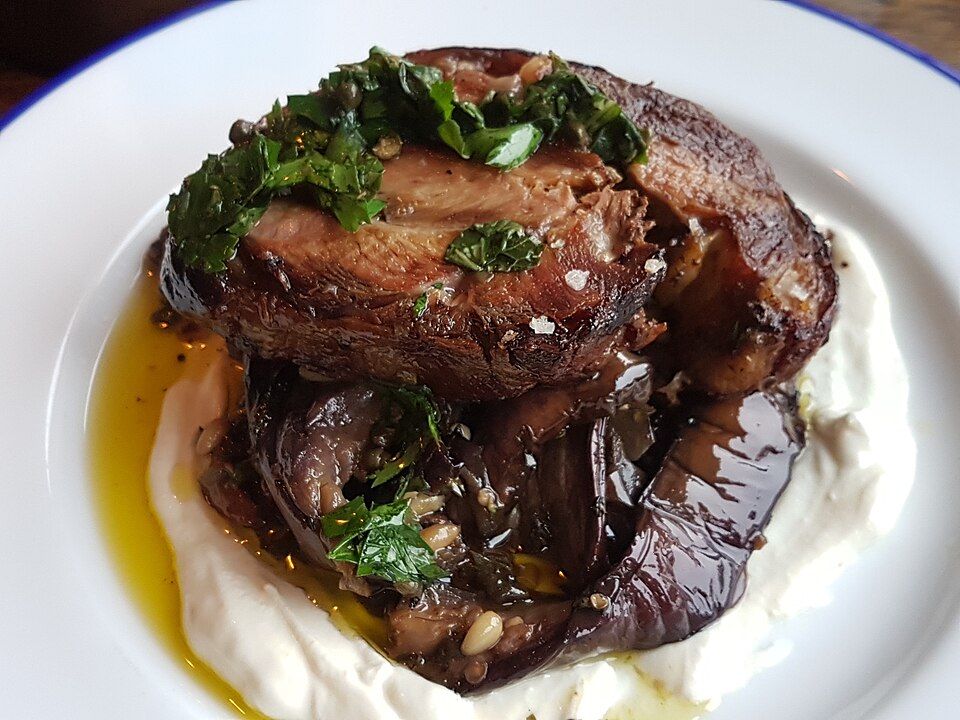
The name means, roughly, that the sultan approved. Refugees brought it to Greece in 1922, and it is the showpiece of Constantinople Greek cooking. It is two recipes on one plate: lamb or veal stewed soft with onion and tomato, over a puree of charred aubergine folded into bechamel with kefalotyri.
Yiayia’s tip: Char, do not roast. Direct flame on the skin is what produces the smoke that defines this dish. An oven gives you soft sweet aubergine and a puree that could be anything.
Make Lamb on Smoked Aubergine Puree10. Lakerda
Λακέρδα · lah-KER-thah
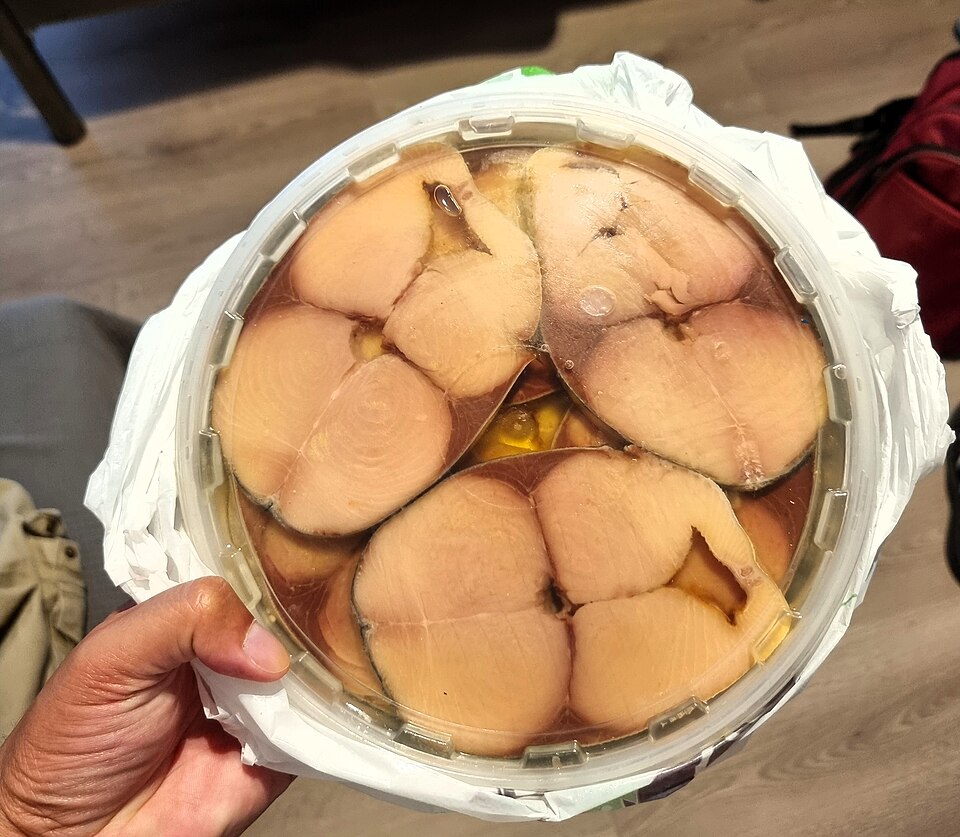
Constantinople's Greeks salted the bonito that passed the Bosphorus each autumn, and brought the method to Greece in 1922. Nothing is cooked or smoked. Salt firms thick steaks over four to six days until dense and silky. Timing is the hard part: cut short it tastes raw, left long it turns dry and salty.
Yiayia’s tip: Use coarse salt only. Fine salt penetrates far too quickly and gives a harsh, over-cured result. Coarse sea salt draws water out gradually, which is the whole mechanism of the cure.
Make Lakerda11. Politiko Spiced Beef Stew
Tas kebap · Τας κεμπάπ · TAS keh-BAP
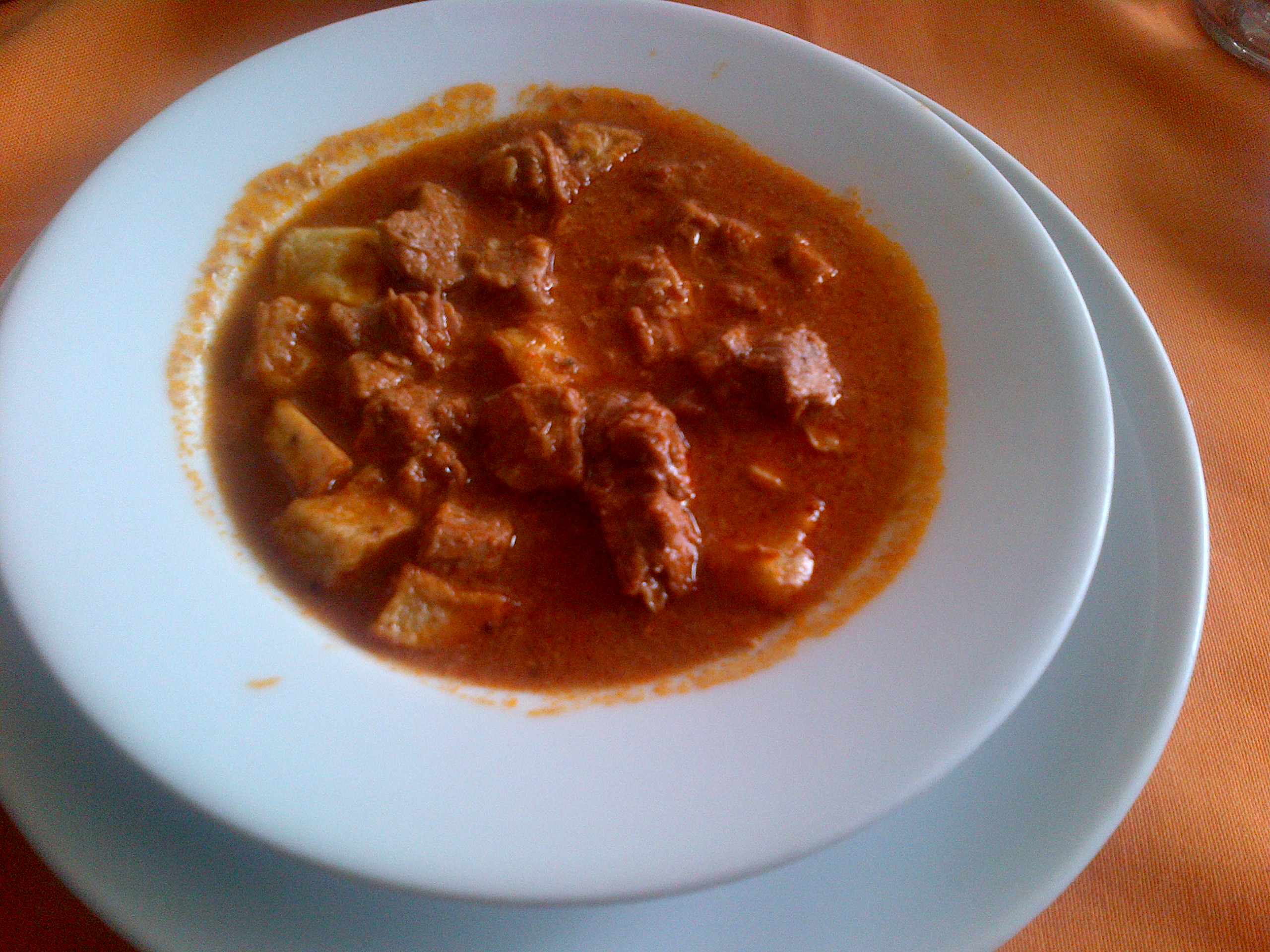
Nothing is grilled, whatever the name suggests. Tas is the pot, and this is a slow stew from the Greeks of Constantinople. Onion goes in at half the meat's weight or more and melts into the sauce, spiced with cumin and allspice. That sauce is kept thin so it soaks into rice pilaf.
Yiayia’s tip: Bloom the ground spices in fat. One minute in the hot onions before liquid goes in transforms cumin and allspice. Added to a wet pot they stay raw and dusty for the whole two hours.
Make Politiko Spiced Beef Stew12. Constantinople-Style Cabbage Slaw
Politiki salata · Πολίτικη σαλάτα · poh-LEE-tee-kee sah-LAH-tah
The name comes from Poli, which is what Greeks with roots in Constantinople still call the city. Finely shredded white cabbage with carrot and red pepper, dressed sharply with olive oil and lemon. It is on winter tables all over Greece, and at Christmas above all.
Yiayia’s tip: Shred everything very fine. This is a slaw, not a chopped salad. A mandoline or food processor gives a far more even texture than a knife.
Make Constantinople-Style Cabbage Slaw13. Anatolian-Style Bulgur Pilaf
Pilafi me pligouri · Πιλάφι με πλιγούρι · pee-LAH-fee meh plee-GOO-ree
Cracked, parboiled wheat was a staple of Asia Minor and Anatolia, and it reached Greek kitchens with the refugees who resettled after 1922. Cooked as a pilaf in stock with a little tomato, it is ready sooner than rice, with a coarser and nuttier bite. Let it rest before fluffing, or it turns mushy.
Yiayia’s tip: Toast the bulgur before adding liquid. This deepens its flavour, the same principle behind any good pilaf, rice or otherwise.
Make Anatolian-Style Bulgur Pilaf14. Baklava
Baklavas · Μπακλαβάς · bahk-lah-VAHS
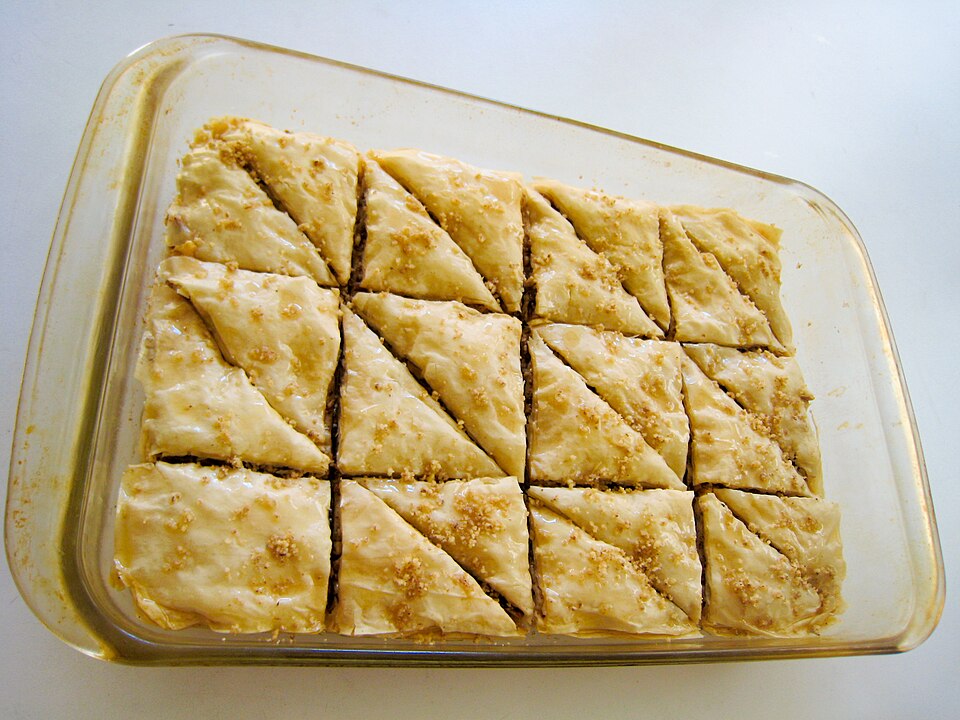
The one everybody thinks they know. The Greek version is walnuts, not pistachios, with a heavy hand of cinnamon and clove and a syrup built on honey. Nothing in it is difficult. The layering takes as long as it takes, and the syrup decides whether you end up with crisp or soggy.
Yiayia’s tip: Do not stir the syrup once it boils. Stirring a boiling sugar syrup encourages crystallisation. Dissolve the sugar as it heats, then leave it alone.
Make Baklava15. Bougatsa
Μπουγάτσα · boo-GHAH-tsah
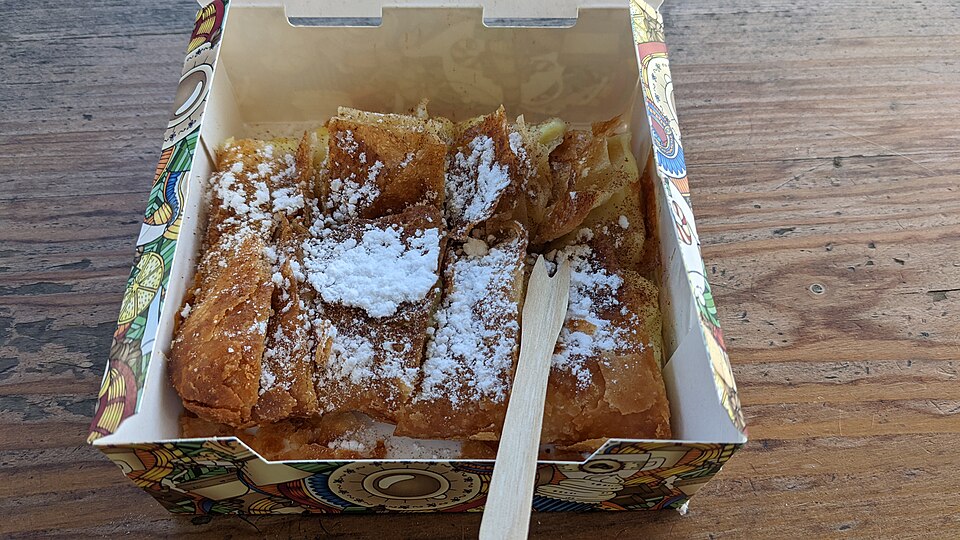
Thessaloniki's breakfast, eaten standing at a counter, cut into squares with scissors and passed across in paper. Refugees from Asia Minor brought it in the 1920s. People confuse it with galaktoboureko, which is firm and drenched in syrup. This one is softer and never sees syrup, only icing sugar and cinnamon.
Yiayia’s tip: Err on the loose side. The custard thickens as it cools and again in the oven. If it looks right in the pan it will be stodgy on the plate.
Make Bougatsa16. Dolmades
Ντολμάδες · dol-MAH-des
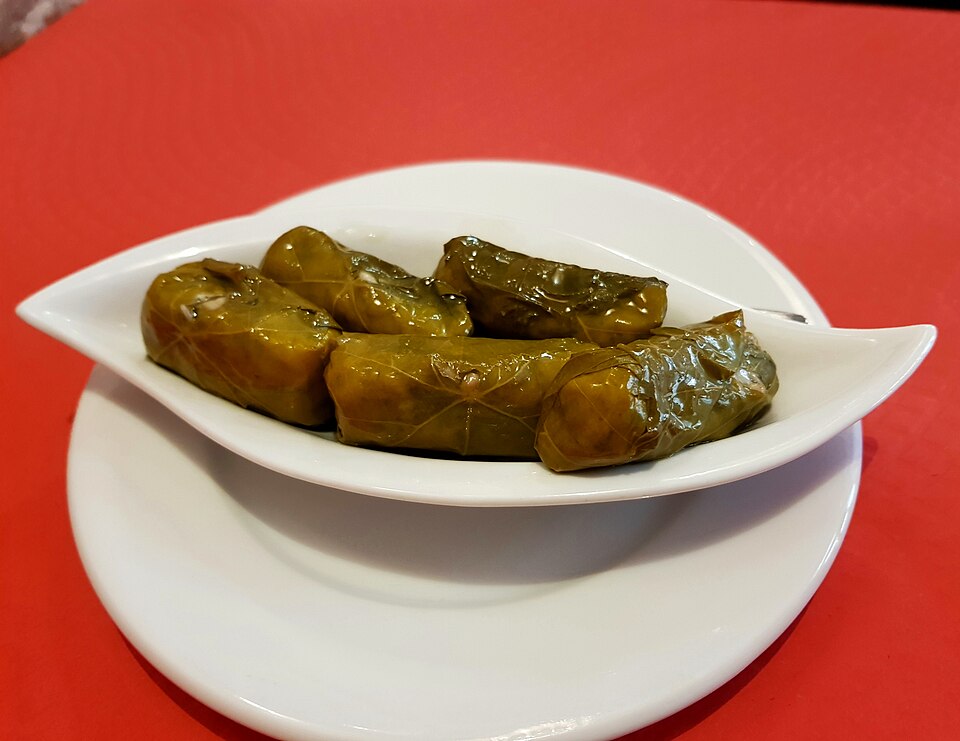
An hour of rolling and no way round it, which is why Greek families do it together at a table, talking. These are the rice and herb ones, served cold, called yialantzi. The word means liar, because they pass themselves off as the meat version. They belong on a meze table and keep for days.
Yiayia’s tip: Under-fill rather than over-fill. A teaspoon per leaf. The rice triples in volume and an over-filled dolma splits along the seam every time.
Make Dolmades17. Cypriot Salted Yogurt Drink
Ayrani · Αϊράνι · ah-ee-RAH-nee
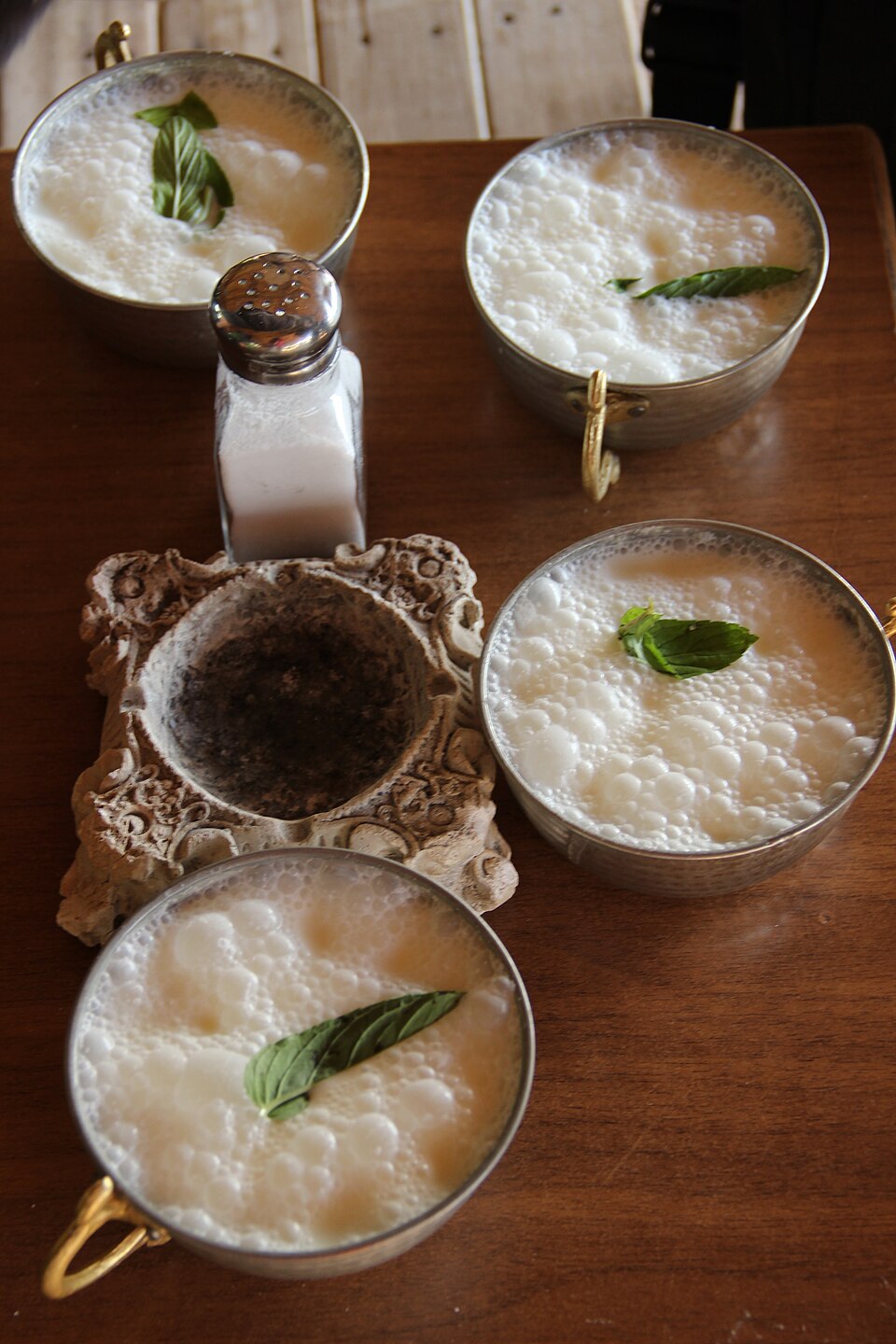
Yogurt, cold water and salt, whisked hard and poured over ice. Cyprus drinks it in hot weather and beside grilled meat. Leaving out the salt is the usual mistake: without it, diluted yogurt is bland and a little chalky. Cypriots make it on the thick side, with a pinch of dried mint.
Yiayia’s tip: Loosen the yogurt first. Whisking the yogurt with a splash of water before adding the rest is the only way to get it smooth. All the water at once leaves lumps you cannot whisk out afterwards.
Make Cypriot Salted Yogurt Drink
Browse other regions
Get one proper Greek recipe a week
No round-ups, no filler, no fifteen-ingredient shortcuts. One dish, written out in full, with the reasoning included.
One email a week. Unsubscribe from any of them.