
Collection
12 Most Popular Greek Recipes
The dishes people arrive here looking for, in the order they ask for them.
The dishes people arrive here looking for, in the order they ask for them. There are no surprises on it, and that is the point.
Between them they make a full Greek table. Tzatziki and a Greek salad to start. Spanakopita. Moussaka or pastitsio from the oven, or souvlaki from the grill and gyros, with lemon potatoes. Avgolemono soup when it is cold. Baklava or galaktoboureko to finish.
They are popular because they are good, and several are harder than they look. Each recipe says where it usually goes wrong.
Every recipe on Kalliopi's Kitchen carries the dish's Greek name and a pronunciation, its region where that is meaningful, ingredient quantities in both metric and imperial, and an honest note on what commonly goes wrong. Nutrition figures are calculated estimates and are labelled as such.
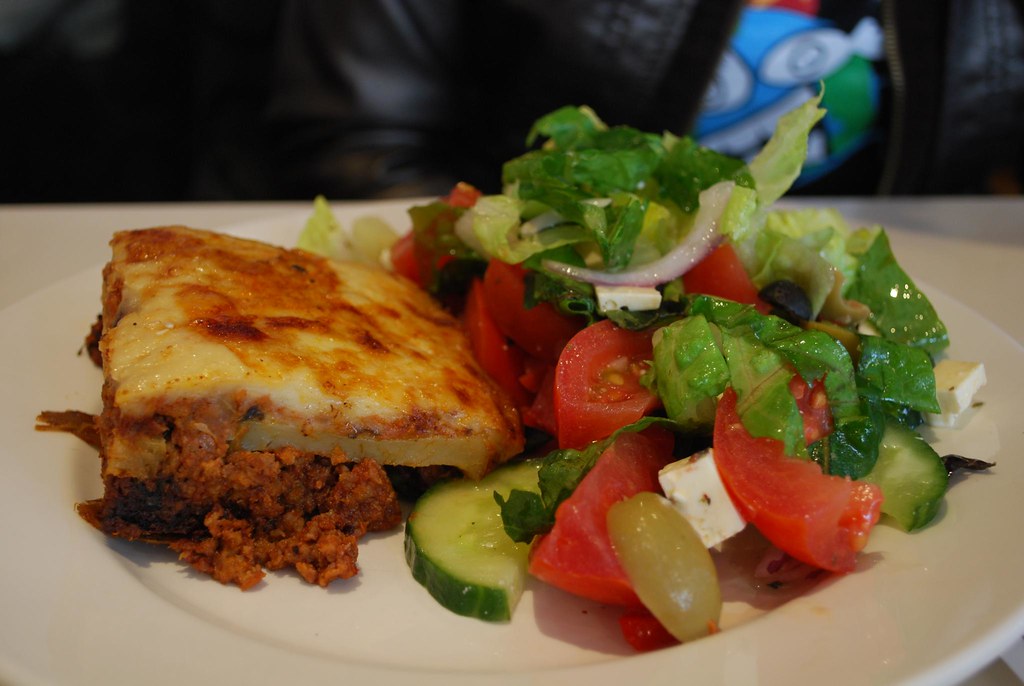
1. Moussaka
Mousakas · Μουσακάς · moo-sah-KAHS
When people say Greek food, this is usually what they mean, and it is also the dish that gets ruined most. Water does it, not bad ingredients. Cook the meat sauce drier than looks right and keep the bechamel thick. It is no weeknight dinner, but nearly all of it can be made ahead.
Yiayia’s tip: Salt the aubergines even if the packet says you do not need to. Modern aubergines are far less bitter than they used to be, so salting is often called unnecessary. That misses the point. Salting collapses the cell structure and drives out water, which means the slices absorb less oil and hold their shape in the bake.
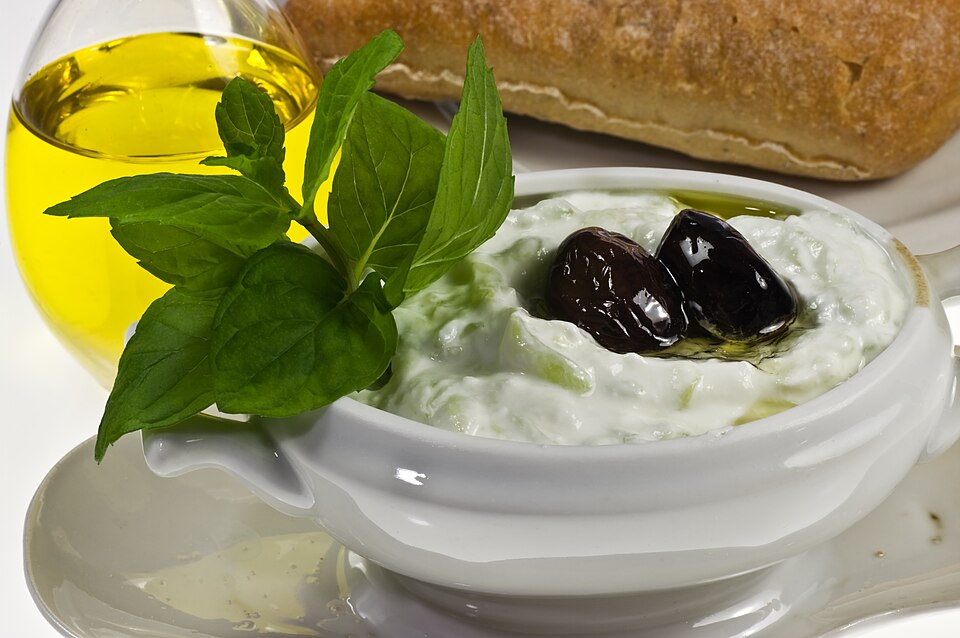
Make Moussaka2. Tzatziki
Τζατζίκι · tsah-TSEE-kee
The gap between the real thing and the loose grey tubs in the shops has nothing to do with garlic. The cucumber is salted and squeezed dry, and the yogurt is strained, thick and tart. Low-fat yogurt turns chalky. The garlic should be loud, and the dip is better made a day ahead.
Yiayia’s tip: Do not use a food processor. It shreds the cucumber too finely and whips air into the yogurt, giving a slack, foamy texture. A box grater and a bowl are the right tools.
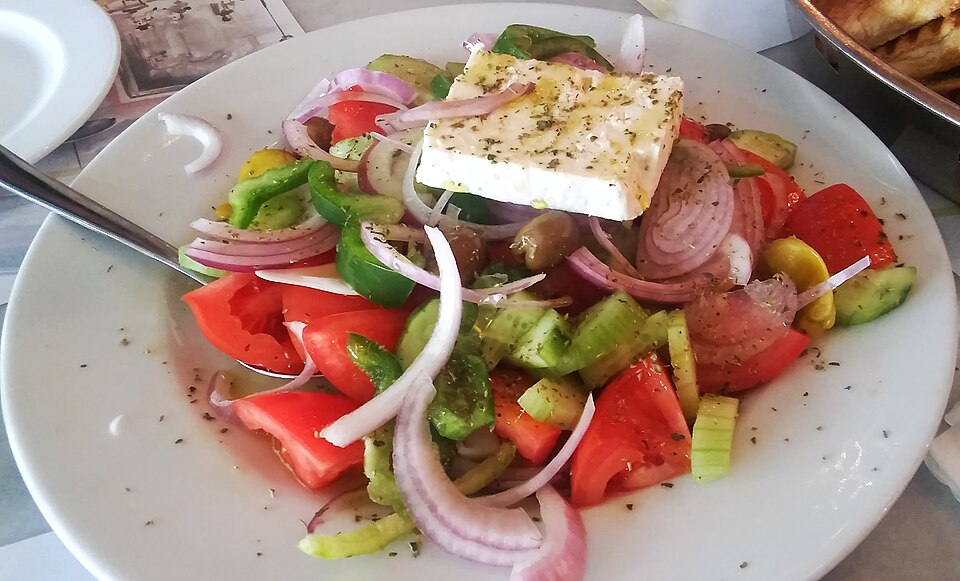
Make Tzatziki3. Greek Salad
Horiatiki salata · Χωριάτικη σαλάτα · hor-YAH-tee-kee sah-LAH-tah
Horiatiki means village salad: what was growing outside, chopped and oiled. There is no lettuce in it. The feta goes on top as one thick slab, never crumbled, and you break bits off as you eat. The dressing is olive oil, a splash of red wine vinegar, salt and oregano, straight into the bowl.
Yiayia’s tip: Room temperature, not fridge cold. Cold blunts tomato flavour badly. Take the tomatoes and feta out of the fridge half an hour before you build the salad.
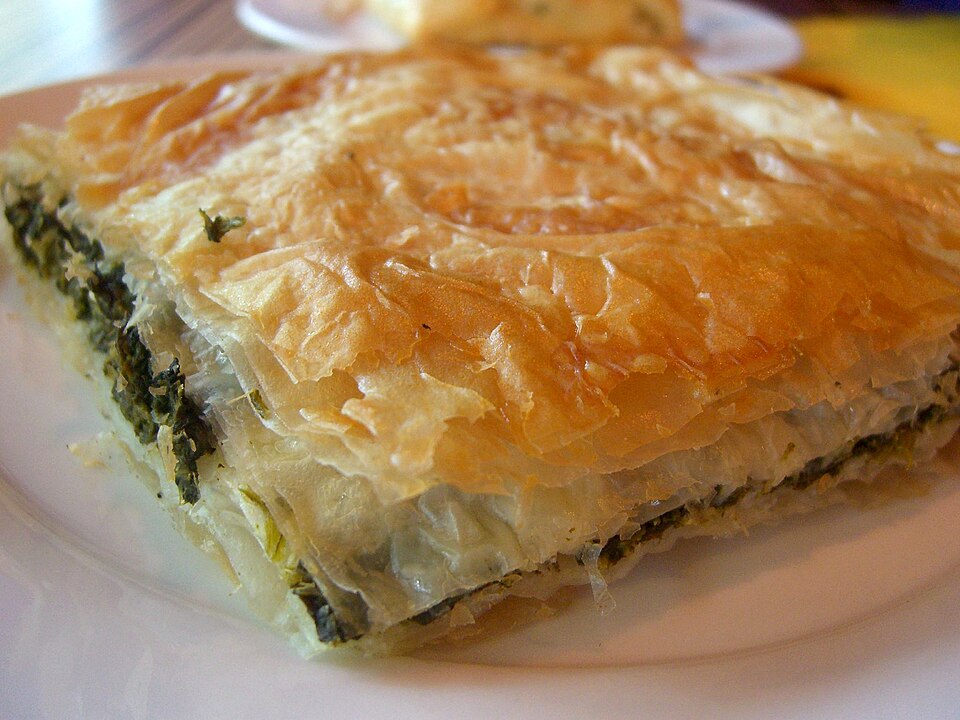
Make Greek Salad4. Spanakopita
Σπανακόπιτα · spah-nah-KOH-pee-tah
Pies are the centre of Greek home baking, and this is the one that left the country. Greens and cheese in quantity, almost nothing else, inside pastry thin enough to read through. Every sheet has to be brushed with fat. Dry phyllo fuses into one papery slab, and the separate leaves are the point.
Yiayia’s tip: Squeeze harder than you think necessary. If any liquid at all comes out when you press the filling in the bowl, go back and squeeze again. This one step decides the pie.
Make Spanakopita5. Pork Souvlaki
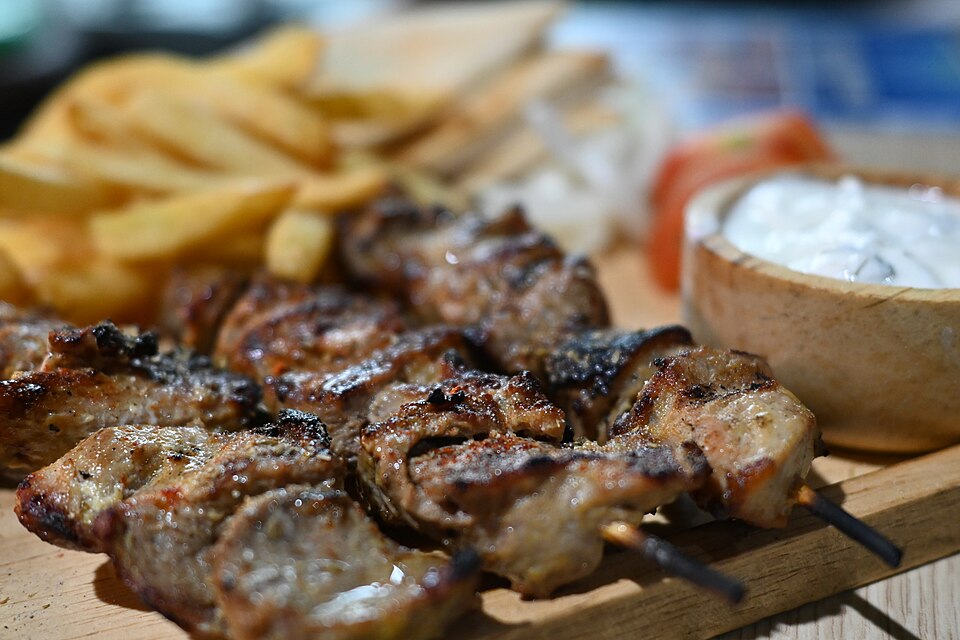
Souvlaki · Σουβλάκι · soo-VLAH-kee
Little skewer is what the word means, and to a Greek it is the meat, not the wrap. Order one in Athens and two bare skewers may arrive with bread, lemon and raw onion. The meat is nearly always pork, and shoulder has the fat to survive a hard fire. Beef barely comes into it.
Yiayia’s tip: Leave gaps between the cubes. Meat packed tightly against itself on a skewer cannot brown on the touching faces. Small gaps let the fire get in and give you crust on all sides.
Make Pork Souvlaki6. Pastitsio
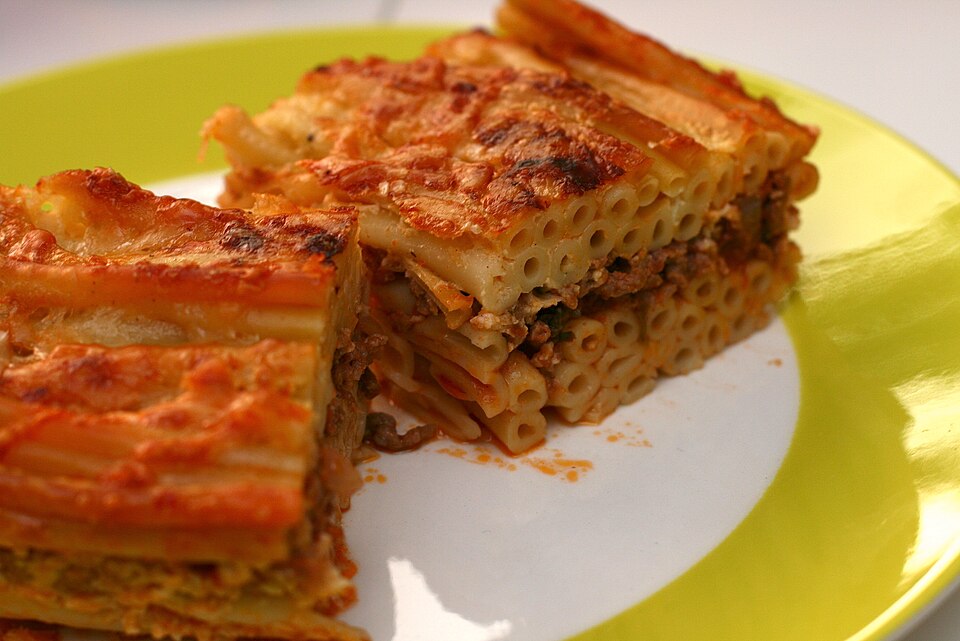
Παστίτσιο · pah-STEE-tsee-oh
The baked pasta Greek families make more often than moussaka, because it costs less, forgives more and nobody at the table refuses it. Two things make it Greek and not Italian: cinnamon in the meat sauce, and a bechamel layer as deep as the pasta underneath it.
Yiayia’s tip: Lay the pasta the same way. If you are using long tubes, lay them all running in one direction. Cutting across the grain afterwards gives clean square portions rather than ragged ones.
Make Pastitsio7. Avgolemono Soup
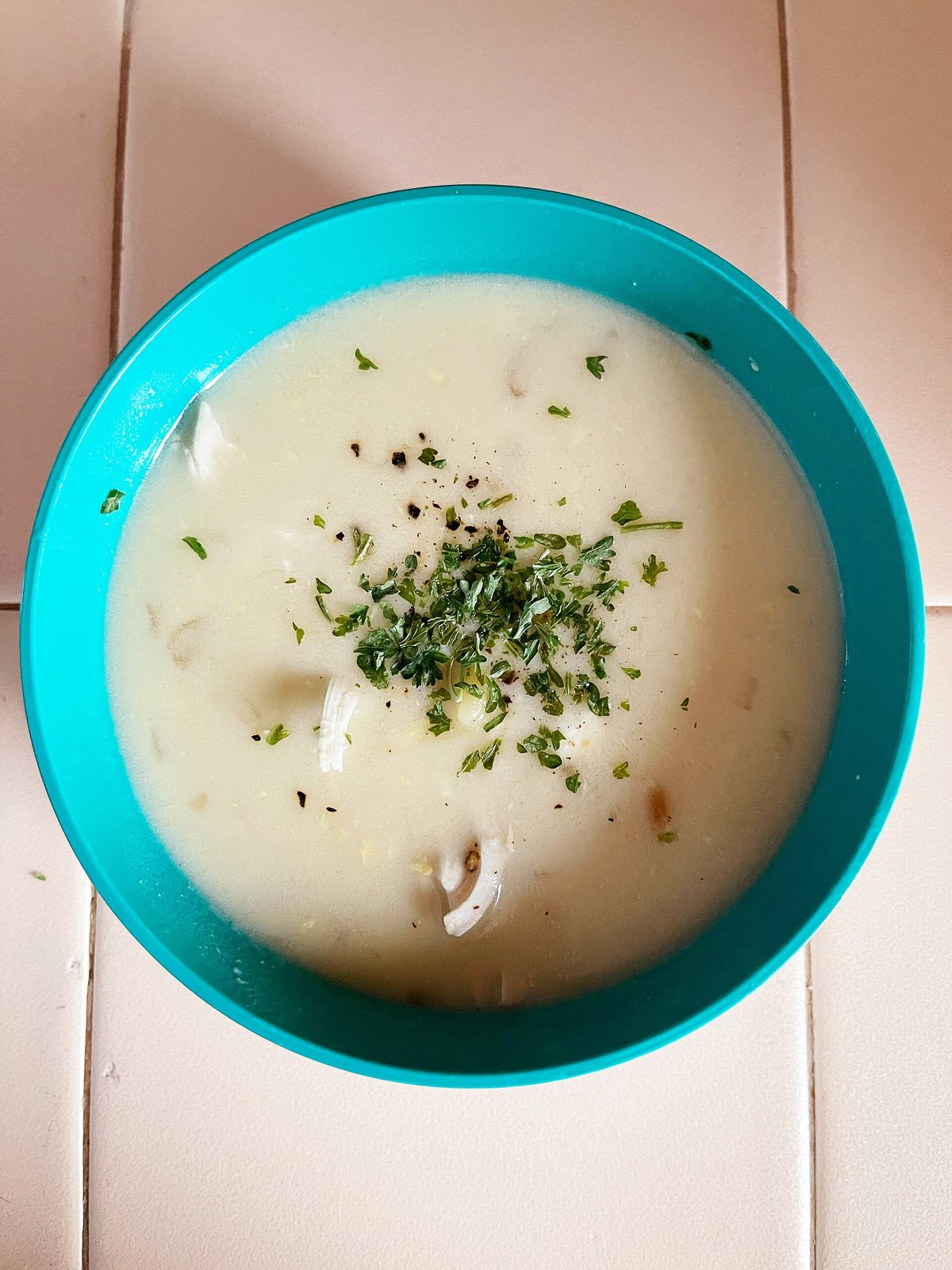
Kotosoupa avgolemono · Κοτόσουπα αυγολέμονο · ahv-gho-LEH-mo-no
Avgo is egg and lemoni is lemon. Whisked together and loosened with hot broth, they thicken a soup with no flour and no cream. It is what a Greek kitchen makes when somebody has flu. The broth goes into the eggs one ladle at a time, away from the heat, or they scramble.
Yiayia’s tip: Room temperature eggs. Cold eggs hitting hot broth is a bigger temperature shock and a bigger curdling risk. Take them out of the fridge half an hour ahead.
Make Avgolemono Soup8. Baklava
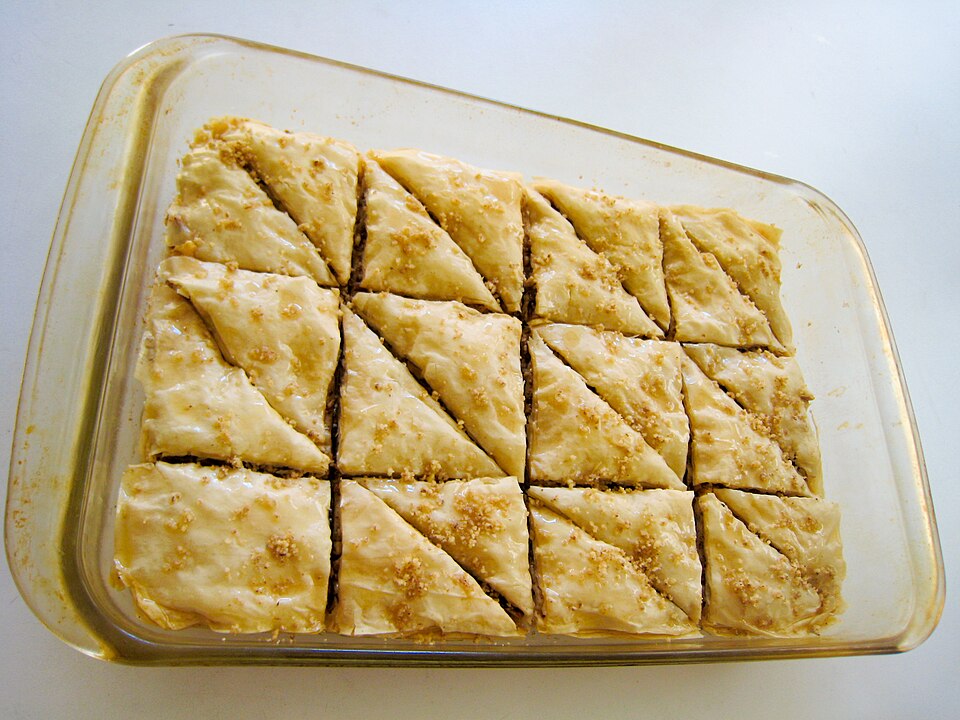
Baklavas · Μπακλαβάς · bahk-lah-VAHS
The one everybody thinks they know. The Greek version is walnuts, not pistachios, with a heavy hand of cinnamon and clove and a syrup built on honey. Nothing in it is difficult. The layering takes as long as it takes, and the syrup decides whether you end up with crisp or soggy.
Yiayia’s tip: Do not stir the syrup once it boils. Stirring a boiling sugar syrup encourages crystallisation. Dissolve the sugar as it heats, then leave it alone.
Make Baklava9. Lemon Potatoes
Patates lemonates · Πατάτες λεμονάτες · pah-TAH-tes leh-mo-NAH-tes
Not roast potatoes with lemon squeezed over. They braise first and roast second, in one tin, with nothing done in between. The liquid looks like far too much. It steams them soft, then boils away and leaves them to colour in oil and concentrated lemon. Cut it back and the middles stay hard.
Yiayia’s tip: Do not crowd the tin. Two tins are better than one overloaded one. Potatoes piled on top of each other steam and never colour, however long you give them.
Make Lemon Potatoes10. Galaktoboureko
Γαλακτομπούρεκο · gha-lahk-toh-BOO-reh-koh
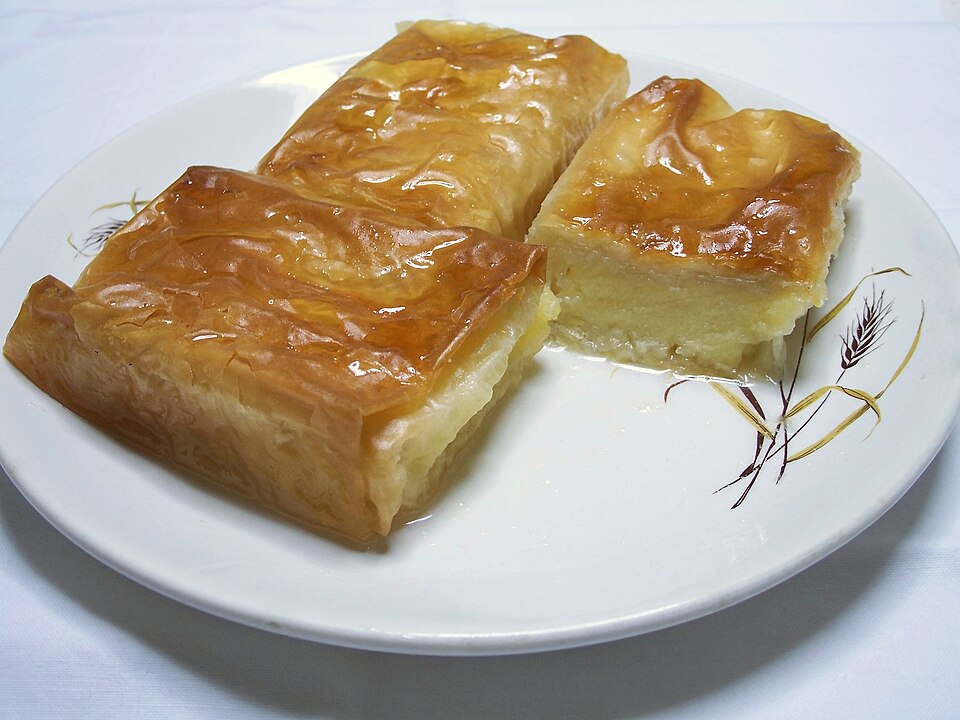
Baklava is more famous. This is the one that people raised on both ask for: a thick custard scented with lemon, shut inside phyllo, with cold syrup poured over the hot pie. Semolina sets the custard firm enough to cut clean. The phyllo is simpler than baklava, only two blocks of layers.
Yiayia’s tip: Rain the semolina, do not dump it. Adding it all at once guarantees lumps. A thin steady stream with constant whisking gives a smooth custard first time.
Make Galaktoboureko11. Pork Gyros
Gyros · Γύρος · YEE-ros
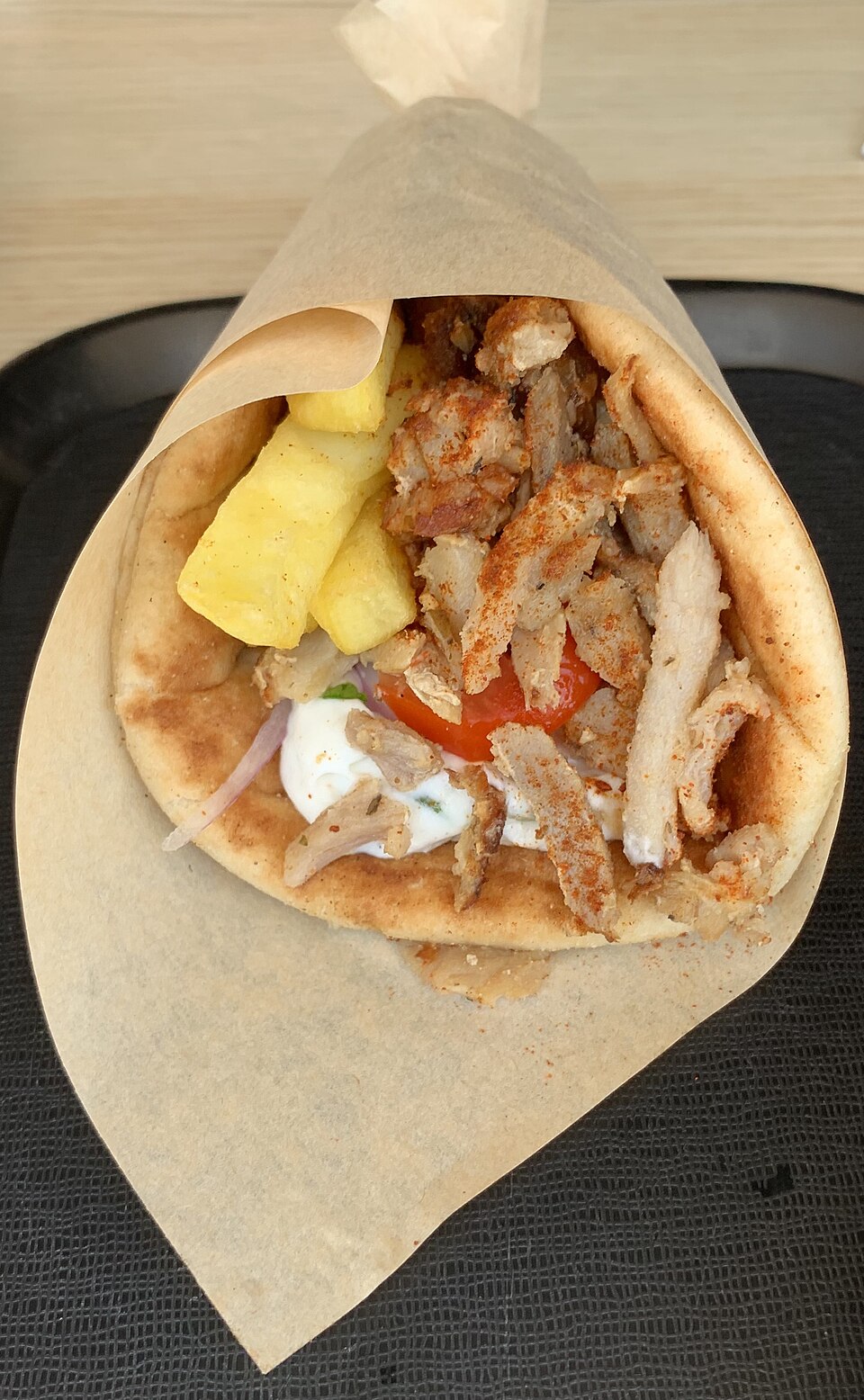
Nobody has a vertical rotisserie at home and nobody needs one. Marinated pork slices are pressed onto an upright skewer in a tin and roasted as one piece, so the fat runs down and bastes what is below. Then the meat is sliced thin and crisped in a hot pan. Most home versions skip that.
Yiayia’s tip: Freeze briefly before slicing. Forty minutes in the freezer firms the joint enough to slice thin and evenly. Trying to slice soft pork shoulder thinly is genuinely difficult.
Make Pork Gyros12. Keftedes
Κεφτέδες · kef-TEH-des
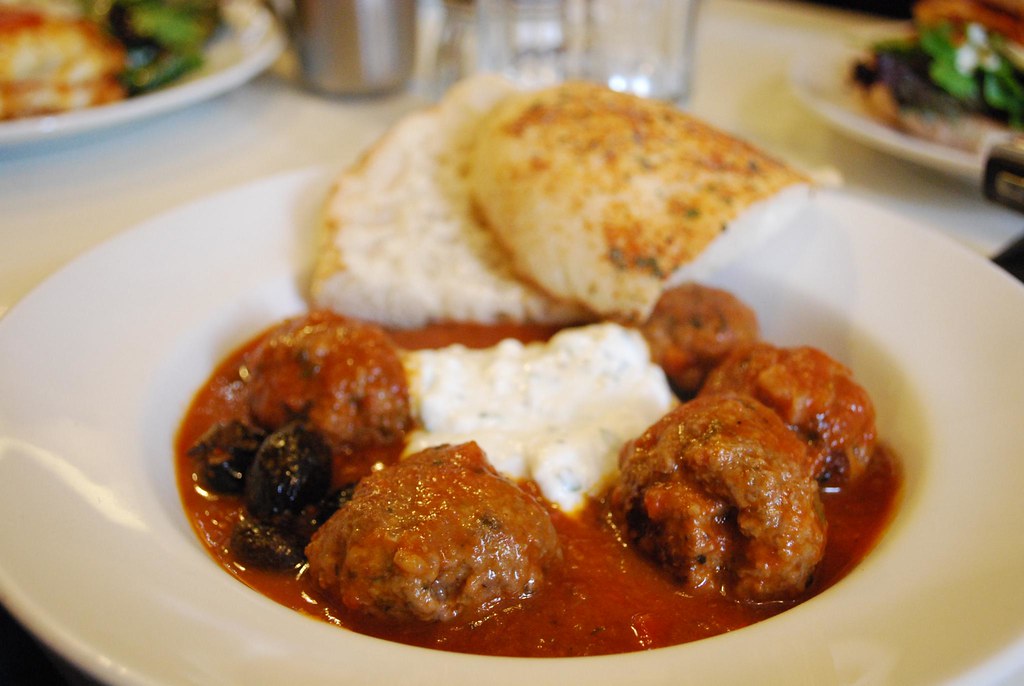
Lighter than most meatballs, and the bread does it: stale bread, wetted and wrung out, holds water inside where breadcrumbs would tighten the mix. They taste of mint and oregano, not garlic and parsley, which separates them from Italian polpette. More often a meze than a main, and good cold the next day.
Yiayia’s tip: Wet your hands to shape. Damp palms stop the mixture sticking and give a smoother surface that browns more evenly.
Make Keftedes
Browse other collections
Get one proper Greek recipe a week
No round-ups, no filler, no fifteen-ingredient shortcuts. One dish, written out in full, with the reasoning included.
One email a week. Unsubscribe from any of them.