
Method
24 One-Pan Greek Recipes
Dishes where the meat, the vegetables and the starch all go into the same tin and come out together. Sunday lunch with almost no washing up.
Dishes where the meat, the vegetables and the starch all go into the same tin and come out together. Sunday lunch with almost no washing up.
The oven versions are lamb or chicken, mostly with potatoes: lemon roast chicken, kleftiko, lamb baked slowly with potatoes in Argolida and on Kalymnos, lamb baked in wine and dill on Sifnos. Gemista and briam are the vegetable ones.
On the hob it is rice, bulgur or small pasta cooked in the same pan as everything else: chicken with leeks and rice from Epirus, lentils and rice, bulgur pilaf, the small pasta of the Dodecanese simmered in tomato. Mussels in tomato and feta sauce are simmered only briefly.
Every recipe on Kalliopi's Kitchen carries the dish's Greek name and a pronunciation, its region where that is meaningful, ingredient quantities in both metric and imperial, and an honest note on what commonly goes wrong. Nutrition figures are calculated estimates and are labelled as such.
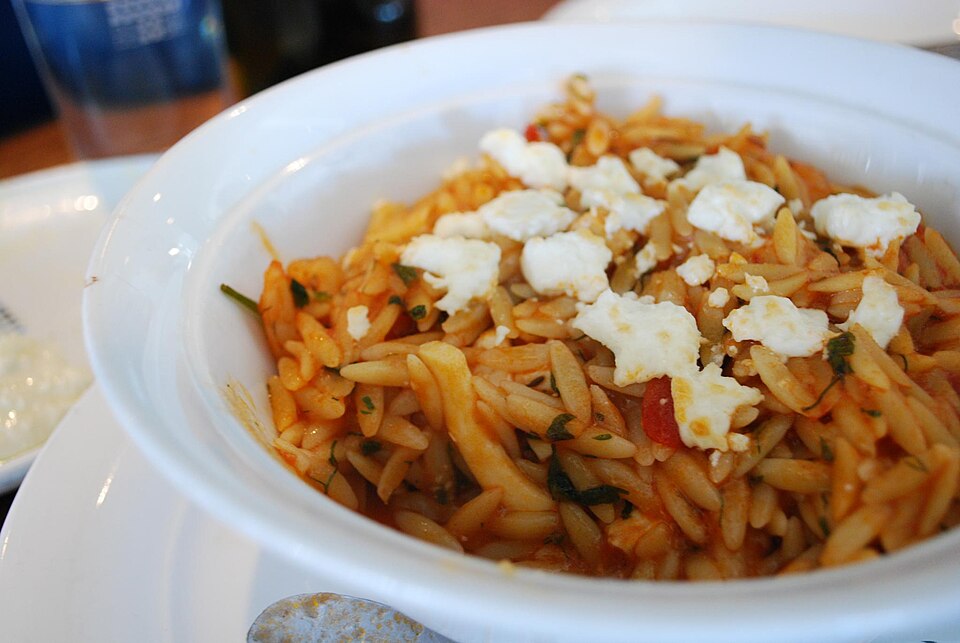
1. Dodecanese Orzo-Style Pasta with Tomato
Sitaraki · Σιταράκι · see-tah-RAH-kee
A small pasta of the Dodecanese, the size and shape of orzo, named from sitari, wheat. It cooks in the tomato and onion sauce itself, not in separate water, and its starch thickens everything into a one-pot meal in half an hour. Orzo or kritharaki behave almost identically if sitaraki cannot be found.
Yiayia’s tip: Cook the onions properly first. A genuine ten to twelve minutes over low heat builds real sweetness that carries the whole dish alongside the tomato.
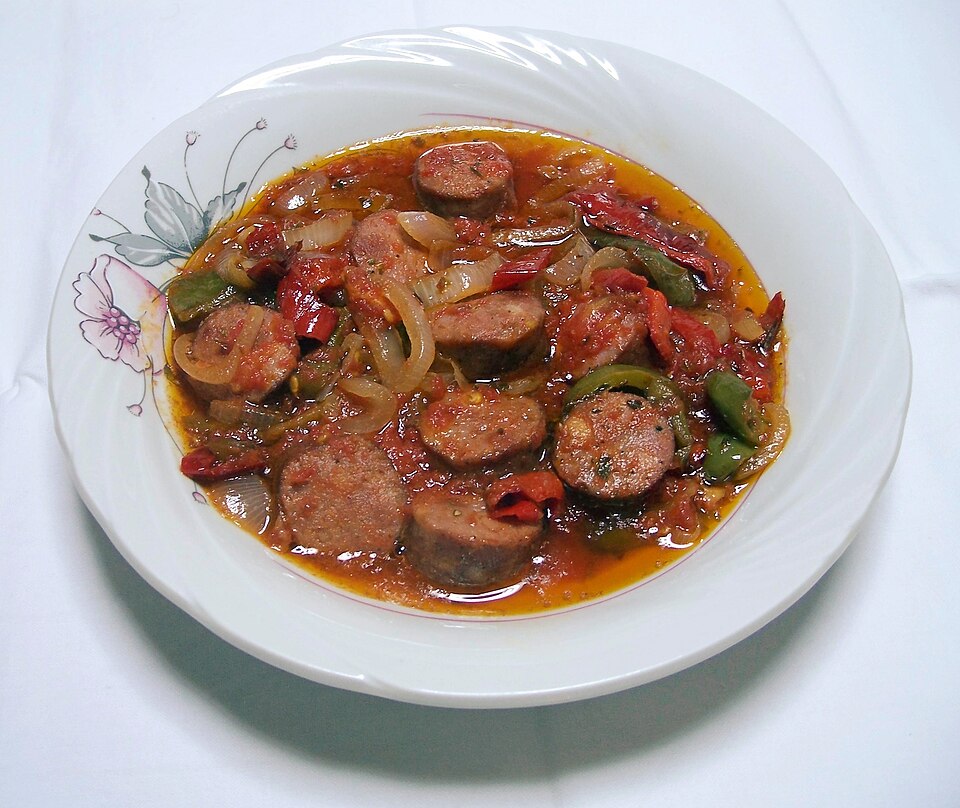
Make Dodecanese Orzo-Style Pasta with Tomato2. Sausage and Pepper Stew
Spetzofai · Σπετζοφάι · speh-tzoh-FAH-ee
This comes from Pilio, a mountain and forest peninsula in Thessaly with an old reputation for sausage. Sliced sausage, plenty of red and green peppers, onion and tomato cook down in one pan until thick and sticky. There is no long braise and no careful technique. Taste before salting: the sausage is already seasoned.
Yiayia’s tip: Use a proper coarse Greek country sausage. Its specific spicing, often orange zest and fennel or coriander, is what genuinely defines this dish. A bland substitute gives a flatter result.
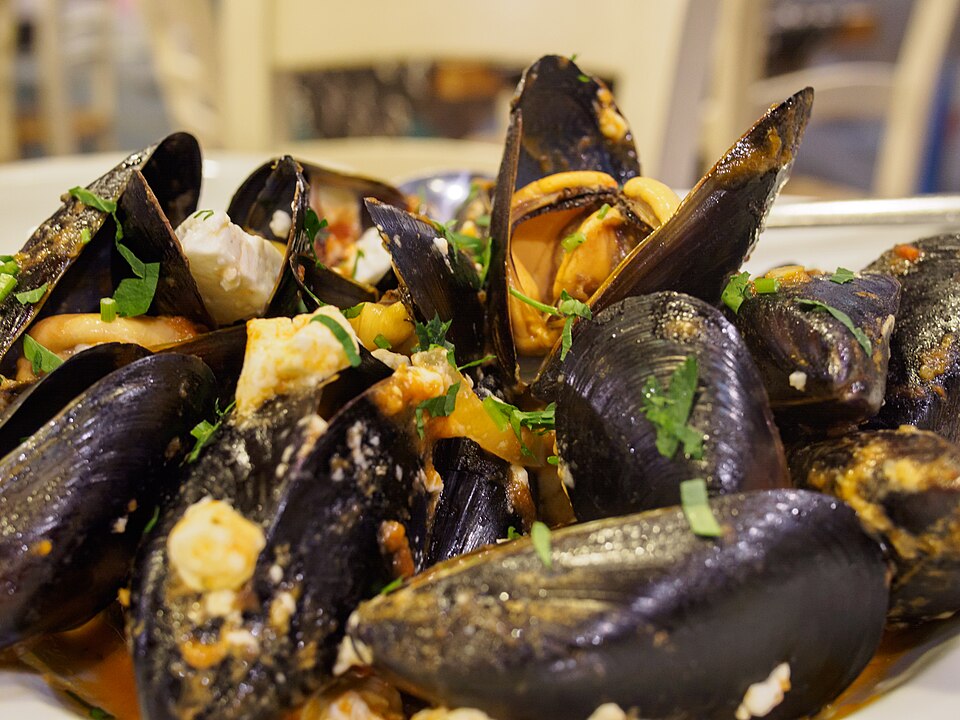
Make Sausage and Pepper Stew3. Mussels in Tomato and Feta Sauce
Mydia saganaki · Μύδια σαγανάκι · MEE-thyah sah-gah-NAH-kee
Saganaki here is a way of cooking, not the fried cheese: a fast tomato sauce with garlic, and feta melted in at the end. Prawns are the familiar version on taverna menus, and mussels take the same sauce without any change. They need only minutes in the pan, and longer turns them tough and rubbery.
Yiayia’s tip: Discard any mussels that do not open. A mussel that stays firmly shut after cooking was not alive before cooking and should not be eaten.
Make Mussels in Tomato and Feta Sauce4. Anatolian-Style Bulgur Pilaf
Pilafi me pligouri · Πιλάφι με πλιγούρι · pee-LAH-fee meh plee-GOO-ree
Cracked, parboiled wheat was a staple of Asia Minor and Anatolia, and it reached Greek kitchens with the refugees who resettled after 1922. Cooked as a pilaf in stock with a little tomato, it is ready sooner than rice, with a coarser and nuttier bite. Let it rest before fluffing, or it turns mushy.
Yiayia’s tip: Toast the bulgur before adding liquid. This deepens its flavour, the same principle behind any good pilaf, rice or otherwise.
Make Anatolian-Style Bulgur Pilaf5. Plain Greek Rice Pilaf
Rizi pilafi · Ρύζι πιλάφι · REE-zee pee-LAH-fee
Medium grain rice, butter and stock, with no vegetables and no meat through it. This is the plain base that richer rice dishes are built on, gamopilafo, the wedding rice of Crete, among them. Leave the lid alone while it simmers, and rest it before fluffing or it turns gluey.
Yiayia’s tip: Do not skip the toasting step. It genuinely deepens the flavour and is the single biggest difference between a good pilaf and plain boiled rice.
Make Plain Greek Rice Pilaf6. Epirus Chicken with Leeks and Rice
Bourani me kotopoulo · Μπουράνι με κοτόπουλο · boo-RAH-nee meh koh-TOH-poo-loh
So much Greek home cooking begins with tomato, and this has none. It is a one-pot dish from Epirus, where leeks and wild greens are a tradition: chicken poached among leeks, spring onions and rice, pale and green. Cook the leeks right down before the chicken goes in. Dill and lemon go on last.
Yiayia’s tip: Wash the leeks thoroughly. Grit hides between the layers, and there is nowhere for it to go once everything is simmering together in one pot.
Make Epirus Chicken with Leeks and Rice7. Cypriot Bulgur Wheat Pilaf
Pourgouri pilafi · Πουργούρι πιλάφι · poor-GHOO-ree pee-LAH-fee
The default starch in Cyprus, next to almost anything off the grill. Coarse bulgur cooks with crushed vermicelli browned in the oil first, which gives a nutty depth, and tomato cooked until it darkens. Whole cinnamon bark and cloves give it a warmth mainland pilafs do not have, and are lifted out at the end.
Yiayia’s tip: Use the same cup for everything. Cypriot cooks measure bulgur and liquid with one mug rather than scales, which is why the two-to-one ratio never goes wrong. Do the same and it will not go wrong for you either.
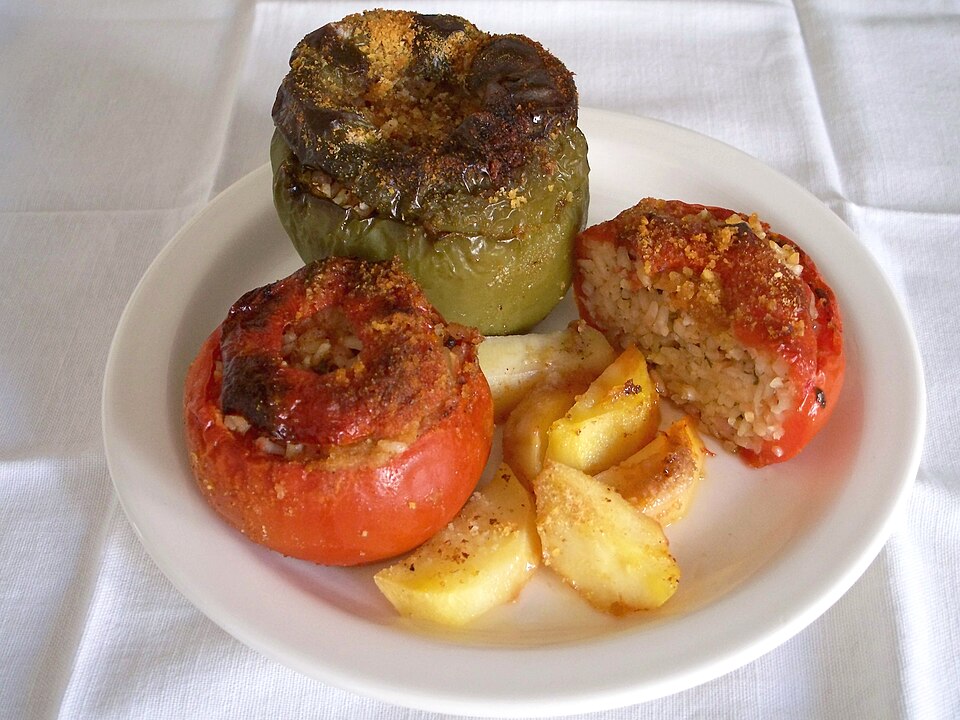
Make Cypriot Bulgur Wheat Pilaf8. Gemista
Γεμιστά · yeh-mee-STAH
Stuffed tomatoes and peppers, and two rules govern them. The rice is raw when it goes in, and nothing is filled past two thirds, because rice cooked first goes to paste and a full tomato bursts. The potatoes wedged in the gaps catch the juices. Many Greeks think them the best thing in the tray.
Yiayia’s tip: Salt and drain the tomato shells. Ten minutes upside down removes excess water that would otherwise make the rice sloppy.
Make Gemista9. Briam
Μπριάμ · bree-AHM
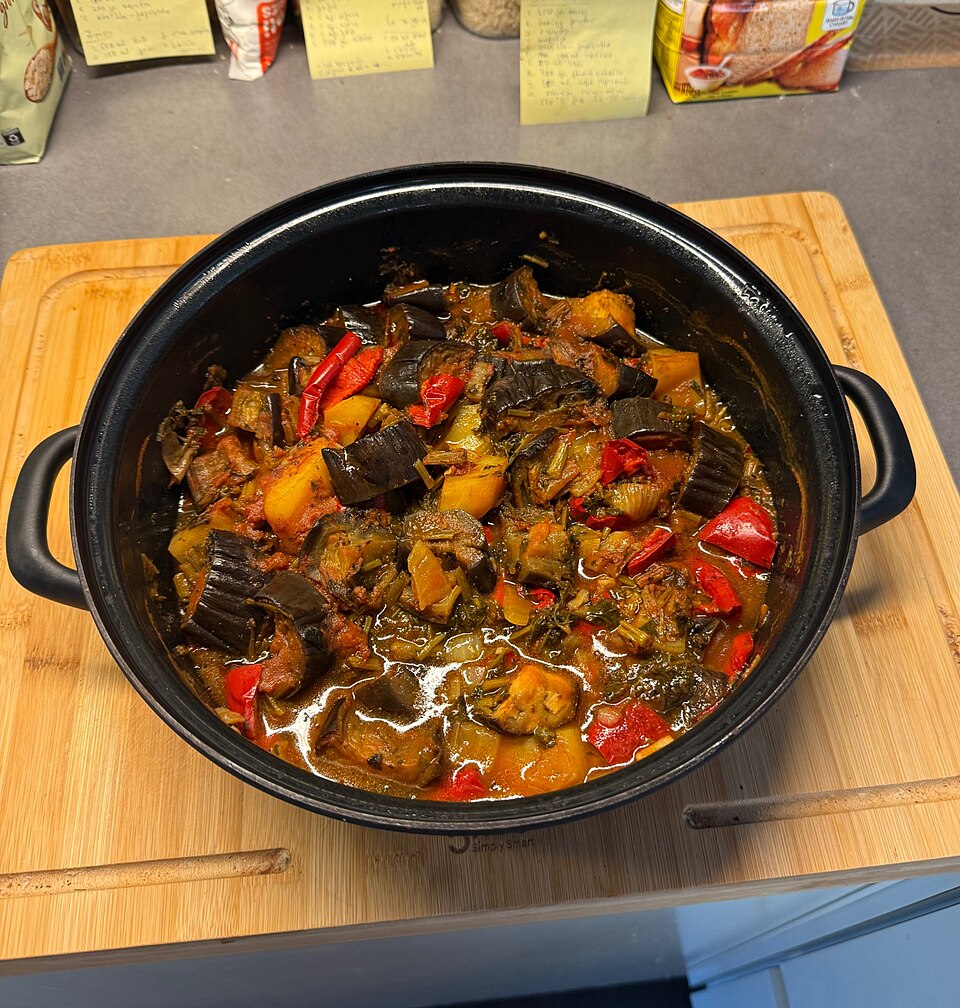
It looks like ratatouille and works the opposite way. Ratatouille keeps each vegetable separate. Here courgette, aubergine, pepper, potato and tomato all go in one tray and cook until they stop being separate things, their water and the olive oil turning to sauce. Forty minutes gives roasted vegetables. Ninety gives briam.
Yiayia’s tip: Use a big tray. A deep pile takes far longer and steams rather than browning. A large shallow layer is what you want, even if it means using two tins.
Make Briam10. Kleftiko
Κλέφτικο · KLEF-tee-koh
Kleftis means thief. The klefts were mountain fighters under Ottoman rule who stole a sheep and had to cook it with no smoke to give them away, so it went into a closed pit over embers. A sealed parcel does the pit's job now. Twenty-five minutes of work, then four hours unopened in the oven.
Yiayia’s tip: Two layers, paper inside foil. Foil alone can react with the lemon and leave a metallic edge on the meat. Baking paper next to the food and foil outside it gives you a reliable seal without that risk.
Make Kleftiko11. Prawns with Feta and Tomato
Garides saganaki · Γαρίδες σαγανάκι · ghah-REE-des sah-ghah-NAH-kee
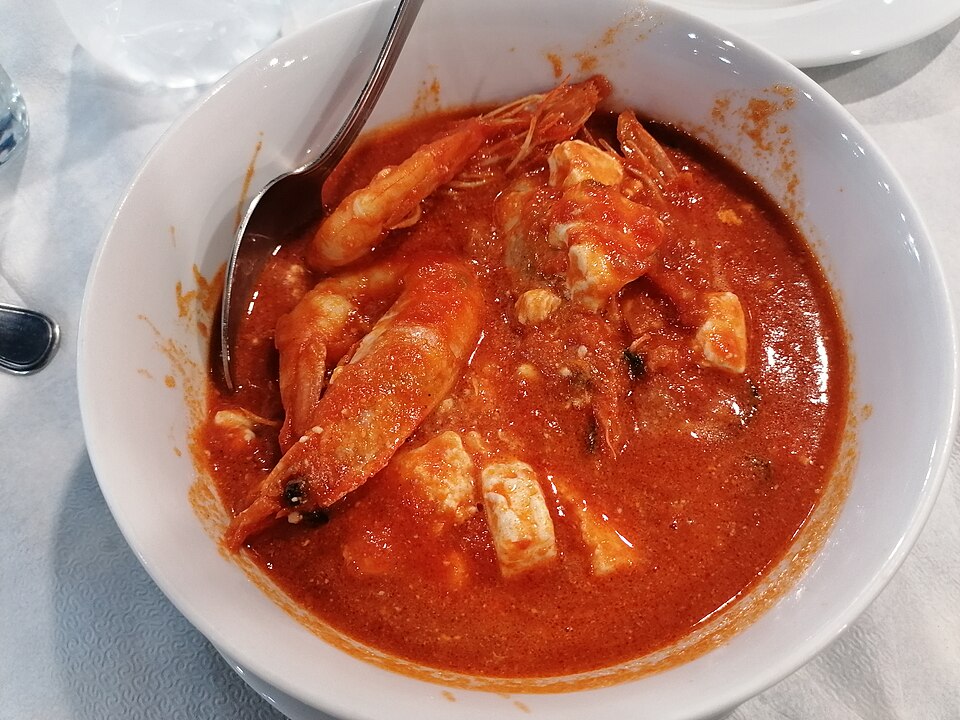
Prawns in sharp tomato sauce with feta on top, finished under the grill or in the oven. Saganaki is the pan, not a cheese. Timing is the only way to spoil it: the sauce needs twenty minutes and the prawns three or four. A splash of ouzo flamed in the pan gives the taverna taste.
Yiayia’s tip: Do not let the feta fully melt. Feta softens and browns rather than melting smoothly. Pull it out while there are still distinct pieces, which is the texture you want against the sauce.
Make Prawns with Feta and Tomato12. Scrambled Eggs with Tomato and Feta
Strapatsada · Στραπατσάδα · strah-pah-TSAH-thah
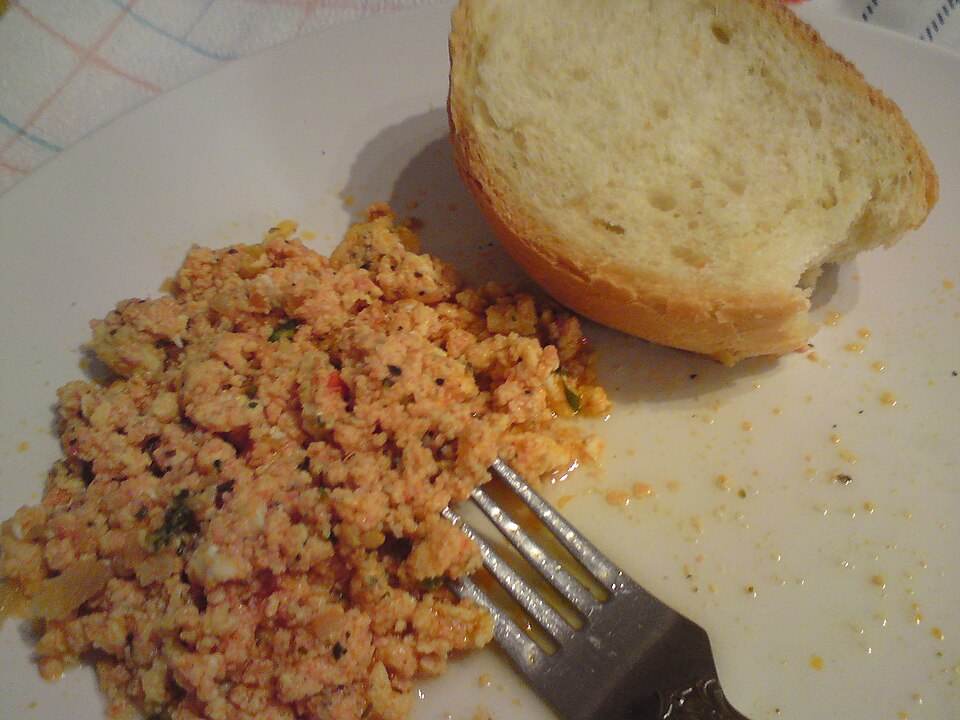
August food, for the weeks when tomatoes peak and the oven stays off. The Peloponnese calls it kagianas, and some households will argue that is another dish. It is not. The tomato has to cook down to a thick, jammy paste before any egg goes in, or the scramble sits in pink liquid.
Yiayia’s tip: Low heat for the eggs. The tomato wants high heat and the eggs want low. Turning the heat down between the two stages is the single most useful thing you can do here.
Make Scrambled Eggs with Tomato and Feta13. Lemon Roast Chicken and Potatoes
Kotopoulo lemonato · Κοτόπουλο λεμονάτο · koh-TOH-poo-loh leh-moh-NAH-toh
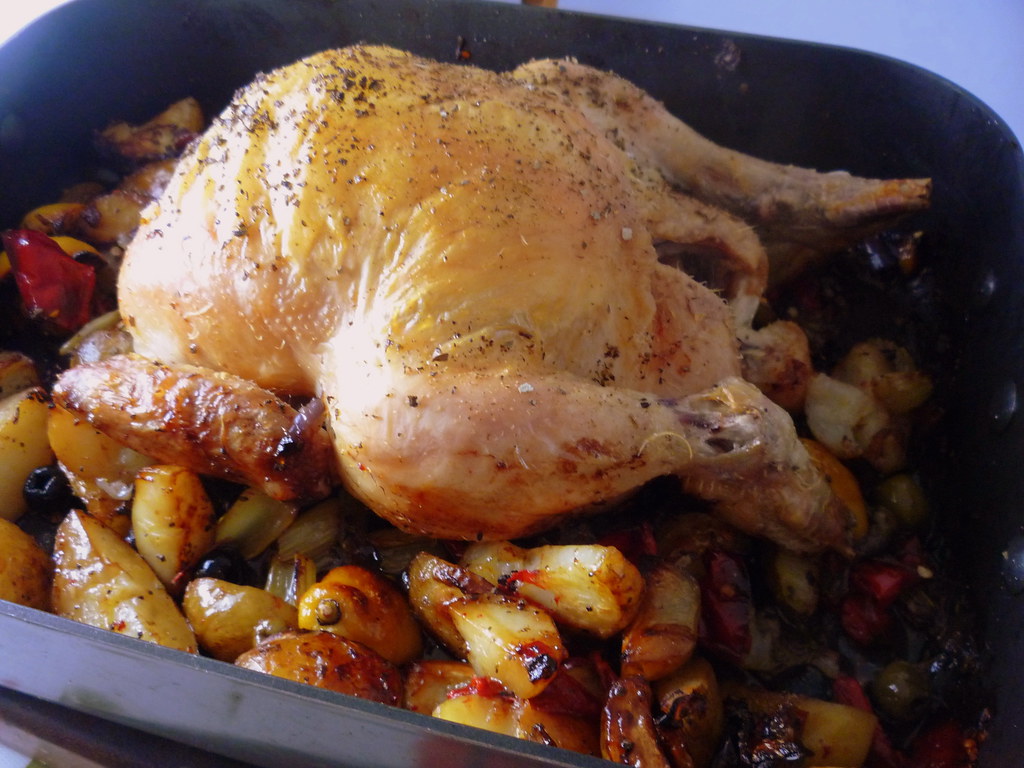
The tray tied most closely to Sunday lunch in Greece. Chicken joints and potato wedges roast together in lemon, oregano, garlic and olive oil, and the potatoes come out tasting of the chicken as much as of the lemon. Use bone-in pieces with the skin on. After the marinating it mostly looks after itself.
Yiayia’s tip: Give the potatoes a head start. Twenty minutes alone in the oven before the chicken joins them is what lets both finish tender and golden at the same time.
Make Lemon Roast Chicken and Potatoes14. Peloponnese Egg Pasta with Chicken
Hylopites · Χυλοπίτες · hee-loh-PEE-tes
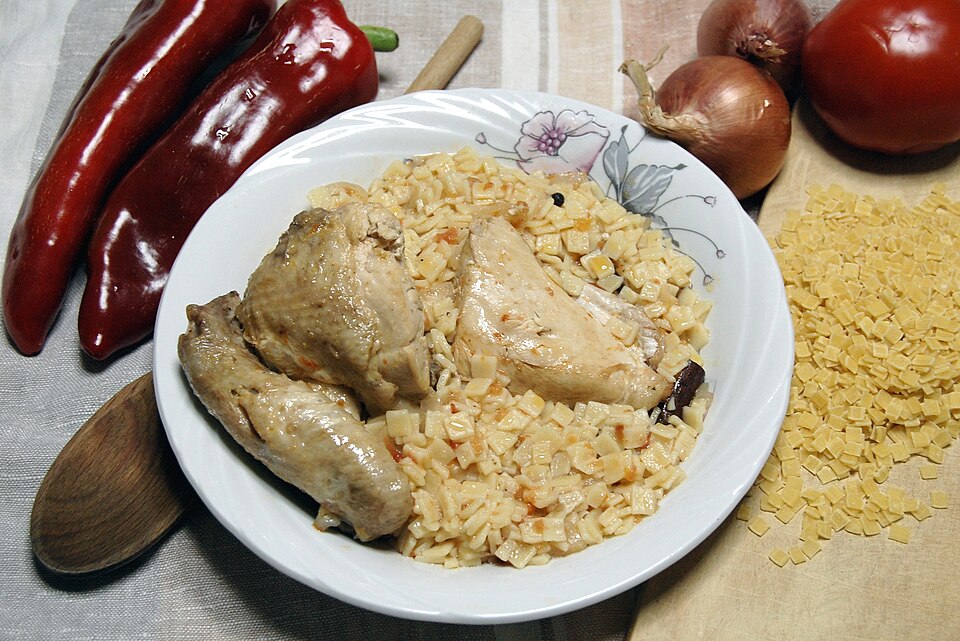
Squares of egg pasta that Peloponnese households once rolled, cut and dried in the sun to keep for months. Most now buy them. They simmer in a broth of chicken and tomato, not in water, and their starch thickens the pot into something like a rustic risotto. Watch the liquid in the last ten minutes.
Yiayia’s tip: Brown the chicken properly first. This single step builds most of the sauce's depth. Do not rush past it to get to the simmering stage.
Make Peloponnese Egg Pasta with Chicken15. Lentils and Rice
Fakorizo · Φακόρυζο · fah-KOH-ree-zoh
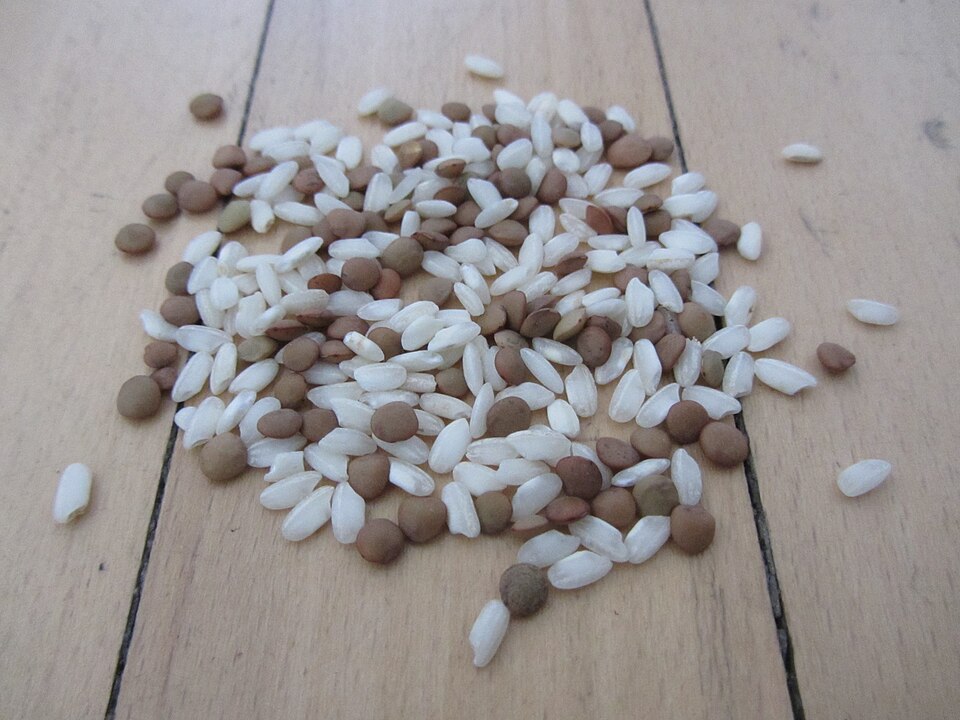
Lentil soup with rice cooked into the same pot, which makes it thick enough to eat like a pilaf. It is cheap store-cupboard food that saw Greek families through the fasts and the lean years. The step people skip is the last one: vinegar and olive oil, heated and poured over just before serving.
Yiayia’s tip: Add the lentils first, then the rice. Lentils need considerably longer to cook. Staggering the two lets them finish tender together.
Make Lentils and Rice16. Baked Chicken with Orzo
Kotopoulo giouvetsi · Κοτόπουλο γιουβέτσι · koh-TOH-poo-loh yoo-VEHT-see
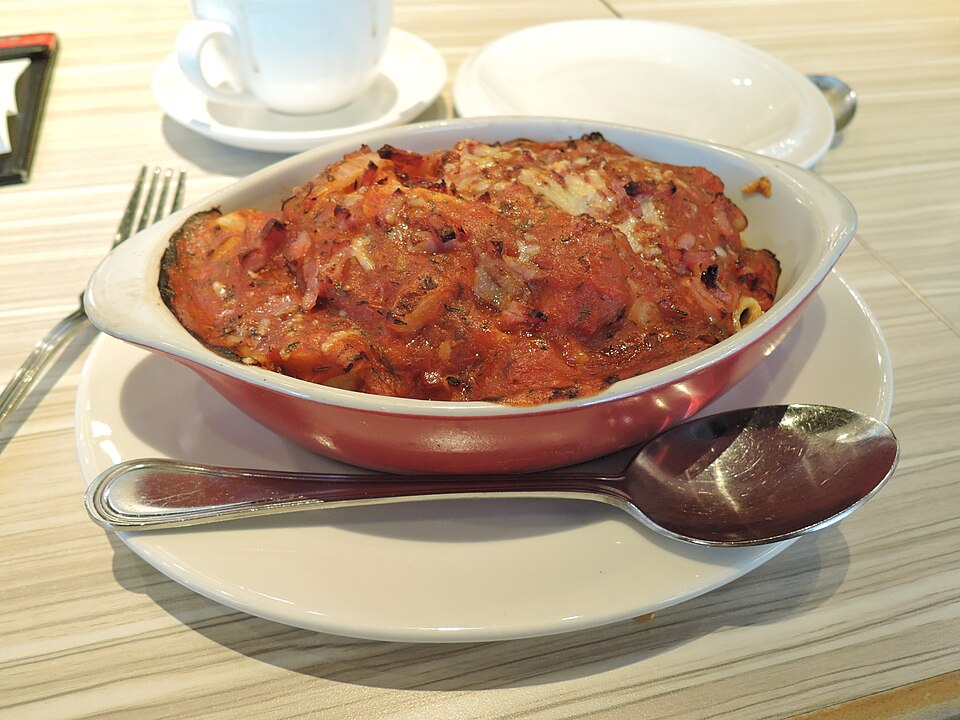
Classic giouvetsi is beef, and beef means hours of braising before the orzo goes in. Chicken brings it down to about an hour and a lighter dish, with the same cinnamon in the tomato sauce and the orzo still baked in it. Keep hot water to hand: the orzo dries it out faster than expected.
Yiayia’s tip: Use bone-in chicken thighs. They stay moist and flavourful over the braise, unlike leaner chicken breast, which can dry out.
Make Baked Chicken with Orzo17. Politiko Spiced Beef Stew
Tas kebap · Τας κεμπάπ · TAS keh-BAP
Nothing is grilled, whatever the name suggests. Tas is the pot, and this is a slow stew from the Greeks of Constantinople. Onion goes in at half the meat's weight or more and melts into the sauce, spiced with cumin and allspice. That sauce is kept thin so it soaks into rice pilaf.
Yiayia’s tip: Bloom the ground spices in fat. One minute in the hot onions before liquid goes in transforms cumin and allspice. Added to a wet pot they stay raw and dusty for the whole two hours.
Make Politiko Spiced Beef Stew18. Lemon Potatoes
Patates lemonates · Πατάτες λεμονάτες · pah-TAH-tes leh-mo-NAH-tes
Not roast potatoes with lemon squeezed over. They braise first and roast second, in one tin, with nothing done in between. The liquid looks like far too much. It steams them soft, then boils away and leaves them to colour in oil and concentrated lemon. Cut it back and the middles stay hard.
Yiayia’s tip: Do not crowd the tin. Two tins are better than one overloaded one. Potatoes piled on top of each other steam and never colour, however long you give them.
Make Lemon Potatoes19. Cypriot Clay-Pot Lamb and Rice
Tavas · Ταβάς · tah-VAHS
Named for the pot, not for anything in it. A tavas is the round, wide clay dish Cypriots bake this in: lamb, a great many onions and rice, with cumin and cinnamon. Half stew, half pilaf. Thick unglazed walls give a gentler heat than metal. A heavy cast iron casserole is the next best thing.
Yiayia’s tip: Do not lift the lid. Every check releases heat and steam that a two-and-a-half-hour covered bake depends on. Trust the time and check only near the end.
Make Cypriot Clay-Pot Lamb and Rice20. Sifnos Lamb Baked in Wine and Dill
Mastelo Sifnou · Μαστέλο Σίφνου · mah-STEH-loh SEEF-noo
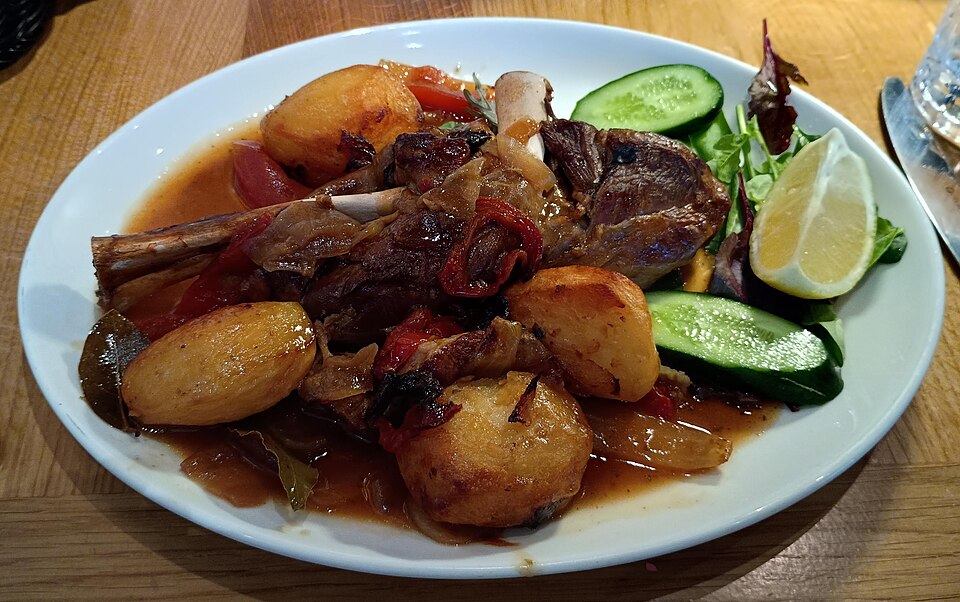
Sifnos is known for clay pottery, and mastelo is the name of both the dish and its shallow pot. Lamb or goat bakes slowly with dill and red wine until the wine is a sauce. It is the island's Easter Sunday meal. A heavy lidded casserole will do, with wine only halfway up the meat.
Yiayia’s tip: Use a properly generous amount of dill. This dish is built around it. A small handful will not give the same depth of flavour as a real bunch.
Make Sifnos Lamb Baked in Wine and Dill21. Baked Fish with Vegetables
Psari plaki · Ψάρι πλακί · PSAH-ree plah-KEE
Plaki means anything baked slowly on a bed of vegetables. Here it is a whole fish laid over onion, garlic, tomato and potato, taking up their juices. This is how Greeks cook a whole fish on a Sunday without a grill. Sea bream or sea bass, something firm, is the choice.
Yiayia’s tip: Give the vegetables a head start. Potato and onion need considerably longer to cook through than the fish. Baking them alone first lets everything finish together.
Make Baked Fish with Vegetables22. Fisherman's Soup
Kakavia · Κακαβιά · kah-kah-vee-AH
Named after the pot it was cooked in, at sea. Fishermen put in the fish that went unsold or were too small for market, with onion, tomato, potato and the oil on board. Several food historians count it an ancestor of bouillabaisse. It takes a lot of olive oil and is never thin.
Yiayia’s tip: Use a genuine mix of seafood. Several different kinds of fish and shellfish give a richer, more complex broth than any single variety used alone.
Make Fisherman's Soup23. Kalymnos Baked Lamb and Potatoes
Fournisto Kalymnou · Φουρνιστό Καλύμνου · foor-nee-STOH kah-LEEM-noo
This was not always baked at home. Kalymnos households carried the tray to the bakery oven the village shared and left it for hours, because not every house had one big or hot enough. Lamb or goat, potatoes, lemon, garlic and oregano: a plain dish. It is still the island's Easter centrepiece.
Yiayia’s tip: Marinate the potatoes along with the meat. This means they carry real flavour of their own, rather than depending only on the meat's juices during the long bake.
Make Kalymnos Baked Lamb and Potatoes24. Argolida Slow-Baked Lamb with Potatoes
Bogana · Μπογάνα · boh-GHA-nah
Argolida's feast-day roast, named for the pot and not the meat. The fat marks it out: sheep or goat butter goes in beside the olive oil and gives a rounder, slightly farmyard richness. Small whole potatoes cook in the lamb juices for three hours, and in many homes they are the prize.
Yiayia’s tip: Seal the pot properly. If your lid is loose, crimp a sheet of foil under it. Steam escaping is the commonest reason a bogana comes out dry rather than falling apart.
Make Argolida Slow-Baked Lamb with Potatoes
Get one proper Greek recipe a week
No round-ups, no filler, no fifteen-ingredient shortcuts. One dish, written out in full, with the reasoning included.
One email a week. Unsubscribe from any of them.