Greek Main Courses · The Mainland · Baked · Lent and Nistisima
Briam Recipe (Greek Roasted Summer Vegetables)
Μπριάμ bree-AHM · Briam
In short
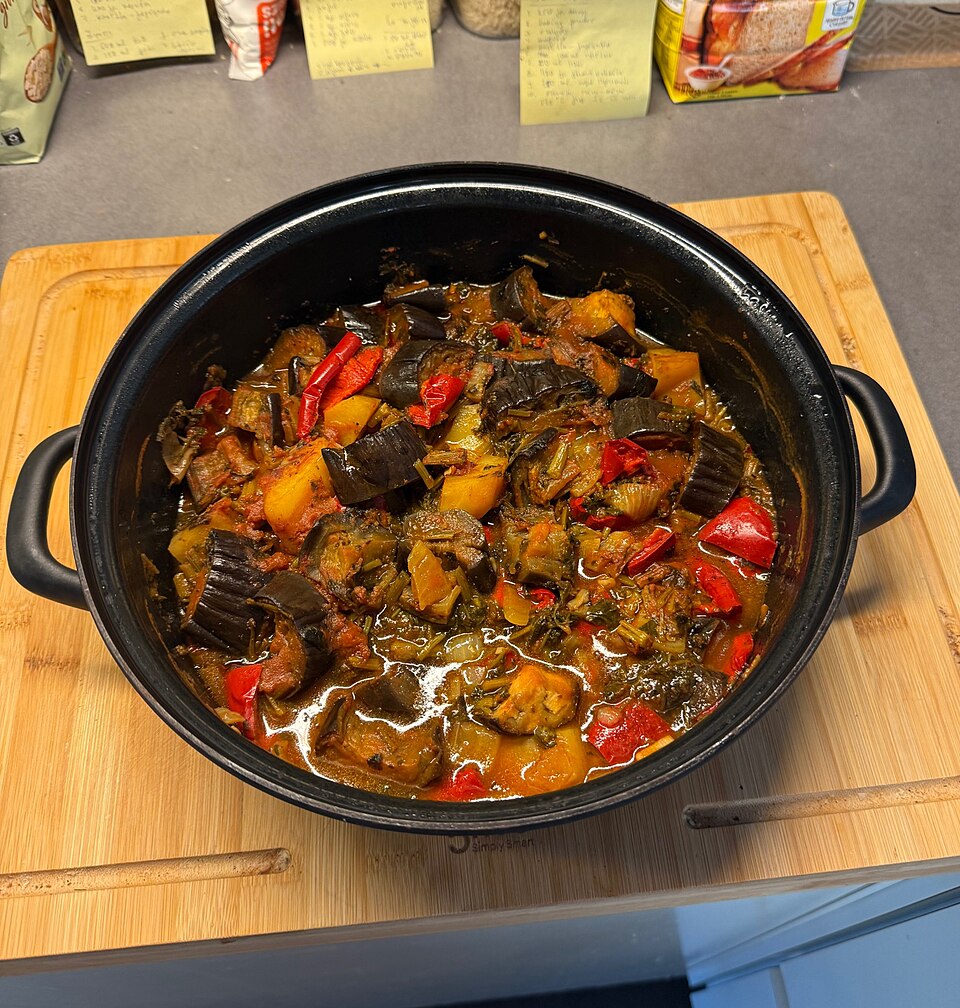
Briam is a Greek dish of sliced summer vegetables, usually courgette, aubergine, potato, pepper and tomato, baked slowly in a generous amount of olive oil until completely soft and caramelised. It is a ladera dish and is naturally vegan.
Briam
- Prep
- 25m
- Cook
- 1h 35m
- Total
- 2h
- Serves
- 6
- Level
- Beginner
Ingredients
Ingredients
Tick ingredients off as you go. Quantities rescale with the buttons above.
Method
- 01Heat the oven to 190C fan 170C. Slice all the vegetables to a consistent 5 to 7 mm, cutting the potato slightly thinner as it takes longest.
- 02Halve two of the tomatoes and grate them on a box grater into a bowl, discarding the skins. Stir in the tomato puree, sugar and hot water.
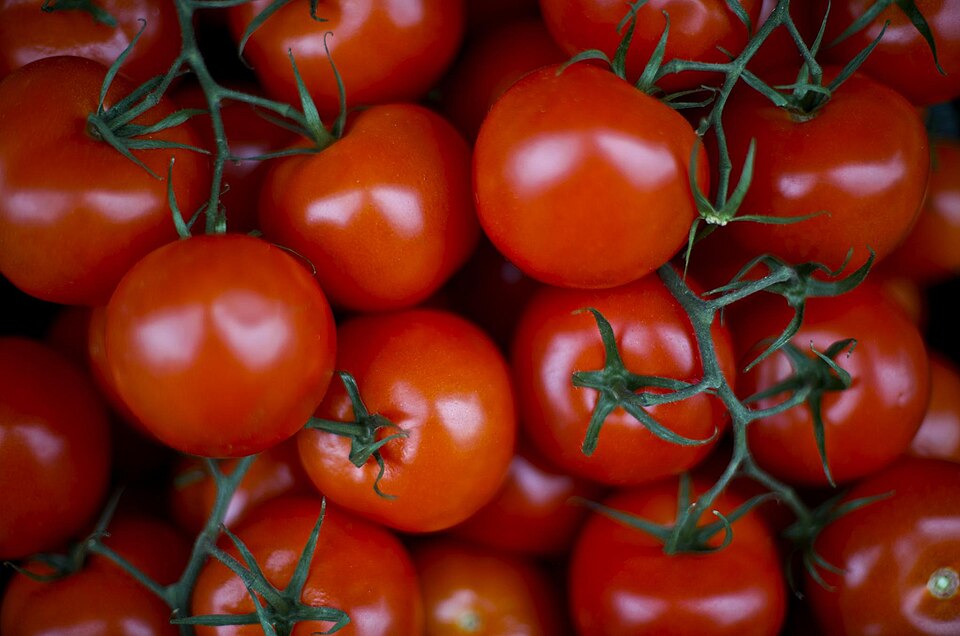
Tomato - 03Put all the sliced vegetables and the garlic into a very large roasting tin. Pour over the olive oil and the grated tomato mixture.
- 04Add the oregano, half the parsley, and a generous amount of salt and pepper. Turn everything with your hands until evenly coated, then spread out level.
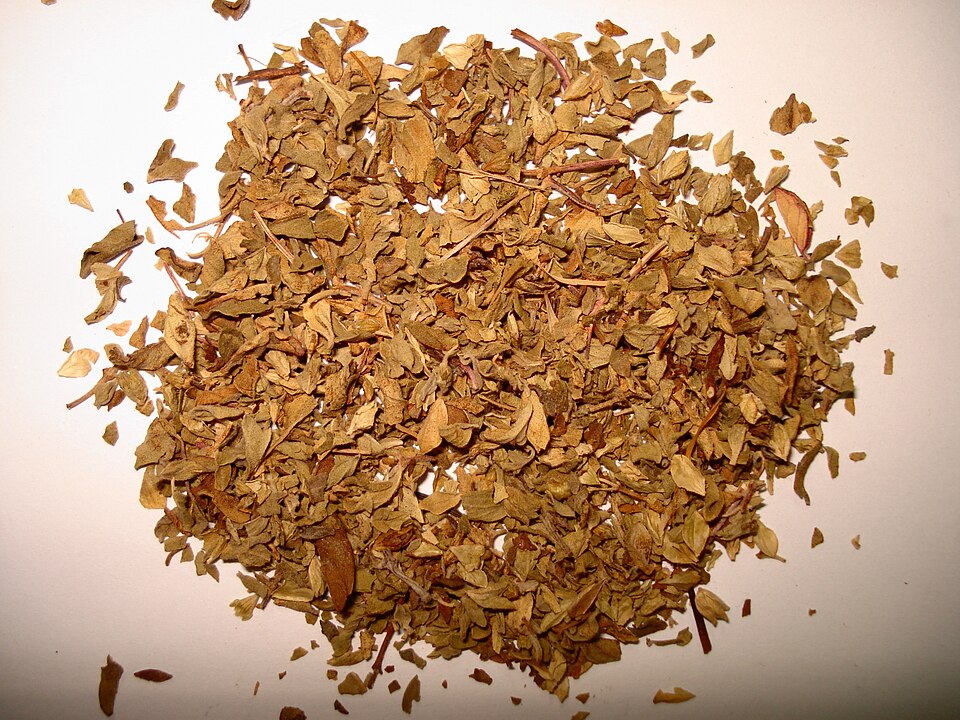
Oregano - 05Lay the sliced tomatoes over the surface and season them.
- 06Cover tightly with foil and bake for 60 minutes.
- 07Remove the foil, turn the vegetables gently, and bake uncovered for a further 30 to 35 minutes until everything is completely soft, the liquid has reduced and the top is browned and caught in places.Do not rush it.Yiayia
- 08Rest for 15 minutes. Scatter with the remaining parsley and serve warm with feta and bread.
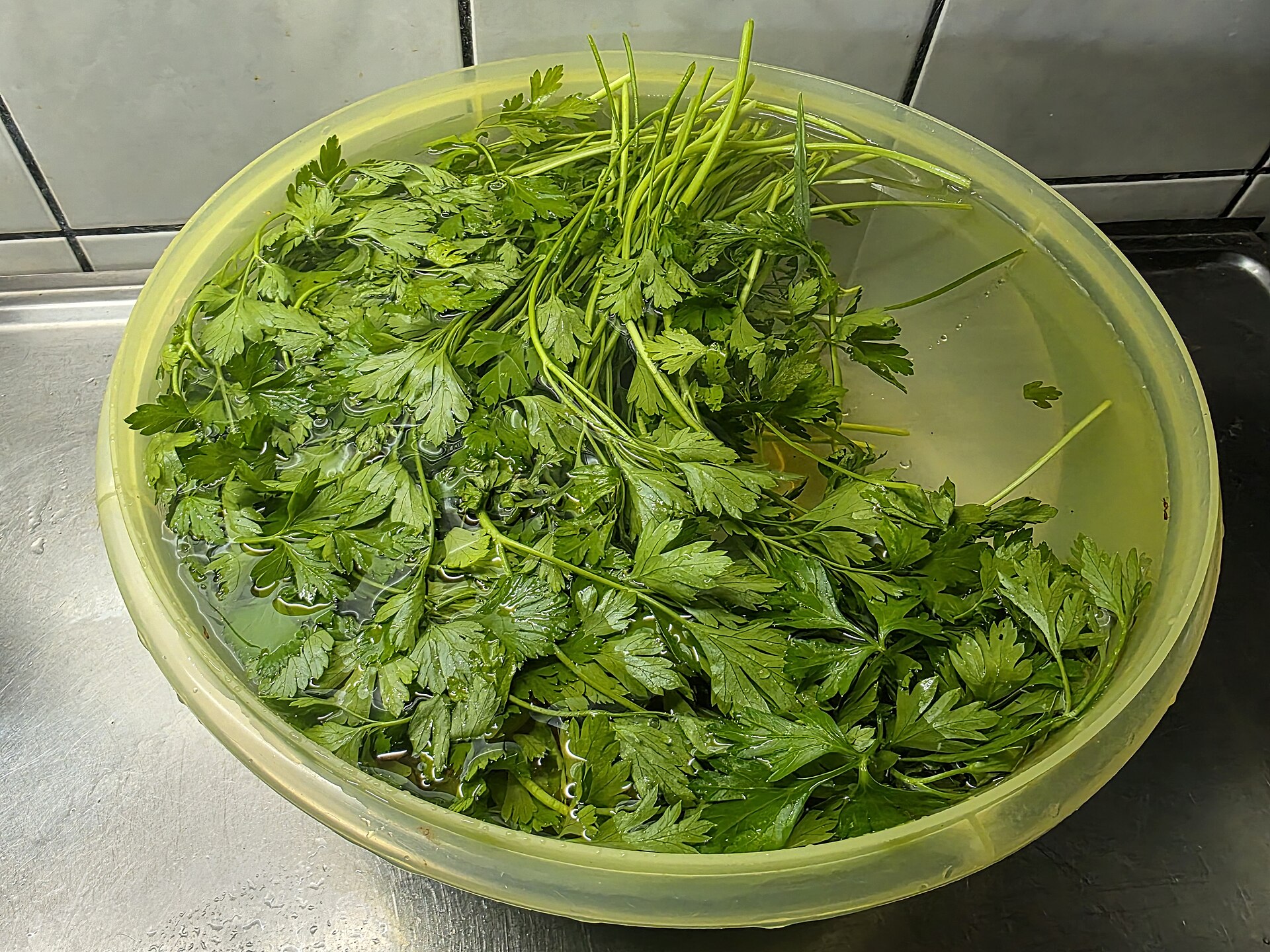
Parsley
Nutrition, per 1 portion
- Calories
- 382
- Protein
- 7 g
- Carbs
- 42 g
- Fat
- 22 g
- Sat fat
- 3 g
- Fibre
- 9 g
These figures are calculated estimates based on the ingredients listed, not laboratory analysis. Actual values vary with brands, cuts and portion size.
Briam looks like ratatouille and is cooked on completely different principles. Ratatouille cooks each vegetable separately to keep its character. Briam does the opposite: everything goes into one tray and cooks together for an hour and a half until the distinctions break down and it becomes one thing.
That is not laziness, it is the intention. The vegetables release their water, the water and the olive oil combine into a sauce, the sugars concentrate and the edges caramelise. What comes out is sweeter and deeper than the sum of the parts.
The mistake is treating it as a quick roasted vegetable tray. Forty minutes gives you nice roasted vegetables. Ninety gives you briam.
Key preparation steps
- Slice everything to a similar thickness so it cooks at the same rate.
- Use far more olive oil than a normal roasting tray.
- Cover for the first hour so it stews, then uncover to brown.
- Rest and serve warm, not hot.
How is briam different from ratatouille?
Method, mainly. Ratatouille is a French dish where the vegetables are traditionally cooked separately and combined at the end, so each keeps its own texture. Briam is a single tray, baked as one, with everything cooked to complete softness.
Briam also includes potato, which ratatouille does not, and it uses considerably more olive oil. The herb is oregano rather than herbes de Provence, and there is no basil.
The results genuinely taste different. Briam is sweeter, heavier and more unified; ratatouille is fresher and more distinct.
Which vegetables, and how to cut them
Courgette, aubergine, potato, onion, red pepper and tomato is the standard set. Some households add green beans or okra in season.
Cut everything into rounds or half-moons about 5 to 7 mm thick, and keep the thickness consistent across vegetables. Potato needs the longest, so slice it slightly thinner than the rest to even things out.
Grate two of the tomatoes rather than slicing them, and use the pulp as the sauce base with the oil. Slice the rest and lay them on top, where they will dry and concentrate.
Covered then uncovered
Cover the tray with foil for the first hour. This traps steam and lets the vegetables stew in their own juices, which is what gets them completely soft and lets the flavours combine.
Then take the foil off for the last thirty minutes so the liquid reduces and the top browns and catches. This is where the caramelisation happens and it is a large part of the flavour.
Uncovered from the start, the top dries out and burns while the bottom is still raw, and you have to keep adding water, which dilutes everything.
How much olive oil?
Around 150 ml for a large tray, which is more than a normal roast. Briam is a ladera dish and the oil is not there simply to stop things sticking.
It emulsifies with the vegetable juices and the grated tomato to form the sauce that pools in the bottom of the tray, and that sauce is what you eat with bread afterwards.
Serve warm rather than hot, with feta and bread. Like all ladera dishes it is better the next day, and it is very good cold.
What matters in this dish
Use a big tray
A deep pile takes far longer and steams rather than browning. A large shallow layer is what you want, even if it means using two tins.
Do not rush it
Ninety minutes is the recipe, not a suggestion. Forty minutes gives you roasted vegetables, which is a different and lesser dish.
Better cold
Briam is excellent straight from the fridge the next day, eaten with bread and feta. Make extra deliberately.
Questions people ask about Briam
What is the difference between briam and ratatouille?
Briam is baked as a single tray until everything collapses together, includes potatoes, and uses much more olive oil and oregano. Ratatouille traditionally cooks each vegetable separately so it keeps its own texture.
Is briam vegan?
Yes, entirely. It is one of the standard dishes of the Orthodox fasting calendar and contains no animal products.
Can you make briam ahead?
Yes, and it improves. It keeps for four days in the fridge and is traditionally eaten warm or at room temperature rather than hot.
Why is my briam watery?
The foil was left on for the whole cook. The last thirty minutes must be uncovered so the liquid reduces and the top browns.