Greek Main Courses · The Mainland · Baked · Taverna Night
Greek Pork Gyros Recipe (Oven Method, No Rotisserie)
Γύρος YEE-ros · Gyros
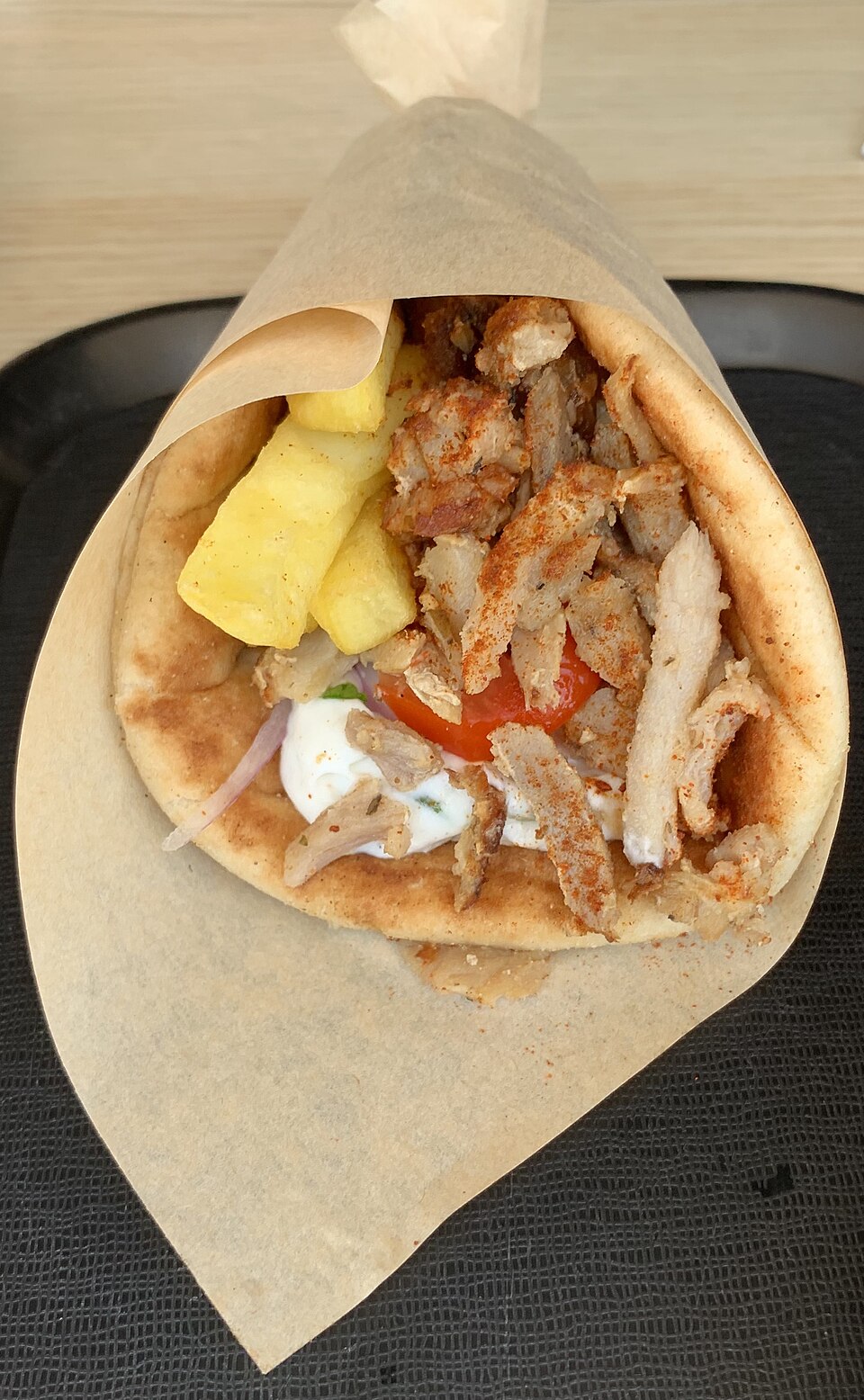
In short
Gyros is meat stacked on a vertical rotisserie, roasted slowly and shaved into thin strips. At home you can reproduce it by stacking marinated pork slices on a vertical skewer, roasting it, then slicing thin and crisping the strips in a hot pan.
Pork Gyros
- Prep
- 30m
- Cook
- 1h 30m
- Total
- 2h
- Serves
- 6
- Level
- Intermediate
Ingredients
For the pork
To serve
Tick ingredients off as you go. Quantities rescale with the buttons above.
Method
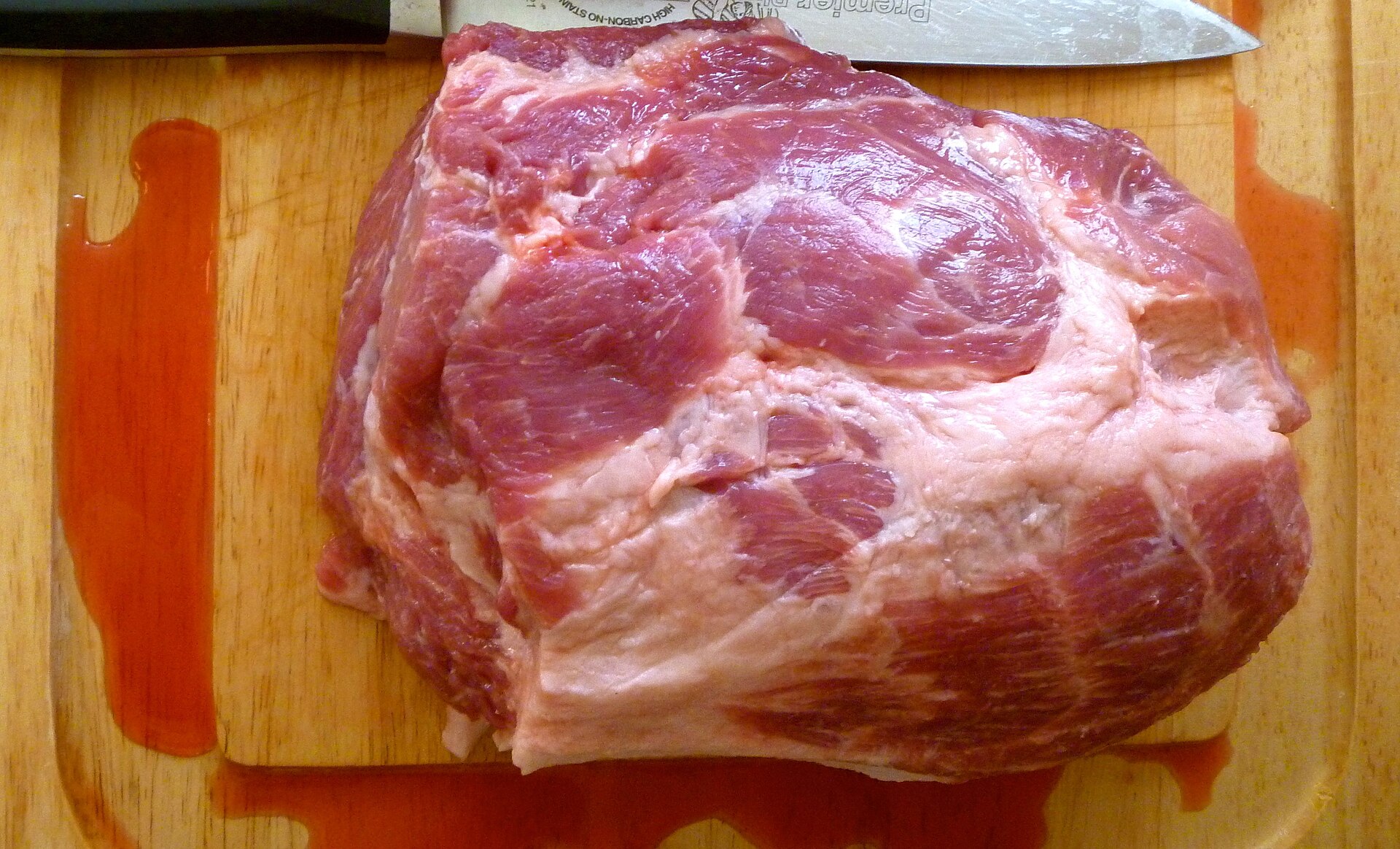
- 01Put the pork shoulder in the freezer for 40 minutes to firm up, which makes slicing much easier.Freeze briefly before slicing.Yiayia
- 02Slice across the grain into pieces about 5 mm thick and roughly palm sized.
- 03Whisk the oil, vinegar, garlic, oregano, paprika, cumin, thyme and grated onion. Season well. Turn the pork slices through it, cover and refrigerate overnight, or at least 4 hours.
Pork - 04Heat the oven to 170C fan 150C. Stand a long metal skewer upright in a small deep roasting tin, using a halved onion as a base to hold it steady.
- 05Thread the marinated slices onto the skewer one at a time, laying each flat and pressing down firmly. Build a dense, tightly packed cylinder with no gaps.
- 06Roast for 75 to 90 minutes until cooked through and well browned on the outside. Baste with the pan juices twice during cooking.
- 07Rest for 15 minutes. This is important: slicing it hot tears the stack.
- 08Stand the stack on a board and shave downwards with a long sharp knife, taking the thinnest strips you can manage.
- 09Heat a large frying pan until very hot. Add the strips in a single layer in batches and leave for 1 to 2 minutes without stirring, until the edges crisp. Season again.
- 10Warm the pitas, spread with tzatziki, fill with the hot meat, tomato, onion and chips. Dust with paprika, squeeze over lemon and wrap tightly.
Tomato
Nutrition, per 1 wrap
- Calories
- 624
- Protein
- 48 g
- Carbs
- 42 g
- Fat
- 30 g
- Sat fat
- 9 g
- Fibre
- 3 g
These figures are calculated estimates based on the ingredients listed, not laboratory analysis. Actual values vary with brands, cuts and portion size.
The obstacle to gyros at home is obvious: you do not own a vertical rotisserie. What is less obvious is that you do not need one, because the two things the rotisserie actually does can both be reproduced.
It cooks a stack of meat slowly so the fat renders down through it and bastes everything below, and it lets you shave off the cooked outer layer while the inside carries on. The domestic version stacks marinated slices on a skewer standing in a tin, roasts it as one piece, then slices it thin and gives the strips a hard flash in a hot pan to get the crisp edges.
That second step is what most home versions skip, and it is the one that makes the difference. Roasted pork sliced thin is nice. Roasted pork sliced thin and then crisped in its own fat is gyros.
Key preparation steps
- Slice pork shoulder thin and marinate overnight.
- Stack the slices on a vertical skewer, packing tightly.
- Roast slowly until cooked through and browned outside.
- Rest, slice very thin, then crisp the strips in a hot pan.
Which cut and how to slice it
Pork shoulder again, and for the same reason as souvlaki: it has the fat running through it that a long roast needs. A boneless shoulder joint of about 1.5 kg is right.
Slice it across the grain into pieces about 5 mm thick and roughly the size of a playing card. Chilling the joint in the freezer for forty minutes first makes this far easier, because firm meat slices cleanly and soft meat drags.
Uneven slices are fine. What matters is that they are thin enough to stack tightly with no big air gaps, because gaps are where the stack dries out.
Building the stack without a rotisserie
Stand a long metal skewer upright in a small deep roasting tin. A halved onion or potato sitting on the base makes a stable foot for it. Then thread the marinated slices on flat, one at a time, pressing each down onto the last.
Pack it hard. The stack should be dense and compressed, roughly cylindrical, with no daylight through it. Loose stacks dry out and fall apart when you slice.
Alternatively, and slightly easier, layer the slices tightly into a loaf tin, press down with something heavy, and roast that. You lose the browned exterior surface area but the slicing is simpler.
Why you must crisp the slices afterwards
On a real rotisserie the outer layer is shaved off at the moment it is browned and hot, so every strip has crisp surface on it. A home roast gives you a browned exterior and a great deal of pale interior, so slicing straight from the oven gives mostly soft meat.
The fix is a very hot dry pan. Slice the rested meat as thinly as you can, then throw the strips into the pan in a single layer and leave them alone for a minute or two. They release their own fat and the edges catch and crisp.
Do this in batches, just before serving, and season again at this stage. It takes three minutes and it is the whole difference.
Building the wrap
Same order as souvlaki, and the order is not arbitrary. Warm thick pocketless pita, brushed with a little oil. Tzatziki straight onto the bread as a moisture barrier. Then the hot meat, tomato, raw onion and a handful of chips.
Paprika over the top, a squeeze of lemon, and wrap tightly in greaseproof paper so it holds together while it is eaten.
Leftover meat keeps three days and reheats well in a pan. It is arguably better on day two because you crisp it fresh each time.
What matters in this dish
Freeze briefly before slicing
Forty minutes in the freezer firms the joint enough to slice thin and evenly. Trying to slice soft pork shoulder thinly is genuinely difficult.
Press the stack down hard
Air gaps in the stack dry the meat out and make it fall apart when you carve. Compress each slice onto the one below.
Crisp in batches, serve straight away
A crowded pan steams the strips instead of crisping them, and crisped gyros softens again within a few minutes.
Questions people ask about Gyros
What is the difference between gyros and souvlaki?
Gyros is meat stacked on a vertical rotisserie and shaved into strips. Souvlaki is cubes of meat grilled on a skewer. Both go into the same pita with the same fillings.
Can you make gyros without a rotisserie?
Yes. Stack marinated slices on a vertical skewer standing in a roasting tin, or press them into a loaf tin, roast slowly, then slice thin and crisp the strips in a hot dry pan.
What meat is used for Greek gyros?
Pork is the standard in Greece, with chicken the common alternative. The lamb and beef mixture familiar in America is a different tradition and rare in Greece itself.
Can you freeze cooked gyros meat?
Yes. Freeze the sliced meat in portions for up to three months. Thaw, then crisp in a hot pan from cold, which drives off the moisture from thawing.