Greek Desserts · The Mainland · Asia Minor · Baked · Christmas
Greek Baklava Recipe with Walnuts and Honey Syrup
Μπακλαβάς bahk-lah-VAHS · Baklavas
In short
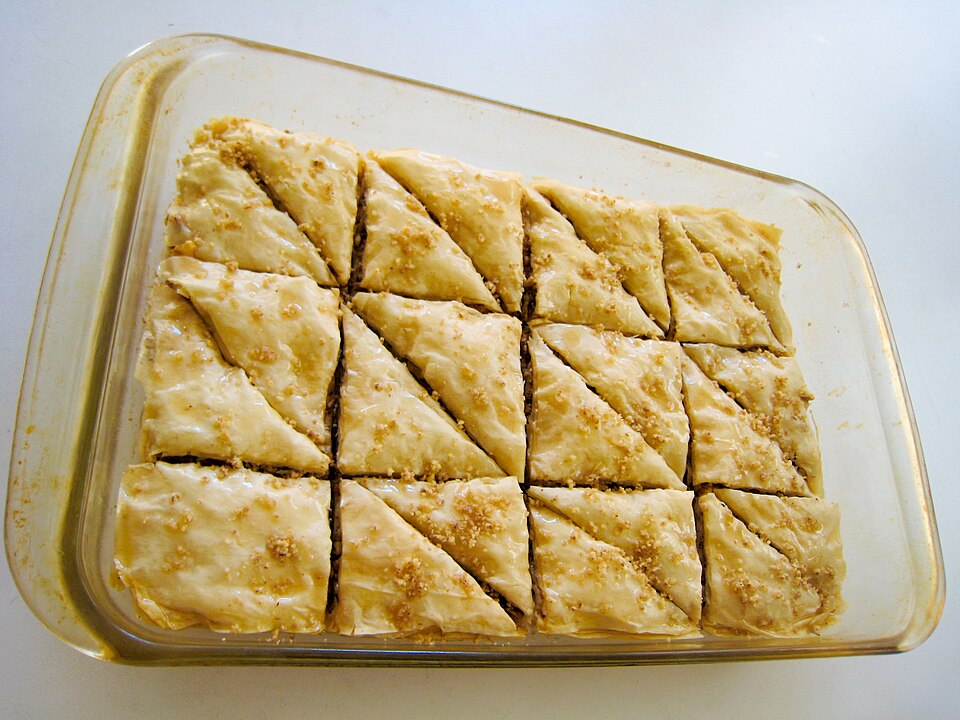
Greek baklava is layered phyllo pastry filled with chopped walnuts and cinnamon, baked until golden and soaked in a honey and lemon syrup. The critical rule is temperature contrast: pour cold syrup over hot baklava, or hot syrup over cold, never hot onto hot.
Baklava
- Prep
- 45m
- Cook
- 1h
- Total
- 1h 45m
- Serves
- 24
- Level
- Intermediate
Ingredients
For the syrup
For the baklava
Tick ingredients off as you go. Quantities rescale with the buttons above.
Method
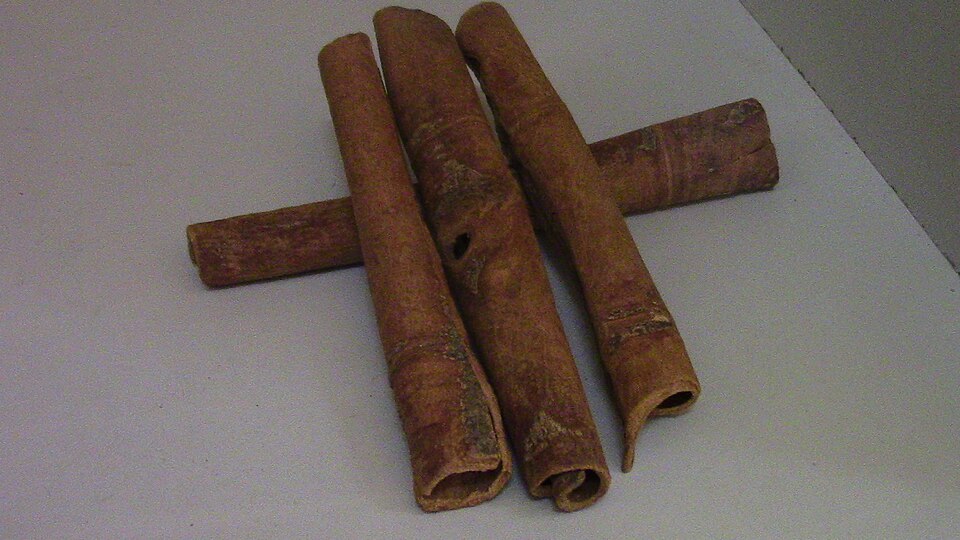
- 01Make the syrup first. Put the sugar, water, honey, cinnamon stick, cloves and lemon peel in a pan. Bring to the boil, stirring until the sugar dissolves, then simmer for 8 minutes without stirring.Do not stir the syrup once it boils.Yiayia
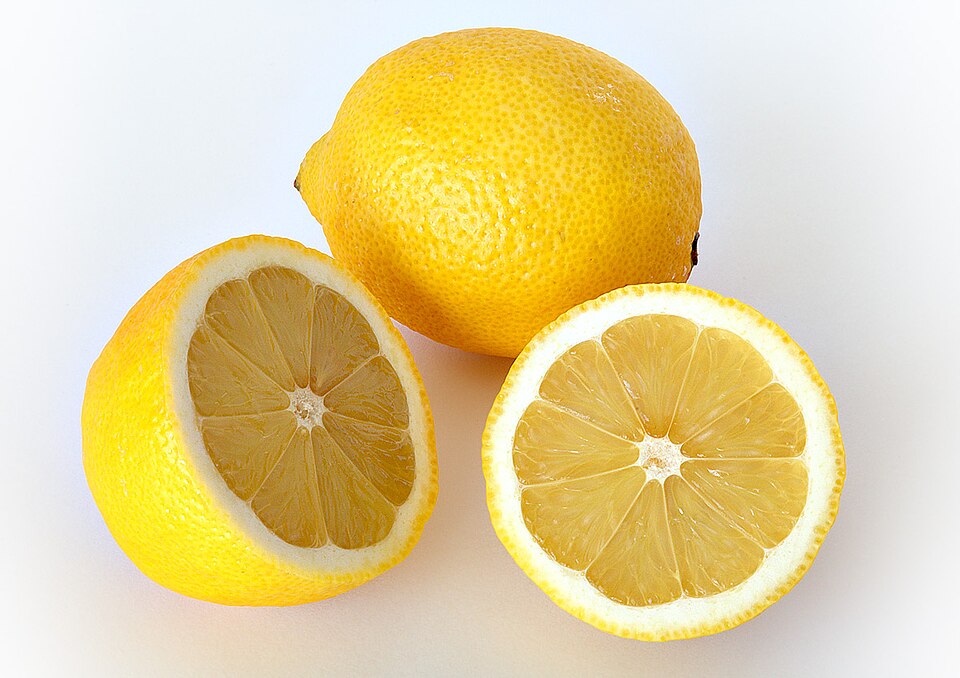
- 02Take off the heat, stir in the lemon juice, and leave to cool completely. Then refrigerate until properly cold. It must be cold when the baklava comes out of the oven.
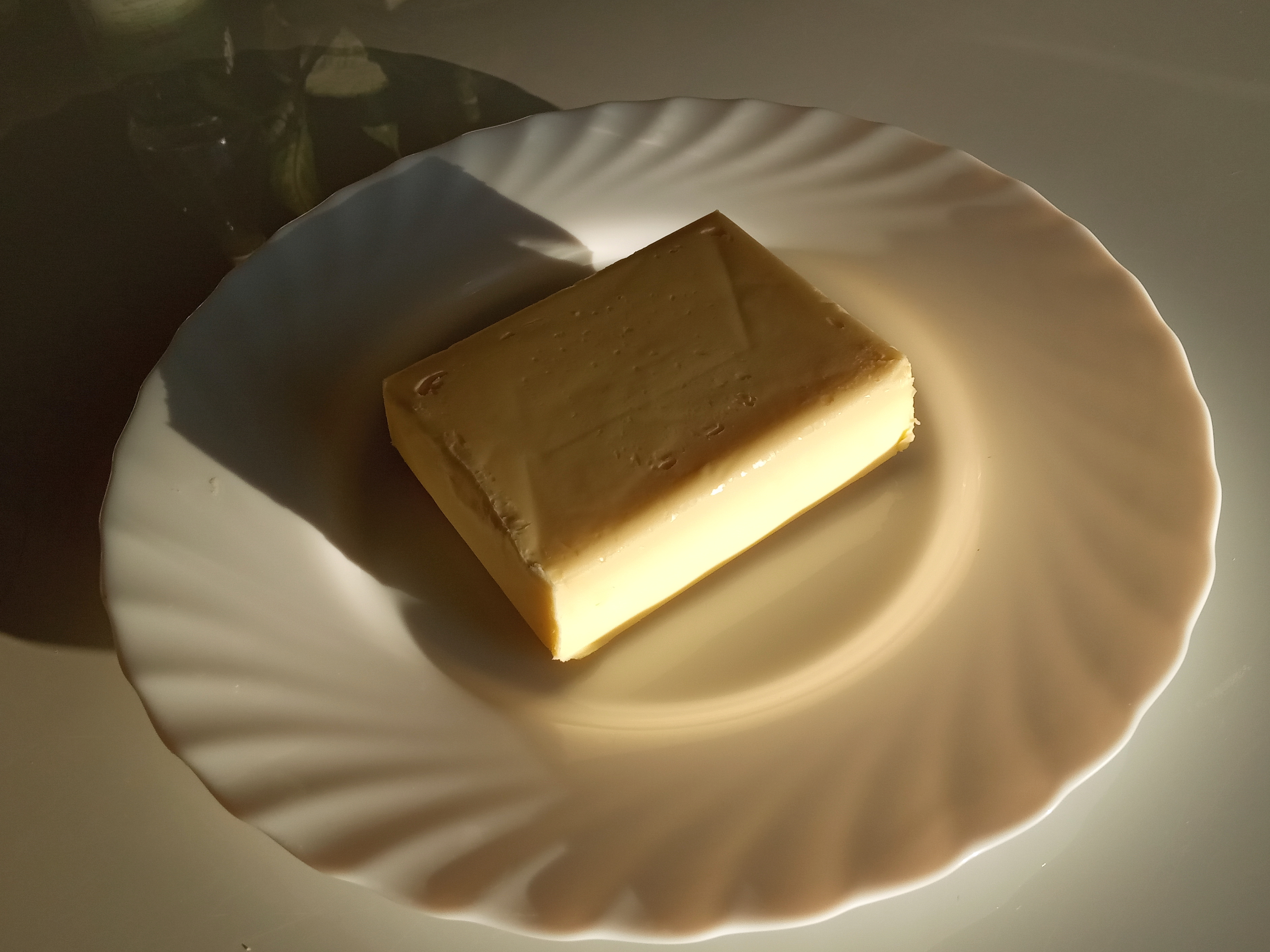
Lemon - 03Clarify the butter. Melt it gently over low heat, let it stand for a few minutes, then pour off the clear golden fat and discard the milky solids.
- 04Toast the walnuts and almonds in a dry pan for 5 minutes until fragrant. Cool, then chop by hand to a rough, uneven texture. Mix with the cinnamon, ground cloves and 3 tablespoons of sugar.
Cinnamon - 05Heat the oven to 160C fan 140C. Brush a 30 x 22 cm tin with butter. Keep the phyllo stack under baking paper and a slightly damp cloth as you work.
- 06Lay 8 sheets of phyllo into the tin one at a time, brushing each with butter, trimming to fit or folding the overhang under.
Butter - 07Scatter a third of the nut mixture evenly over the pastry. Add 4 more buttered sheets, then another third of the nuts. Repeat once more.
- 08Finish with 8 buttered sheets on top. Brush the final layer very generously.
- 09Using a sharp thin knife, cut all the way through to the base of the tin: parallel lines lengthways about 5 cm apart, then diagonal cuts across to form diamonds. Push a whole clove into the centre of each diamond if using.
- 10Bake for 55 to 65 minutes until deep golden brown and crisp. It should sound dry and papery when tapped.
- 11Take the baklava out of the oven and immediately pour the cold syrup evenly over the whole surface, working slowly around the tin. It will hiss. Let it settle between pours.
- 12Leave uncovered at room temperature for at least 6 hours, ideally overnight, so the syrup is fully absorbed. Cover with a tea towel, never with cling film.
Nutrition, per 1 diamond
- Calories
- 298
- Protein
- 4 g
- Carbs
- 31 g
- Fat
- 18 g
- Sat fat
- 6 g
- Fibre
- 2 g
These figures are calculated estimates based on the ingredients listed, not laboratory analysis. Actual values vary with brands, cuts and portion size.
Baklava belongs to the whole eastern Mediterranean and every country in it makes a version and claims the original. The Greek one is characterised by walnuts rather than pistachios, a heavy hand with cinnamon and clove, and a syrup built on honey rather than sugar alone.
It is not a difficult recipe. It is a patient one. The work is in the layering, and there is no way to speed that up. What can be got wrong, and frequently is, is the syrup, and there is exactly one rule that decides whether your baklava is crisp or soggy.
That rule is temperature contrast. One element hot, the other cold. Hot syrup on hot pastry steams the layers and you get a sweet wet slab. I use cold syrup on hot baklava, straight from the oven, and it hisses and crackles as it goes on.
Key preparation steps
- Make the syrup first and chill it completely.
- Layer phyllo and nuts, brushing every single sheet with butter.
- Cut all the way through into diamonds before baking, not after.
- Bake slowly until deep gold and crisp through.
- Pour the cold syrup over the hot baklava and leave it for six hours.
Why must you cut baklava before baking?
Because baked phyllo shatters. Try to cut it afterwards and you will crush the layers you spent an hour building, and the top will splinter into crumbs.
Cut all the way to the base of the tin with a very sharp, thin knife before it goes in the oven. Diamonds are traditional: cut parallel lines lengthways, then cut diagonally across them. The cuts also let the syrup penetrate to the bottom, which is the whole reason the dessert works.
Some cooks push a whole clove into the centre of each diamond, which is traditional and perfumes the pastry as it bakes. Warn people, because biting into a clove is memorable for the wrong reasons.
Hot syrup on cold baklava, or cold syrup on hot?
Either works. What you cannot do is hot on hot. Both being hot means nothing is drawing the syrup in, the steam has nowhere to go, and it sits on the surface soaking the top layers into pulp.
The version I prefer is cold syrup onto hot baklava. Make the syrup first, cool it in the fridge while the baklava bakes, then pour it over the moment the tray comes out. The temperature difference pulls the syrup down through the cuts and the pastry keeps its crispness.
Pour slowly and evenly, working around the tin, and let it settle before adding more. It will look like far too much liquid. It is not, and it will all be absorbed within a couple of hours.
Walnuts, pistachios or almonds?
Walnuts are the Greek default and give the deepest, slightly bitter flavour that stands up to a very sweet syrup. Almonds appear in some regions and give a milder result. Pistachios are the Turkish and Levantine tradition, more expensive and more delicate.
A blend of walnuts and almonds, roughly two to one, is common in Greek homes and is arguably better than either alone. Whatever you use, chop by hand or pulse briefly. A food processor run continuously turns nuts into oily paste, and the filling needs texture.
Toast the nuts first. Five minutes in a dry pan makes a substantial difference and costs nothing.
How much butter, and clarified or not?
More than you expect. Every sheet gets brushed, without exception, and the tin gets a coating too. This is what separates the layers into leaves.
Clarifying the butter is worth the ten minutes. Melt it gently, let it settle, then pour off the clear golden fat and discard the milky solids at the bottom. Those solids burn during a long bake and give a slightly scorched taste. Clarified butter also crisps better because there is no water in it.
Greek bakers sometimes use a mixture of butter and a neutral oil for exactly this reason. Ghee works perfectly if you have it.
How long should baklava rest before serving?
At least six hours, and overnight is better. Freshly syruped baklava is unevenly wet in places and dry in others. Time lets the syrup distribute completely.
Cover it loosely with a tea towel, never cling film or an airtight lid, which traps steam and softens the top. Kept at room temperature under a cloth it stays crisp for a week, and it genuinely improves for the first two or three days.
Do not refrigerate it. The cold makes the butter in the pastry firm and waxy, and the texture goes dull.
What matters in this dish
Do not stir the syrup once it boils
Stirring a boiling sugar syrup encourages crystallisation. Dissolve the sugar as it heats, then leave it alone.
Lemon juice at the end
Added off the heat, it stops the syrup crystallising as it cools and keeps it pourable. Added at the start it can be boiled away.
Trim, do not stuff
Trim phyllo to the tin rather than folding thick wads of overhang into the corners, which bake into hard lumps.
Questions people ask about Baklavas
Why is my baklava soggy?
Hot syrup was poured onto hot baklava. One of the two must be cold. Either cool the syrup completely and pour it over baklava straight from the oven, or let the baklava cool fully and use hot syrup.
How long does baklava keep?
About a week at room temperature, covered with a tea towel rather than anything airtight. It improves for the first two or three days as the syrup settles. Do not refrigerate it, as the cold makes the pastry waxy.
Can you freeze baklava?
Yes, and it freezes very well. Freeze it after baking and syruping, in an airtight container with baking paper between the layers, for up to three months. Thaw at room temperature uncovered so it does not sweat.
What is the difference between Greek and Turkish baklava?
Greek baklava typically uses walnuts, more cinnamon and clove, and a honey-based syrup. Turkish baklava usually uses pistachios, a plain sugar syrup with no spice, and has thinner, more numerous pastry layers.
Why do you cut baklava before baking?
Baked phyllo shatters when cut, so you would destroy the top layers. Cutting beforehand also opens channels for the syrup to reach the bottom of the tin.