Greek Desserts · The Mainland · Baked · The Sunday Table
Galaktoboureko Recipe (Greek Custard Pie in Phyllo)
Γαλακτομπούρεκο gha-lahk-toh-BOO-reh-koh · Galaktoboureko
In short
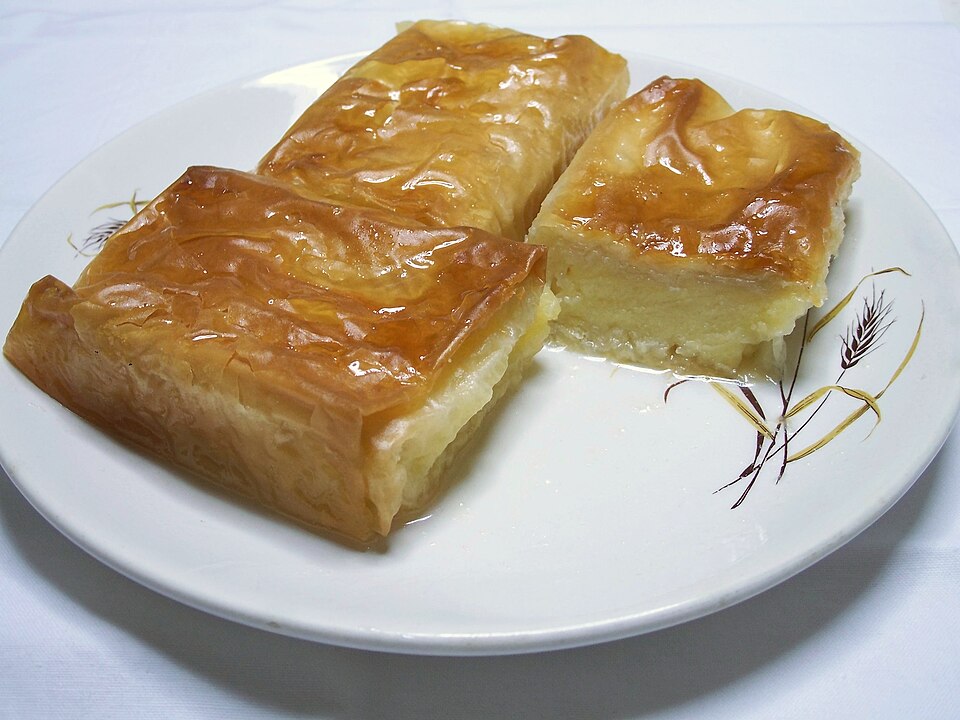
Galaktoboureko is a Greek dessert of semolina custard baked between layers of phyllo and soaked in a lemon syrup. The custard is thickened with fine semolina rather than cornflour, which lets it set firm enough to cut into clean squares.
Galaktoboureko
- Prep
- 35m
- Cook
- 55m
- Total
- 1h 30m
- Serves
- 12
- Level
- Intermediate
Ingredients
For the syrup
For the custard
For the pastry
Tick ingredients off as you go. Quantities rescale with the buttons above.
Method
- 01Make the syrup first. Bring the sugar, water, cinnamon stick and lemon peel to the boil, stirring until dissolved, then simmer for 8 minutes without stirring. Take off the heat, add the lemon juice, cool, then refrigerate until cold.
- 02For the custard, bring the milk almost to the boil in a heavy pan with the sugar, lemon zest and salt.
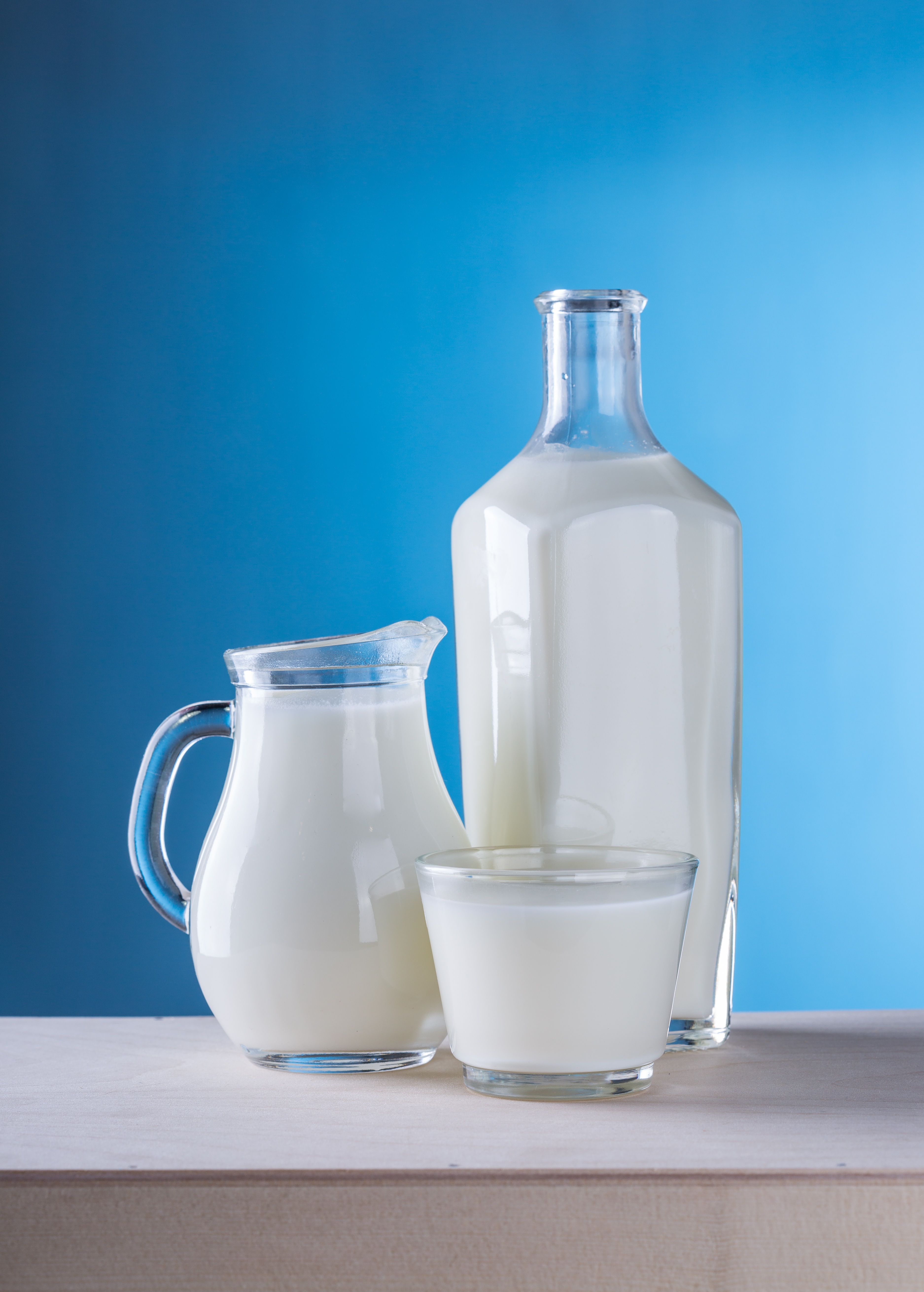
Milk - 03Rain in the semolina in a thin stream, whisking constantly to avoid lumps. Cook over medium heat, stirring continuously, for 6 to 8 minutes until very thick. A spoon dragged across the base should leave a channel.Rain the semolina, do not dump it.Yiayia
- 04Take off the heat, stir in the butter and vanilla, and let it cool for 5 minutes.
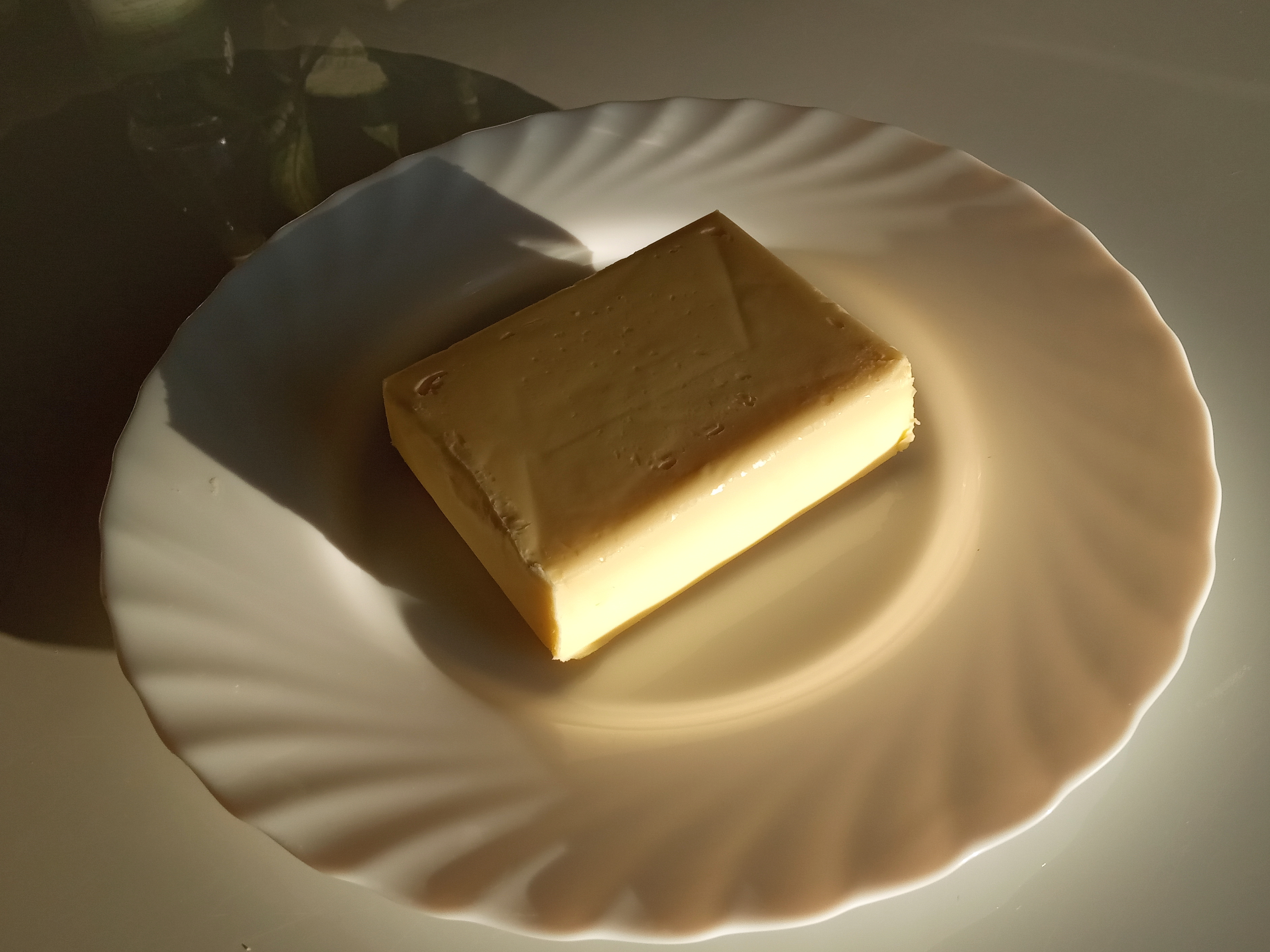
Butter - 05Beat in the eggs in a thin stream, whisking hard the whole time. The custard should be smooth, thick and glossy.
- 06Heat the oven to 180C fan 160C. Brush a 30 x 22 cm dish with butter. Lay in 8 sheets of phyllo one at a time, brushing each with butter and letting them overhang the sides.
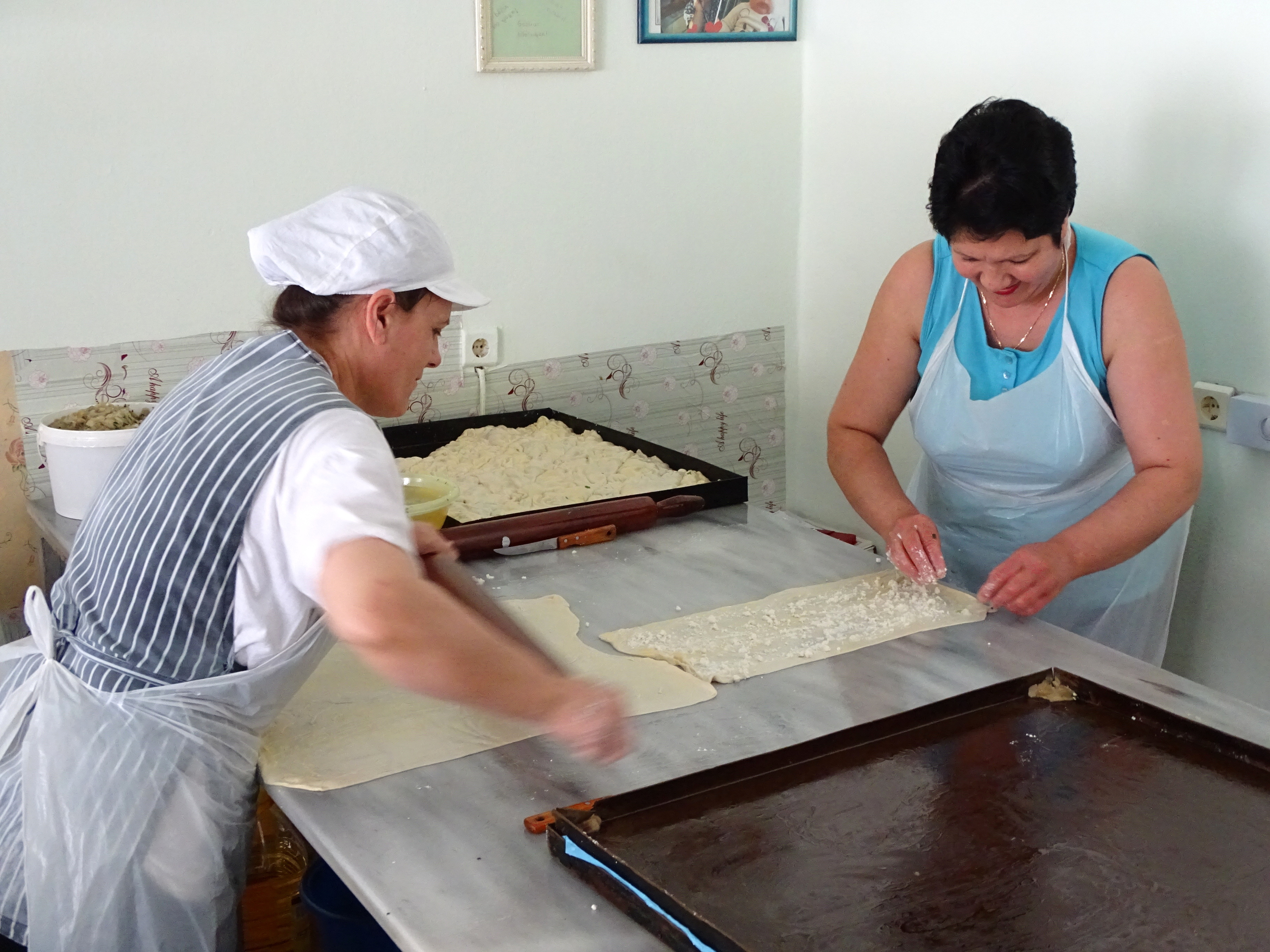
Phyllo - 07Pour in the warm custard and level the surface.
- 08Fold the overhanging phyllo in over the custard and brush. Layer 6 more sheets on top, brushing each, and tuck the edges down inside the dish.
- 09Brush the top generously. With a very sharp knife, score through the top layers only into 12 squares, cutting down to the custard but not through the base.
- 10Bake for 50 to 55 minutes until deep golden and crisp.
- 11Take it straight from the oven and pour the cold syrup evenly over the whole surface. It will hiss and steam.
- 12Leave at room temperature for at least 3 hours before cutting along the scored lines. Serve at room temperature.
Nutrition, per 1 square
- Calories
- 486
- Protein
- 9 g
- Carbs
- 72 g
- Fat
- 19 g
- Sat fat
- 11 g
- Fibre
- 1 g
These figures are calculated estimates based on the ingredients listed, not laboratory analysis. Actual values vary with brands, cuts and portion size.
Galaktoboureko is the best Greek dessert and it is not close. Baklava is more famous, but this is the one people who grew up with both actually ask for: a thick lemon-scented semolina custard sealed inside phyllo, baked until the pastry shatters, then flooded with cold syrup.
Two things need to be right. The custard must be thickened with fine semolina, not cornflour, because semolina sets to a texture that holds a clean edge when sliced while staying creamy. And the syrup must be cold when it hits the hot pie, for the same reason as baklava.
It is easier than it looks. The custard is a stirred one-pan job and the phyllo work is far simpler than baklava because there are only two blocks of layers rather than many.
Key preparation steps
- Make and chill the syrup before anything else.
- Cook a thick semolina custard and beat in the eggs off the heat.
- Build a base of buttered phyllo, pour in the custard while warm, seal the top.
- Score into squares, bake until deep gold, then flood with cold syrup.
Why semolina and not cornflour?
Semolina gives the custard structure. It swells and sets into something that holds a shape when cut, so you get clean squares with a defined custard layer rather than a puddle escaping across the plate.
Cornflour or custard powder gives a glossier, softer set that slumps once cut and turns loose again once the syrup goes in. Some modern recipes use it for speed and the result is noticeably worse.
Use fine semolina rather than coarse. Coarse semolina leaves a slightly gritty texture that never quite goes away.
How thick should the custard be?
Very. When you drag a spoon across the base of the pan the channel should stay open for a second or two. It is closer to a stiff porridge than to pouring custard at the point you take it off the heat.
Add the eggs off the heat and beat fast. Straight into a hot pan they will scramble. Let the custard cool for four or five minutes first, then add the beaten eggs in a thin stream while whisking hard.
Pour it into the pastry case while still warm and pourable. Let it cool completely and it becomes a solid block you cannot spread.
Hot pie, cold syrup
Exactly as with baklava, and for the same reason. The pie comes out of the oven hot and the syrup goes on straight from the fridge. The temperature difference draws the syrup down into the pastry rather than leaving it pooling on top.
Make the syrup first so it has time to chill properly. Lemon peel and a cinnamon stick are traditional; some cooks add a strip of orange peel or a spoon of vanilla.
Pour slowly, all over, and let it settle. Then leave it for at least three hours before cutting. It needs that time for the syrup to distribute and the custard to firm.
Serving and storage
Room temperature, never fridge cold, which mutes the flavour and makes the phyllo waxy. If you have refrigerated it, take it out an hour before serving.
It keeps for three days covered with a tea towel at room temperature, and the pastry gradually softens over that time. That is inevitable and it is still very good on day two.
It does not freeze. The custard splits on thawing.
What matters in this dish
Rain the semolina, do not dump it
Adding it all at once guarantees lumps. A thin steady stream with constant whisking gives a smooth custard first time.
Pour the custard in warm
Cooled custard sets solid and cannot be spread without tearing the pastry underneath. Assemble while it is still pourable.
Cut only along your scored lines
Scoring before baking is what gives you clean squares. Trying to cut fresh lines through baked phyllo shatters the top.
Questions people ask about Galaktoboureko
Why is my galaktoboureko runny?
The custard was not cooked thick enough before the eggs went in, or cornflour was used instead of semolina. It should be stiff enough that a spoon leaves an open channel across the base of the pan.
Can you freeze galaktoboureko?
No. The custard separates on thawing and becomes grainy. It keeps three days at room temperature under a tea towel.
Should galaktoboureko be served warm or cold?
At room temperature. Fridge cold mutes the lemon and makes the pastry waxy, and straight from the oven the custard has not set. Give it at least three hours after syruping.
What is the difference between galaktoboureko and bougatsa?
They are close relatives. Bougatsa is a breakfast pastry from Thessaloniki with a thinner custard, served dusted with icing sugar and cinnamon and never soaked in syrup. Galaktoboureko has a firmer semolina custard and is syruped.