Greek Breakfast Recipes · Epirus · Fried · The Sunday Table
Greek Fried Bread with Feta (Tiganopsomo)
Τηγανόψωμο tee-gha-NOH-psoh-moh · Tiganopsomo
In short
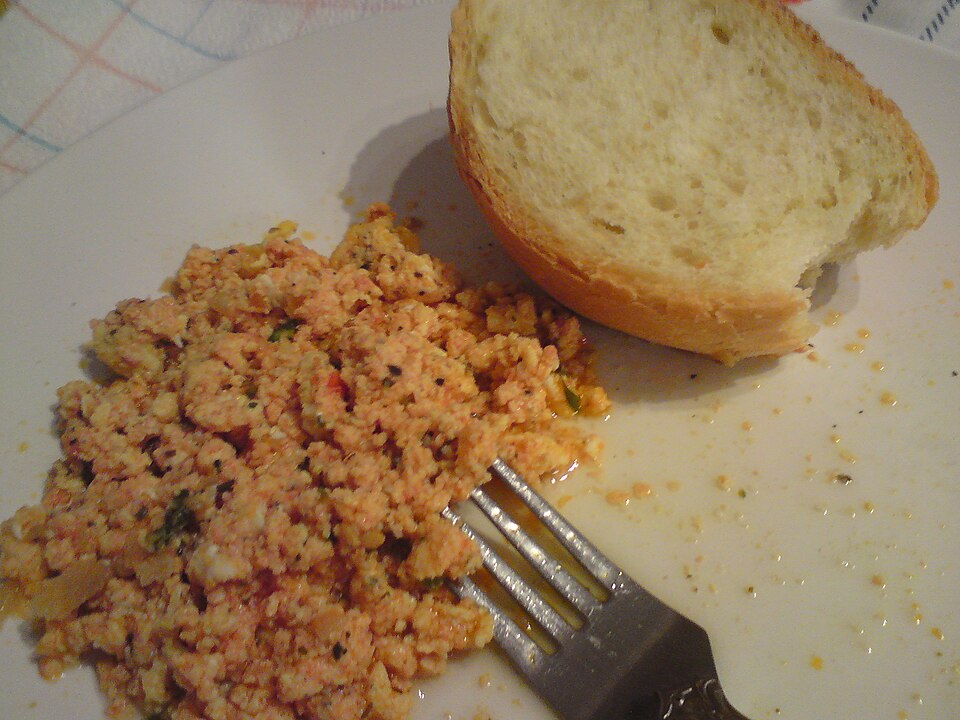
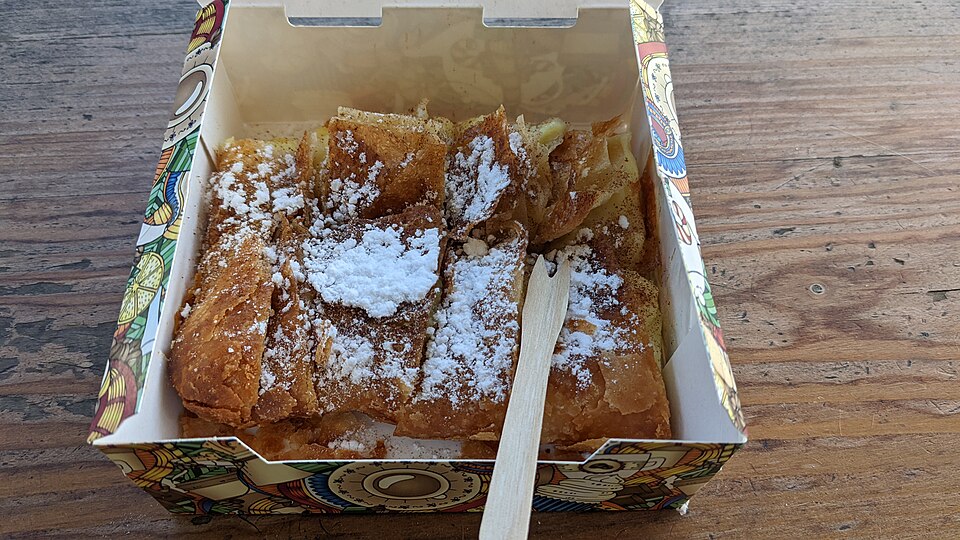
Tiganopsomo is fried bread from the mountain villages of Epirus: a soft yeasted dough is divided, filled with crumbled feta, sealed into flat rounds and fried in shallow olive oil until blistered and golden. It is eaten hot for breakfast or as a meze, and the whole thing takes about half an hour from a standing start.
Fried Bread with Feta
- Prep
- 25m
- Cook
- 15m
- Total
- 40m
- Serves
- 6
- Level
- Beginner
Ingredients
For the dough
For the filling
To fry
Tick ingredients off as you go. Quantities rescale with the buttons above.
Method
- 01Mix the flour, yeast, salt and sugar in a bowl. Add the warm water and the 2 tbsp olive oil and bring together into a soft, slightly sticky dough.
- 02Knead in the bowl with oiled hands for 3 minutes, then cover and leave somewhere warm for 30 minutes.
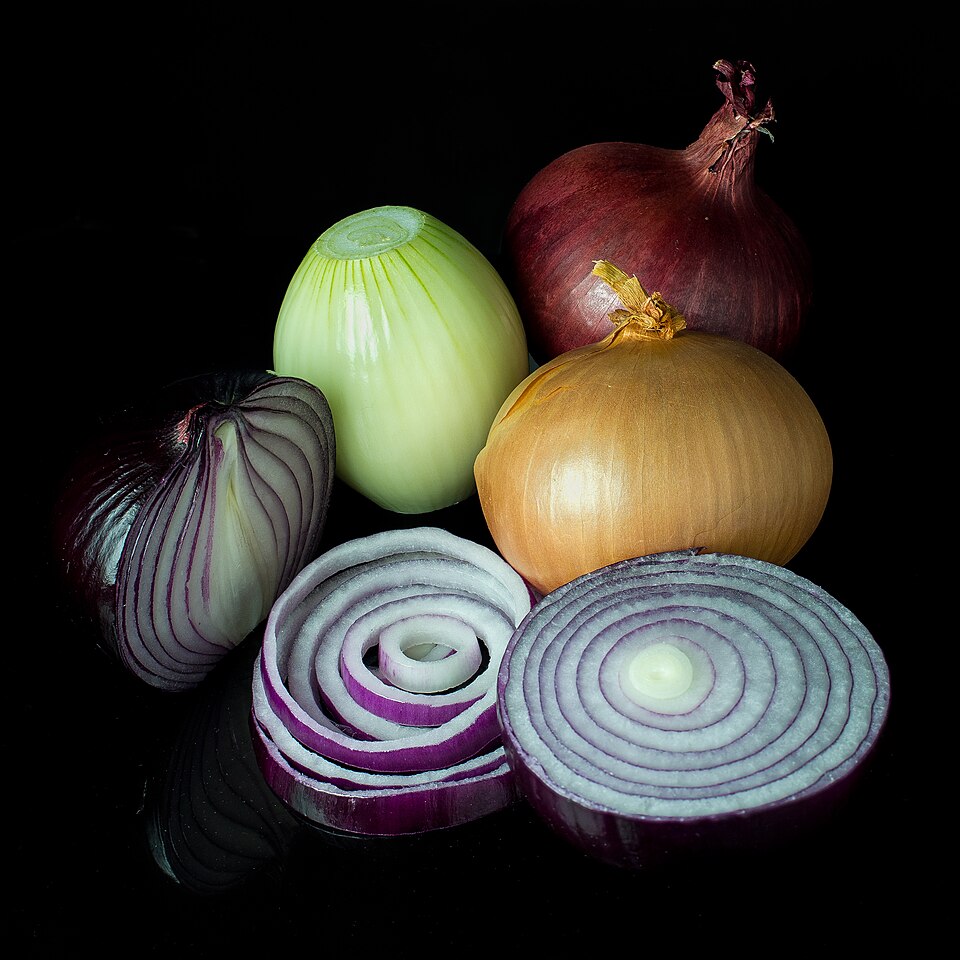
- 03Mix the feta with the mint, spring onions if using, and black pepper.
Onion - 04Divide the dough into 6 pieces. With oiled hands, flatten each into a disc about 14cm across on an oiled surface.
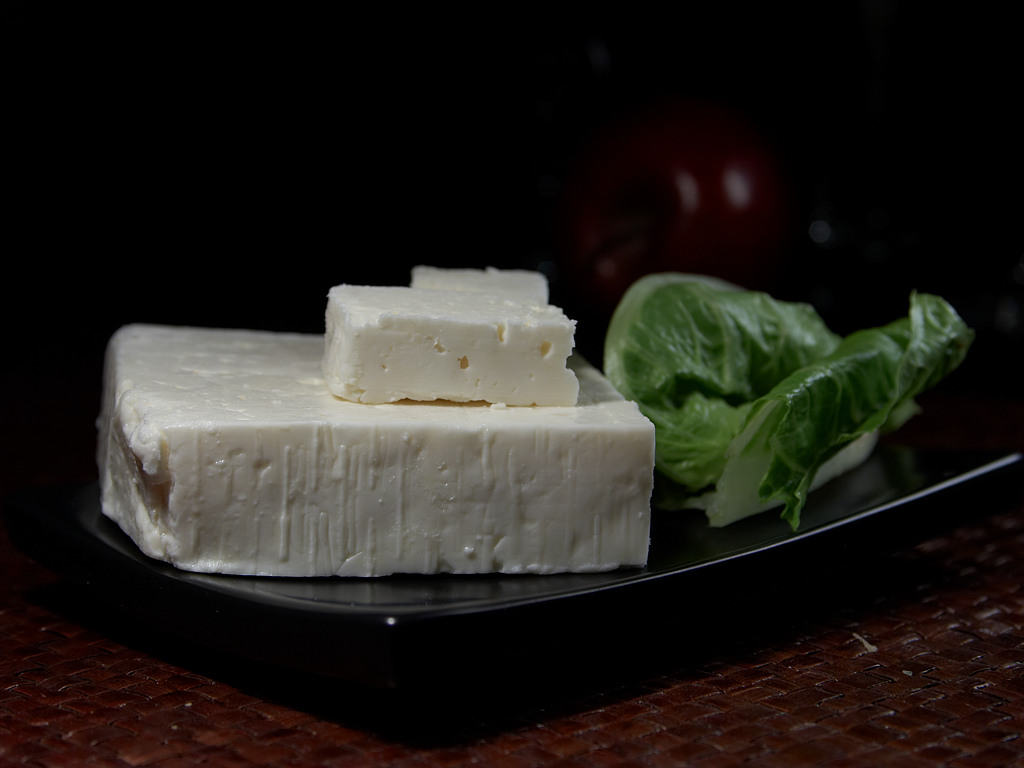
- 05Put a sixth of the feta in the centre of each disc, leaving a 2cm border. Gather the edges up over the filling and pinch firmly to seal.
Feta - 06Turn each parcel seam side down and flatten gently with your palm to about 1cm thick.
- 07Heat the frying oil in a wide pan over medium heat. Fry the rounds two at a time, seam side down first, for 3 to 4 minutes a side, until deep golden and blistered.Seam side down first.Yiayia
- 08Drain briefly on kitchen paper and eat hot, torn open.
Nutrition, per 1 round
- Calories
- 512
- Protein
- 16 g
- Carbs
- 52 g
- Fat
- 26 g
- Sat fat
- 9 g
- Fibre
- 2 g
These figures are calculated estimates based on the ingredients listed, not laboratory analysis. Actual values vary with brands, cuts and portion size.
Tiganopsomo is exactly what its name says: pan bread. In the villages of Epirus and the Pindos it was what you made when there was no oven lit, no time, and a hungry table, which between them describe most mornings.
The dough is deliberately soft and slack, closer to a batter than to a bread dough, because a stiff dough fries into something hard and biscuit-like. Handled with oiled hands and flattened rather than rolled, it puffs and blisters in the pan and stays tender inside.
The classic filling is feta and nothing else, though many households add a pinch of dried mint or a scattering of spring onion. It is eaten straight from the pan, torn rather than cut, and it is best with a coffee at eight in the morning or a glass of tsipouro at eight at night.
Key preparation steps
- Mix a soft yeasted dough and rest it briefly.
- Flatten pieces by hand and fill with crumbled feta.
- Seal into flat rounds with oiled fingers.
- Fry in shallow olive oil until blistered on both sides.
How soft should the dough be?
Soft enough to be slightly sticky and awkward. It should just about hold together when you lift it, and it should never be firm enough to roll with a rolling pin.
Work it with oiled hands rather than adding more flour. Every extra spoonful of flour tightens the crumb, and the difference between a tender tiganopsomo and a tough one is almost entirely how much flour got added at this stage.
Does the dough need a long rise?
No. Thirty minutes in a warm place is enough, and in the villages it was often less. The frying does most of the lifting, since the sudden heat turns the moisture in the dough to steam and puffs the round from inside.
A long slow rise actually works against you here. Over-proved dough is full of large bubbles that burst in the pan and let the cheese escape.
How hot should the oil be, and how much?
Shallow, about half a centimetre, and hot enough that a scrap of dough sizzles the moment it goes in without browning in ten seconds. Medium heat on most hobs is right.
Too hot and the outside colours before the middle cooks, leaving raw dough around the cheese. Too cool and the round drinks oil and turns heavy. Adjust between batches rather than powering through.
How do I stop the feta leaking out?
Leave a clear two-centimetre border when you put the cheese on, gather the edges up over it like a purse and pinch them properly closed, then turn the parcel seam side down and flatten it gently with your palm.
Do not overfill. About fifty grams of feta per round is right. More than that stretches the dough thin at the seam and the cheese finds its way into the oil, where it burns and makes a mess of the pan.
What matters in this dish
Oil your hands, not the worktop with flour
Flour tightens this dough and makes it tough. Olive oil on your palms and on the surface lets you handle a very soft dough without adding anything to it.
Seam side down first
Frying the sealed side first sets it shut before the round is turned, which is the simplest insurance against cheese leaking into the oil.
Fry two at a time
A crowded pan cools the oil and the rounds go greasy instead of blistering. Keep the oil moving up to temperature between batches.
Questions people ask about Tiganopsomo
Can tiganopsomo be made without yeast?
Yes. Replace the yeast with 2 teaspoons of baking powder and skip the rest, using yogurt in place of half the water. The result is denser and more scone-like but perfectly good, and it is how it is done when there is no time at all.
What else can go inside?
Feta is standard, but crumbled feta mixed with grated kefalotyri or graviera is common, and a spoonful of wilted, thoroughly squeezed greens can go in with it. Keep the filling dry, or it will steam the dough from inside.
Can I bake it instead of frying?
You can bake the rounds at 200C for about 18 minutes, brushed with oil, and they will be pleasant. They will not be tiganopsomo, though, since the blistered fried surface is the entire character of the dish.
Do they keep?
They are at their best within minutes of coming out of the pan. Leftovers reheat reasonably in a dry frying pan over medium heat for two minutes a side, but never quite come back to what they were.