Greek Drinks · The Mainland · Boiled and Simmered · Mezedes and Ouzo
How to Make Greek Coffee in a Briki
Ελληνικός καφές eh-lee-nee-KOS kah-FES · Ellinikos kafes
In short
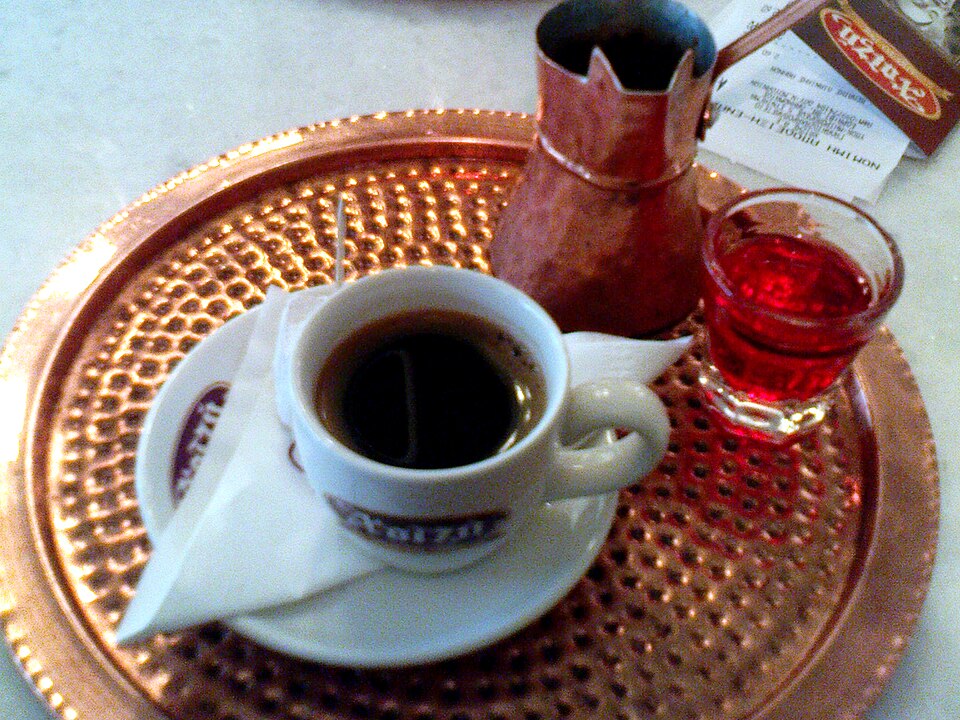
Greek coffee is made by heating very finely ground coffee, water and sugar together in a small pot called a briki over low heat until foam rises, without ever letting it boil. It is poured unfiltered and the grounds settle at the bottom of the cup.
How to Make Greek Coffee in a Briki
- Prep
- 2m
- Cook
- 5m
- Total
- 7m
- Serves
- 2
- Level
- Beginner
Ingredients
For two cups
Tick ingredients off as you go. Quantities rescale with the buttons above.
Method
- 01Measure the water using the cups you intend to serve in, one cup of cold water per coffee, and pour into the briki. Cold water only.
- 02Add the coffee and the sugar. Stir once, off the heat, until the coffee is wetted and there are no dry clumps floating on top.
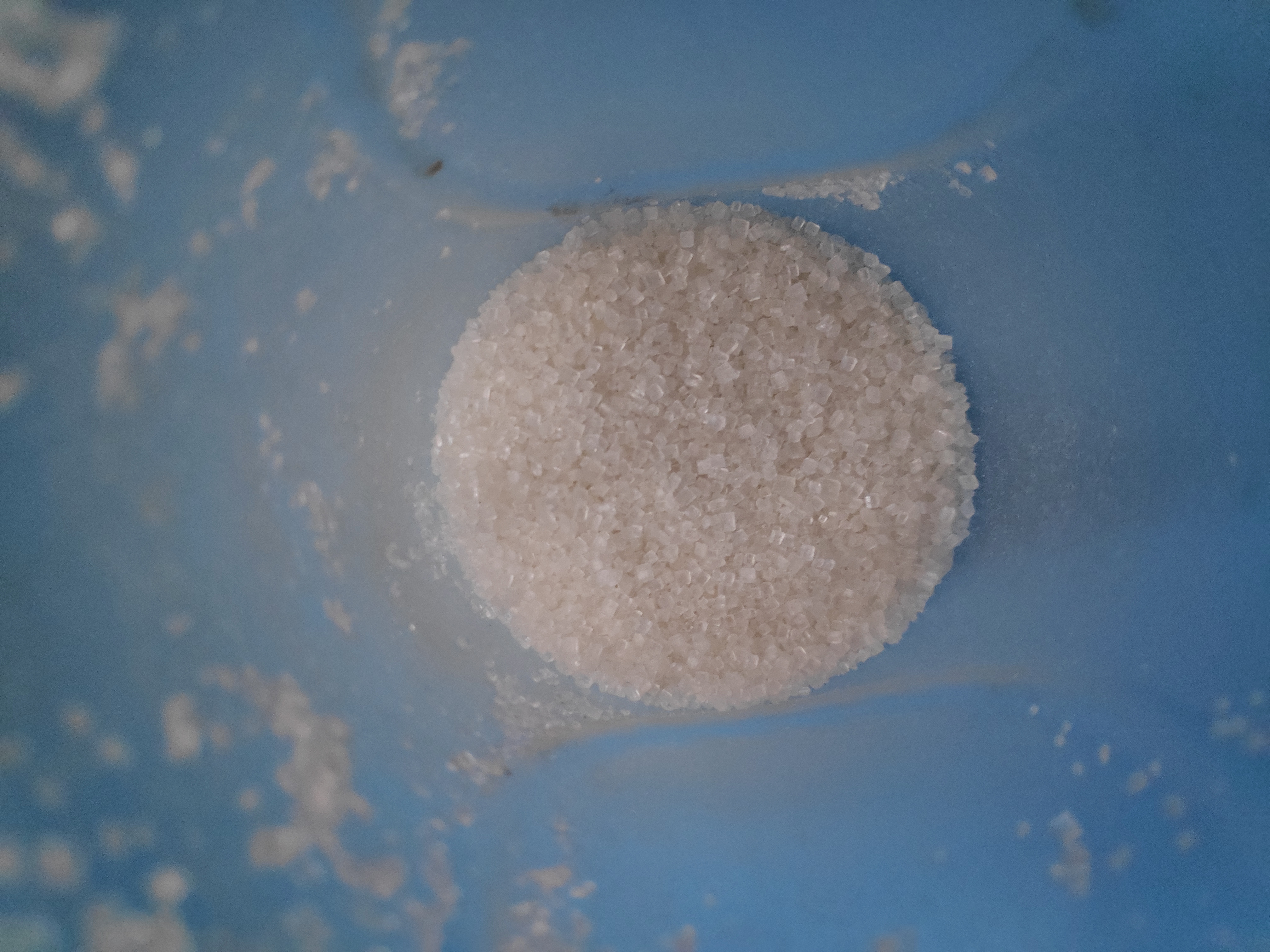
Sugar - 03Put the briki on the smallest burner over a low heat. Do not stir again from this point on.
- 04Let it heat slowly for 3 to 4 minutes. The coffee will darken, then a ring of fine bubbles will form around the edge, then a thick foam will start climbing the sides.
- 05The instant the foam reaches the rim and threatens to rise over, take the briki off the heat. Do not let it boil.Some let it rise twice.Yiayia
- 06Pour the foam off the top first, dividing it between the cups so each gets a good head of kaimaki, then gently top up with the coffee beneath.
- 07Let it stand for a minute so the grounds settle, and serve with a glass of cold water. Drink down to the sludge and stop.
Nutrition, per 1 cup, metrios
- Calories
- 18
- Protein
- 0 g
- Carbs
- 4 g
- Fat
- 0 g
- Sat fat
- 0 g
- Fibre
- 0 g
These figures are calculated estimates based on the ingredients listed, not laboratory analysis. Actual values vary with brands, cuts and portion size.
Greek coffee is not espresso and it is not filter. The grounds are never separated from the water: they are cooked in it and then poured into the cup, where they settle into a sludge at the bottom that you do not drink.
It takes five minutes and there is exactly one skill involved, which is not letting it boil. The moment it boils you lose the kaimaki, the fine dense foam on top, and a Greek coffee without kaimaki is considered a failure regardless of how it tastes.
The other thing worth knowing before you start is that sugar goes in at the beginning, with the water. You cannot sweeten it afterwards without stirring up the grounds, so you have to decide how sweet you want it before you make it. There are names for each level and ordering by name is normal.
Key preparation steps
- Measure cold water with the cup you will drink from.
- Add coffee and sugar to cold water and stir once, off the heat.
- Heat slowly, never stirring again.
- Pull it off the moment the foam rises, before it boils.
How sweet? The four levels
Sketos means plain, with no sugar at all. Metrios is medium, one teaspoon per cup, and is what most people order. Glykos is sweet, two teaspoons. Variglykos is very sweet, three or more, and is more common with older generations.
The sugar is not only about taste: it affects the foam. A metrios or glykos produces noticeably more kaimaki than a sketos, because the dissolved sugar helps stabilise the bubbles. A plain Greek coffee needs a slower, more careful heat to foam properly.
Decide before you start. Adding sugar afterwards means stirring, and stirring lifts the settled grounds into the coffee.
The grind, and why it matters
Greek coffee needs a powder grind, finer than espresso and closer to flour. This is finer than most domestic grinders will go, so buying it ready-ground is usually the practical answer.
The reason is that the grounds are never filtered. A coarse grind will not extract properly in five minutes and will give a thin, sour cup with gritty sediment you can feel. A powder grind extracts fully and settles into a dense compact sludge.
Greek and Turkish ground coffee are effectively identical in grind. The beans are usually a medium roast, lighter than Italian espresso roasts.
Getting the kaimaki foam
Low heat and patience. Put the briki on the smallest ring at a low setting and leave it. It should take three to four minutes to come up, and rushing it is the only real mistake available.
Stir once at the very start, off the heat, to wet the coffee. Then do not stir again. Stirring during heating breaks the foam as it forms.
Watch for the coffee to rise up the sides of the briki and a thick head of fine bubbles to climb towards the rim. Pull it off the heat immediately at that point. If it breaks into a rolling boil the foam collapses and will not come back.
Pour the foam out first, dividing it between the cups, then top up with the coffee underneath. Traditionally the cup with the most kaimaki goes to the guest.
How to drink it
Slowly, and with a glass of cold water alongside, which is served automatically in Greece and is not optional in practice.
Stop when you reach the sludge. The last centimetre or so is grounds and is not meant to be drunk. Tipping the cup back to get the last of it is the mark of someone who has not done this before.
The residue left in the cup is what fortune telling is done with, by inverting the cup on the saucer and reading the patterns once it dries. Whether you take that seriously is a separate question.
What matters in this dish
Match the briki to the quantity
A briki should be roughly two thirds full for the foam to build properly. Making one cup in a large briki gives you almost no kaimaki.
Never reheat it
Once it has been off the heat it cannot be brought back. Reheating boils it, kills the foam and turns it bitter.
Some let it rise twice
A traditional variation pulls the briki off as the foam rises, lets it settle, and returns it once for a second rise. It gives a denser foam. It also makes boiling over more likely, so watch it.
Questions people ask about Ellinikos kafes
What is the difference between Greek coffee and Turkish coffee?
In preparation and grind, essentially nothing. The same method is used across the eastern Mediterranean and the Balkans under different national names. Greek coffee tends towards a slightly lighter roast, and the sweetness terminology differs.
Can you make Greek coffee without a briki?
A very small saucepan works, though the narrow neck of a briki is what concentrates and builds the foam. If you use a pan, keep the quantity small so the liquid is reasonably deep.
Do you drink the grounds in Greek coffee?
No. The grounds settle into a thick sludge at the bottom of the cup and you stop drinking when you reach it, usually with about a centimetre left.
What does metrios mean?
Medium sweet, one teaspoon of sugar per cup. The other levels are sketos with no sugar, glykos with two, and variglykos with three or more.