Greek Breakfast Recipes · Northern Greece · Asia Minor · Baked · The Sunday Table
Bougatsa Recipe (Thessaloniki Custard Pastry)
Μπουγάτσα boo-GHAH-tsah · Bougatsa
In short
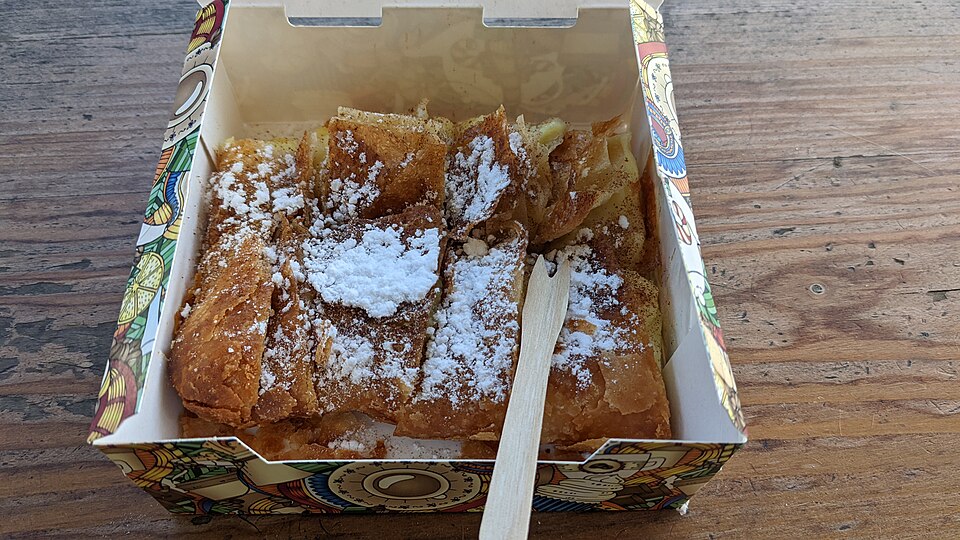
Bougatsa is a breakfast pastry from Thessaloniki of loose semolina custard baked in crisp phyllo, then cut into squares and dusted with icing sugar and cinnamon. Unlike galaktoboureko it is never soaked in syrup and its custard is deliberately softer.
Bougatsa
- Prep
- 30m
- Cook
- 40m
- Total
- 1h 10m
- Serves
- 8
- Level
- Intermediate
Ingredients
For the custard
For the pastry and finishing
Tick ingredients off as you go. Quantities rescale with the buttons above.
Method
- 01Bring the milk to just below boiling with the sugar, lemon peel and salt, stirring until the sugar dissolves. Remove the lemon peel.
- 02Rain in the semolina in a thin steady stream, whisking constantly so it does not lump.
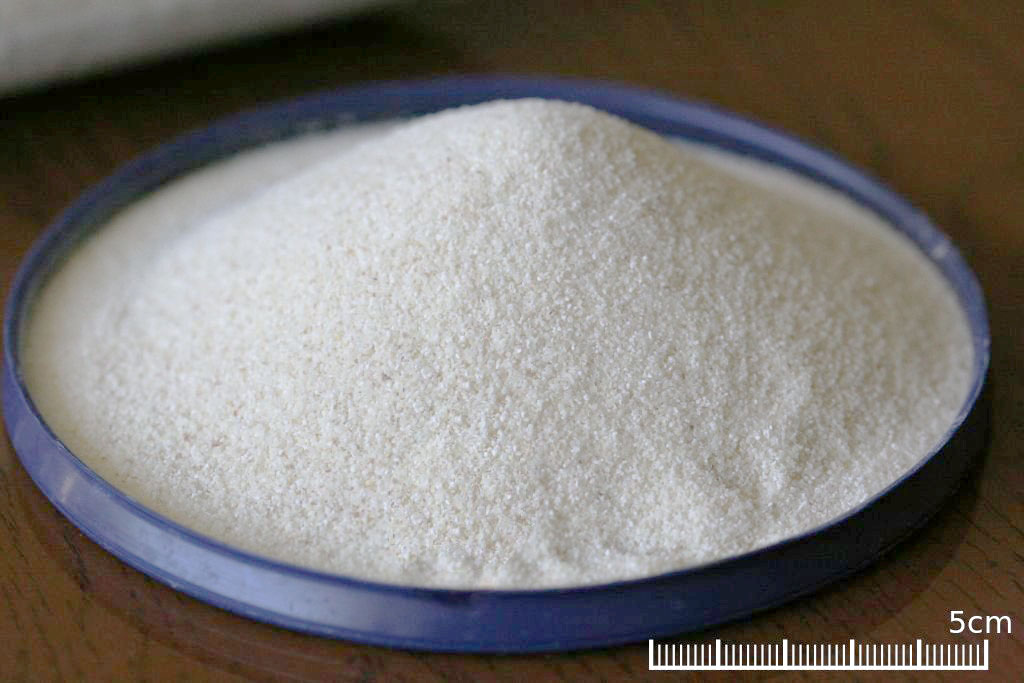
Semolina - 03Cook over a medium heat for 5 to 6 minutes, stirring, until it thickly coats the back of a spoon. Stop there. It should still pour easily.
- 04Take off the heat, stir in the butter and vanilla, and cool for 5 minutes.
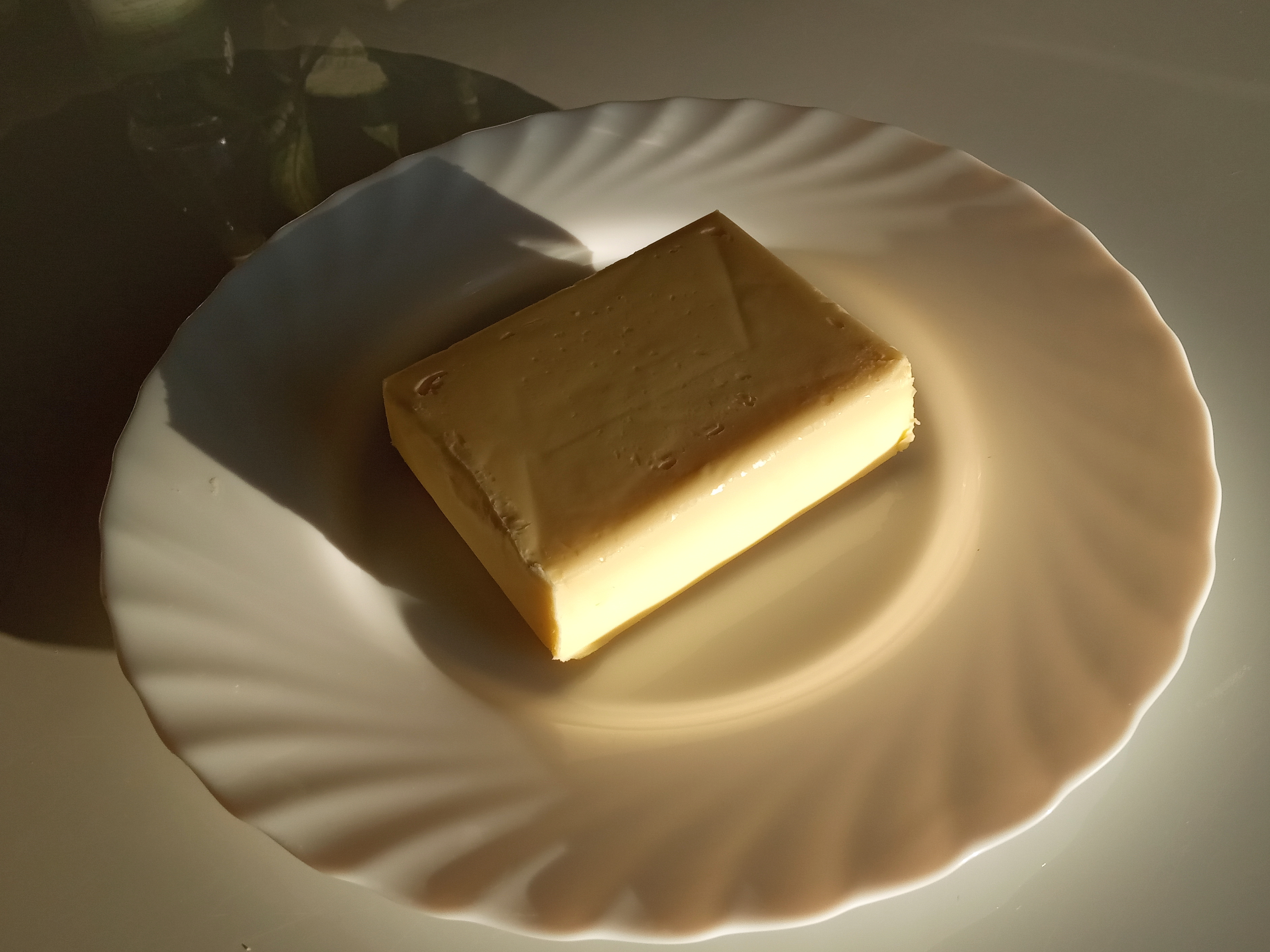
Butter - 05Beat in the eggs in a thin stream, whisking hard, until smooth and glossy.
- 06Heat the oven to 180C fan 160C. Brush a 30 x 22 cm dish with melted butter.
- 07Lay in 6 sheets of phyllo one at a time, brushing each with butter and letting the edges overhang the sides.
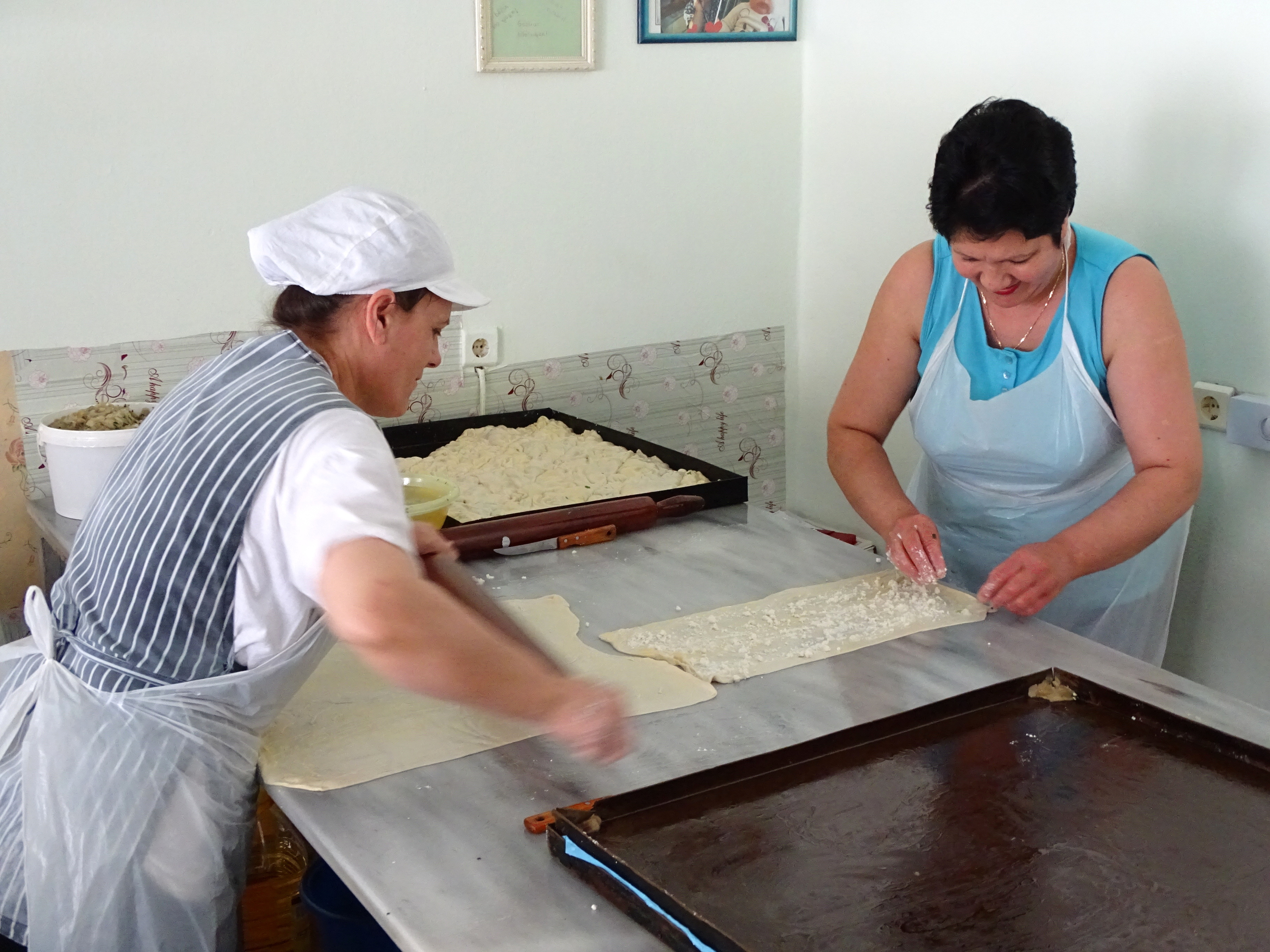
Phyllo - 08Pour in the custard and level the surface.
- 09Fold the overhanging edges in over the custard and brush them, then layer 5 more buttered sheets on top, tucking the edges down inside the dish. Brush the top generously.
- 10Bake for 35 to 40 minutes until deep golden and crisp. Do not score it beforehand.
- 11Cool for 15 minutes, then cut into squares with a pair of kitchen scissors rather than a knife, which would squash the layers.Scissors, not a knife.Yiayia
- 12Dust heavily with icing sugar and ground cinnamon and serve warm.
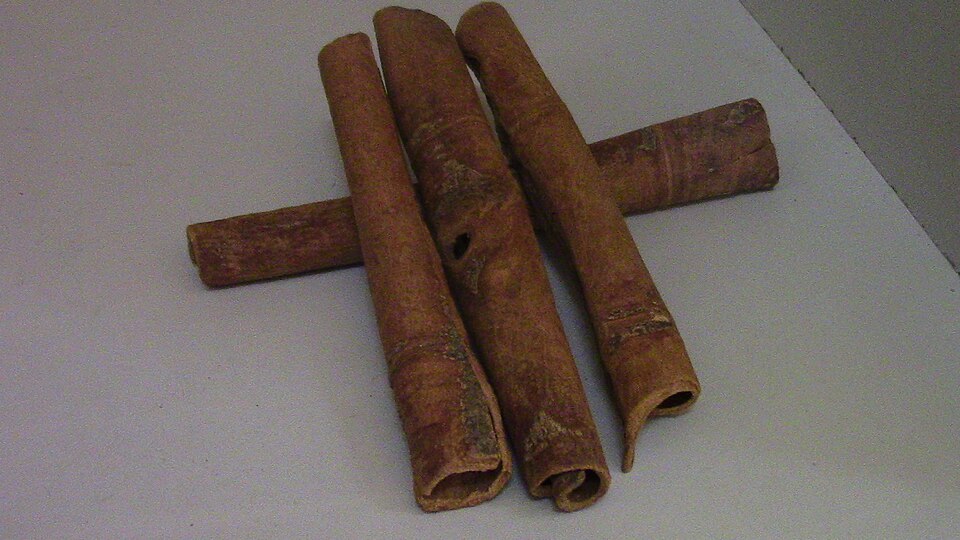
Cinnamon
Nutrition, per 1 piece
- Calories
- 428
- Protein
- 10 g
- Carbs
- 52 g
- Fat
- 20 g
- Sat fat
- 12 g
- Fibre
- 1 g
These figures are calculated estimates based on the ingredients listed, not laboratory analysis. Actual values vary with brands, cuts and portion size.
Bougatsa is what Thessaloniki eats for breakfast, standing at a counter at seven in the morning, cut into squares with a pair of scissors and handed over in paper. It came with refugees from Asia Minor in the 1920s and the city adopted it completely.
It is often confused with galaktoboureko and they are genuinely different. Galaktoboureko has a firm semolina custard and is drenched in syrup. Bougatsa has a much looser, softer, milkier custard and gets no syrup at all, only icing sugar and cinnamon dusted over at the end.
That looser custard is the point and it is also the thing people get wrong by cooking it too far. It should be pourable and only just thickened when it goes into the pastry.
Key preparation steps
- Cook the semolina custard only until it thickly coats a spoon, not until stiff.
- Cool it slightly and beat in the eggs off the heat.
- Build a phyllo base, pour in the custard, seal the top.
- Bake until deep gold, then cut with scissors and dust generously.
How is bougatsa different from galaktoboureko?
Three things. The custard is looser and milkier, using less semolina for the same quantity of milk. There is no syrup at all. And it is finished with icing sugar and cinnamon dusted over the top, which is done after cutting rather than before.
The result is a breakfast pastry rather than a dessert. It is sweet but not very sweet, and the dominant flavour is milk and cinnamon rather than sugar syrup.
There are also savoury bougatsa, filled with minced meat or with cheese, which are common in Thessaloniki and eaten at the same counters. The cheese version uses a mixture of feta and a soft fresh cheese.
Getting the custard consistency right
Around 100 g of fine semolina to a litre of milk, which is roughly half what galaktoboureko uses. Cook it until it thickly coats the back of a spoon and no further.
It will thicken more as it cools and again in the oven, so a custard that looks correct in the pan will be stodgy in the finished pastry. Err loose.
Take it off the heat, let it cool for five minutes, then beat in the eggs in a thin stream while whisking hard. Vanilla and a strip of lemon peel infused in the milk both belong here.
Why it is cut with scissors
Every bougatsa counter in Thessaloniki cuts with scissors, and it is genuinely better than a knife. A knife presses down and squashes the layers, pushing custard out of the sides. Scissors cut through cleanly from above without compressing anything.
Cut after baking, not before. Unlike baklava, bougatsa is not syruped, so there is no need to open channels beforehand, and the top layers stay crisper if left whole in the oven.
Cut into squares and then dust generously with icing sugar and cinnamon, so the sugar falls into the cuts as well as over the top.
Serving
Warm, within an hour of baking, with a Greek coffee. That is how it is eaten and it is noticeably better than at room temperature.
It does not keep well. The pastry softens overnight and the custard firms up, so it is best made on the day. If you have leftovers, reheat in a hot oven for five minutes to bring the crispness back, never a microwave.
What matters in this dish
Err on the loose side
The custard thickens as it cools and again in the oven. If it looks right in the pan it will be stodgy on the plate.
Scissors, not a knife
This is not affectation. A knife compresses the layers and pushes custard out; scissors cut down cleanly.
Eat it the same day
Bougatsa is a fresh pastry. The phyllo softens overnight and no amount of reheating fully recovers it.
Questions people ask about Bougatsa
What is the difference between bougatsa and galaktoboureko?
Bougatsa has a looser, milkier custard, gets no syrup at all, and is finished with icing sugar and cinnamon. Galaktoboureko has a firm semolina custard and is soaked in lemon syrup. One is breakfast, the other is dessert.
Is bougatsa sweet or savoury?
Both exist. The custard version is the famous one, but minced meat and cheese bougatsa are equally traditional in Thessaloniki and sold at the same counters.
Why is my bougatsa custard runny?
It was not cooked long enough, or the eggs were not properly incorporated. It should thickly coat a spoon before it comes off the heat, and the eggs need beating in fully rather than stirred through.
Can you freeze bougatsa?
Assembled and unbaked it freezes for up to two months and can be baked from frozen with about 15 extra minutes. Baked bougatsa does not freeze well, as the custard turns grainy.