Greek Drinks · Epirus · Northern Greece · No-Cook · Taverna Night
Tsipouro Serving Guide (Greek Grape Pomace Spirit)
Τσίπουρο TSEE-poo-roh · Tsipouro
In short
Tsipouro is a clear, strong spirit distilled from grape pomace, mainland Greece's counterpart to Crete's tsikoudia, traditionally served neat or over ice in small glasses alongside a genuine spread of mezedes rather than drunk alone. In Thessaly and Epirus especially, ordering tsipouro means ordering food to go with it.
Tsipouro Serving Guide
- Prep
- 5m
- Cook
- None
- Total
- 5m
- Serves
- 4
- Level
- Beginner
Ingredients
Ingredients
Tick ingredients off as you go. Quantities rescale with the buttons above.
Method
- 01Chill the tsipouro, or keep it at a cool room temperature.
- 02Pour into small glasses, neat or over a little ice.
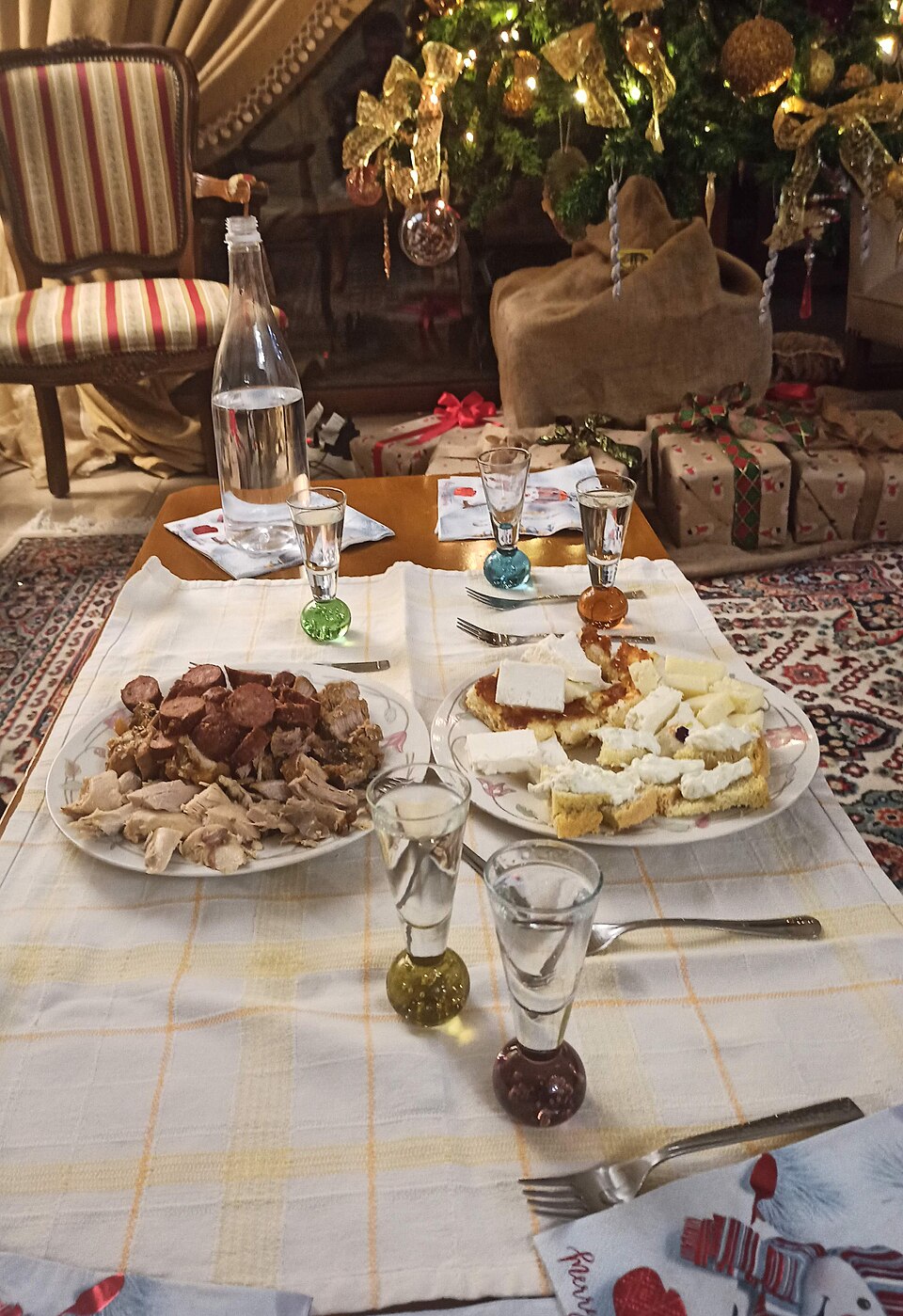
- 03Set out a spread of mezedes, olives, cheese, small fried fish or sausage, alongside.Serve with real food, not alone.Yiayia
- 04Sip slowly, refilling glasses gradually rather than all at once.
Nutrition, per 1 small glass, 30ml
- Calories
- 88
- Protein
- 0 g
- Carbs
- 0 g
- Fat
- 0 g
- Sat fat
- 0 g
- Fibre
- 0 g
These figures are calculated estimates based on the ingredients listed, not laboratory analysis. Actual values vary with brands, cuts and portion size.
Tsipouro is distilled from the pressed skins, stems and seeds left over after winemaking, exactly the same starting material as Crete's tsikoudia and the raw material behind ouzo before anise flavouring is added, and it holds a particularly strong cultural place across Thessaly and Epirus, where ordering a bottle traditionally means ordering a whole spread of small dishes alongside it, not the spirit alone.
Unlike ouzo, which is almost always served with water added, tsipouro is traditionally drunk neat or over ice, without dilution, which keeps its fuller, earthier character more intact than ouzo's milkier, anise-forward profile.
This is a genuine serving guide rather than a recipe, since the whole experience is built around pacing, small glasses refilled steadily across a long table of meze, rather than a quick drink on its own.
Key preparation steps
- Chill the tsipouro or serve at cool room temperature.
- Pour into small glasses, neat or with ice.
- Serve alongside a genuine spread of mezedes, not alone.
- Sip slowly, refilling gradually across the meal.
Serving it properly
Tsipouro is served either neat at a cool room temperature or over ice, rarely diluted with water the way ouzo typically is. Some varieties, particularly from Tyrnavos in Thessaly, are made with anise as well, closer in character to ouzo, while plain tsipouro without anise has a cleaner, more direct grape flavour.
Why food matters so much here
In Thessaly and Epirus specifically, a tsipouradiko, a tavern built around serving tsipouro, brings a genuine parade of small dishes with every round ordered, olives, cheese, small fried fish, sausage, without the customer even asking, since the food is considered inseparable from the drink itself rather than an optional side order.
Pacing
Serve in genuinely small glasses, refilled steadily rather than poured generously all at once, which is exactly the pace this drink is meant to be enjoyed at, alongside conversation and a slowly accumulating spread of small plates rather than as a fast round of shots.
What matters in this dish
Serve with real food, not alone
Tsipouro is genuinely built to be drunk alongside a spread of small mezedes, particularly in Thessaly and Epirus, where the two are considered inseparable.
Keep the glasses small
This paces the drinking properly, refilled steadily across a long meal rather than poured generously all at once.
Check if it contains anise
Some varieties, particularly from Tyrnavos, include anise and taste closer to ouzo. Plain tsipouro has a cleaner, more direct grape character.
Questions people ask about Tsipouro
What is the difference between tsipouro and tsikoudia?
They are essentially the same pomace spirit, distilled from grape skins and stems left over from winemaking. Tsikoudia is the specifically Cretan name for it, while tsipouro is used across the rest of mainland Greece.
Do you add water to tsipouro like ouzo?
Not typically. Tsipouro is more often served neat or over ice, while ouzo is almost always diluted with water, which brings out its milky, anise-forward character.
Why is tsipouro always served with food?
Particularly in Thessaly and Epirus, a tsipouradiko tavern brings small dishes automatically with each round, since the food and drink are considered inseparable parts of the same experience rather than the meze being an optional extra.