Greek Meze and Appetisers · The Mainland · No-Cook · Lent and Nistisima
Greek Fish Roe Dip (Taramosalata)
Ταραμοσαλάτα tah-rah-moh-sah-LAH-tah · Taramosalata
In short
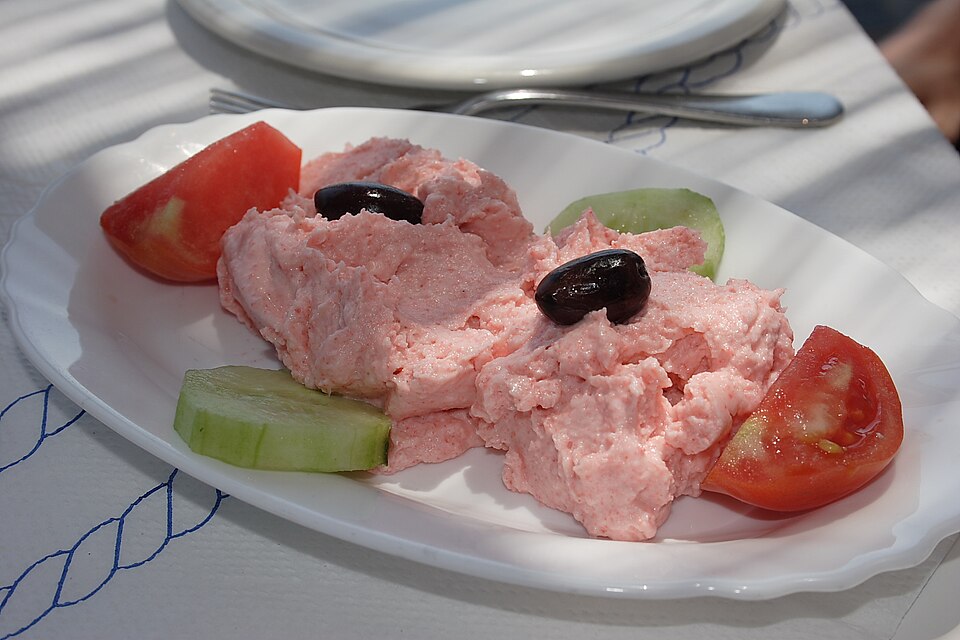
Taramosalata is a Greek dip made by whipping cured fish roe, tarama, with soaked bread or potato and olive oil into a pale, fluffy emulsion, sharpened with lemon. Properly made it is pale pink to beige, never the bright pink of the dyed supermarket version.
Fish Roe Dip
- Prep
- 15m
- Cook
- None
- Total
- 15m
- Serves
- 8
- Level
- Beginner
Ingredients
Ingredients
Tick ingredients off as you go. Quantities rescale with the buttons above.
Method
- 01Tear the bread into pieces and soak in cold water for 5 minutes. Squeeze it very hard, in batches, until completely dry, almost like a compressed ball of dough.Squeeze the bread bone dry.Yiayia
- 02Put the squeezed bread and the tarama into a food processor and blend until smooth and well combined.
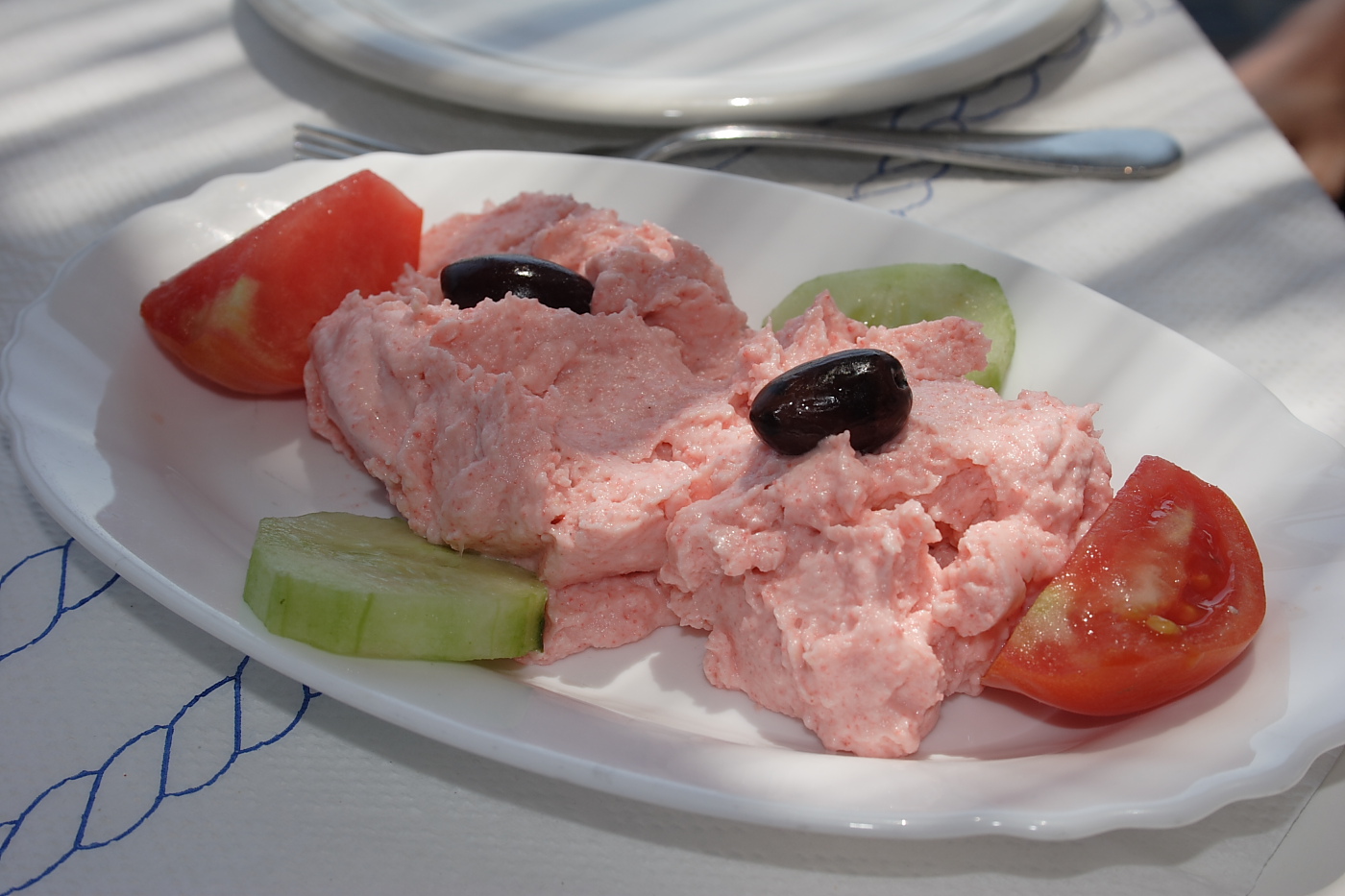
Tarama - 03With the processor running, add the grated onion if using, then drizzle in the oil slowly and steadily, as you would making mayonnaise, until the mixture turns pale and fluffy.
- 04Add the lemon juice gradually, tasting as you go, until the balance of salt and acidity is right.
Lemon - 05If the dip is thicker than you want, blend in a tablespoon or two of ice-cold water until it loosens to a spreadable consistency.
- 06Transfer to a bowl, cover, and chill for at least 1 hour before serving, which lets the flavour settle and mellow.
Nutrition, per 2 tbsp
- Calories
- 168
- Protein
- 3 g
- Carbs
- 6 g
- Fat
- 15 g
- Sat fat
- 2 g
- Fibre
- 0 g
These figures are calculated estimates based on the ingredients listed, not laboratory analysis. Actual values vary with brands, cuts and portion size.
The taramosalata sold pre-packaged in most supermarkets is dyed bright pink and tastes mostly of mayonnaise. Real taramosalata is pale, closer to beige or the softest pink, and it gets its body from bread or potato whipped with good olive oil into the cured roe, not from an egg-based emulsion.
Tarama itself, the cured and salted roe of cod or carp, is sold in small jars or tubs at Greek delis and well-stocked supermarkets, usually in the fridge section near other cured fish products. It is intensely salty and briny on its own, which is exactly why it needs the volume of bland bread or potato to turn it into something spreadable rather than overpowering.
This is a fifteen-minute dip with no cooking at all beyond boiling a potato if you go that route, and it is one of the very few genuinely fasting-friendly dishes that also feels like a real indulgence.
Key preparation steps
- Soak stale bread in water, then squeeze it completely dry.
- Whip the tarama with the bread base until pale and creamy.
- Drizzle in olive oil gradually, the way you would build a mayonnaise.
- Sharpen with lemon juice and thin with cold water to the texture you want.
Bread base versus potato base
The crumb of good stale white bread, crusts removed, soaked in water and squeezed bone dry, is the classic base and gives a light, almost whipped texture. A boiled and cooled potato, mashed smooth, is the other common base and gives a slightly denser, creamier result.
Both are correct and the choice mostly comes down to family habit. Bread gives a lighter dip that is easier to whip fluffy in a food processor, so it is the better choice if this is your first attempt.
Building the emulsion
Once the tarama and bread or potato are blended smooth, add the olive oil gradually with the processor running, the same way you would build a mayonnaise from egg yolk. Adding it all at once can cause the mixture to split rather than emulsify into that pale, fluffy texture you are after.
If it does split or looks greasy rather than creamy, a tablespoon of ice-cold water blended in hard will usually bring it back together.
Balancing the salt and acidity
Tarama varies significantly in saltiness between brands, so taste as you go rather than trusting a fixed quantity. Lemon juice is what cuts through the richness and the salt, added at the end rather than the start so you can judge how much you actually need.
Thin the finished dip with a tablespoon or two of ice-cold water if it is thicker than you want, whipping it in well. It should hold its shape on a spoon but spread easily on bread.
What matters in this dish
Squeeze the bread bone dry
Any leftover water thins the dip and stops it whipping up fluffy. Squeeze harder than feels necessary.
Add oil gradually
Tipping it all in at once risks splitting the emulsion. A slow, steady stream with the motor running gives a stable, fluffy result.
Taste before adding all the lemon
Tarama's saltiness varies by brand, so build the lemon in gradually rather than trusting a fixed amount.
Questions people ask about Taramosalata
Why is shop-bought taramosalata bright pink?
Most commercial versions add food colouring and lean heavily on mayonnaise rather than a genuine bread and oil emulsion. Real taramosalata, made simply with tarama, bread and olive oil, is pale beige to soft pink.
Where do you buy tarama?
Small jars or tubs of cured cod or carp roe, usually found in the fridge section of Greek delis and well-stocked supermarkets near other cured fish and olives.
Is taramosalata suitable for fasting?
Yes, it is a traditional Lenten dish since it contains no meat or dairy, which is exactly why it appears so often on fasting tables alongside dishes like louvi and horta.
How long does taramosalata keep?
About 4 days in the fridge in a sealed container. The flavour actually improves after the first day, once it has had time to settle.