Greek Salads · Crete · No-Cook · The Summer Table
Cretan Dakos Recipe (Barley Rusk with Tomato and Mizithra)
Ντάκος DAH-kos · Dakos
In short
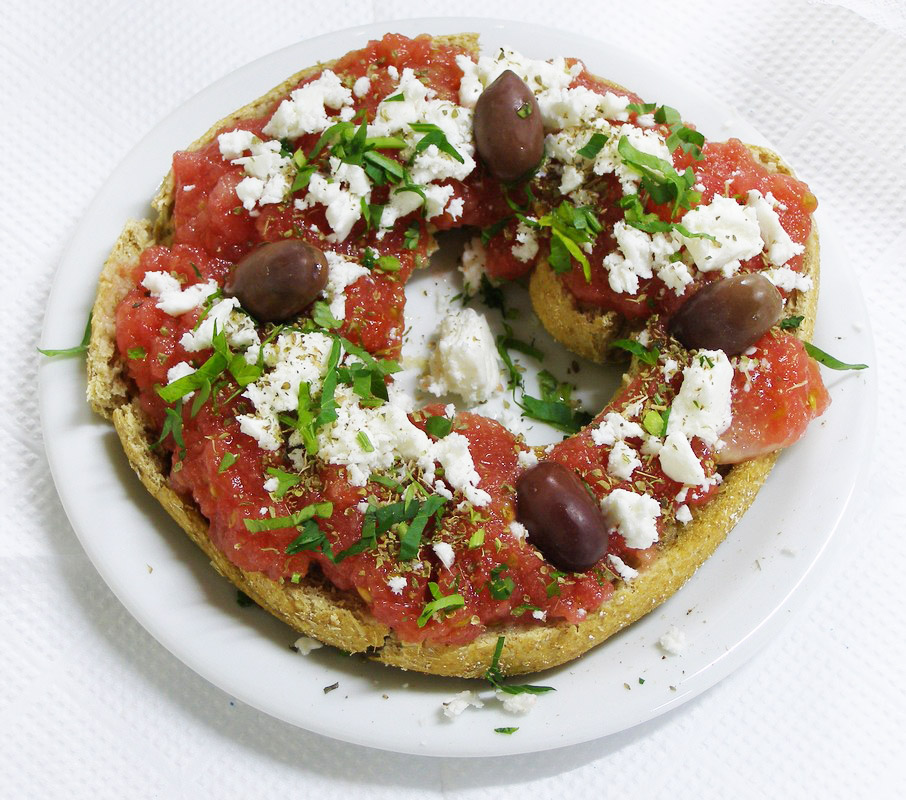
Dakos is a Cretan dish of hard barley rusk moistened with water and olive oil, topped with grated fresh tomato, soft mizithra cheese, oregano and olive oil. The rusk must be dampened just enough to yield without turning to mush.
Cretan Dakos
- Prep
- 12m
- Cook
- None
- Total
- 12m
- Serves
- 4
- Level
- Beginner
Ingredients
Ingredients
Tick ingredients off as you go. Quantities rescale with the buttons above.
Method
- 01Halve the tomatoes across the middle. Grate the cut faces on the coarse side of a box grater into a bowl, holding the skin flat and discarding it when only skin remains. Season the pulp with salt and set aside.
- 02Hold each rusk briefly under a cold tap, 2 to 3 seconds a side, or sprinkle over a tablespoon of water. Do not soak them. Set on plates and leave for 5 minutes.
- 03Drizzle each rusk with a tablespoon of olive oil and let it soak in.
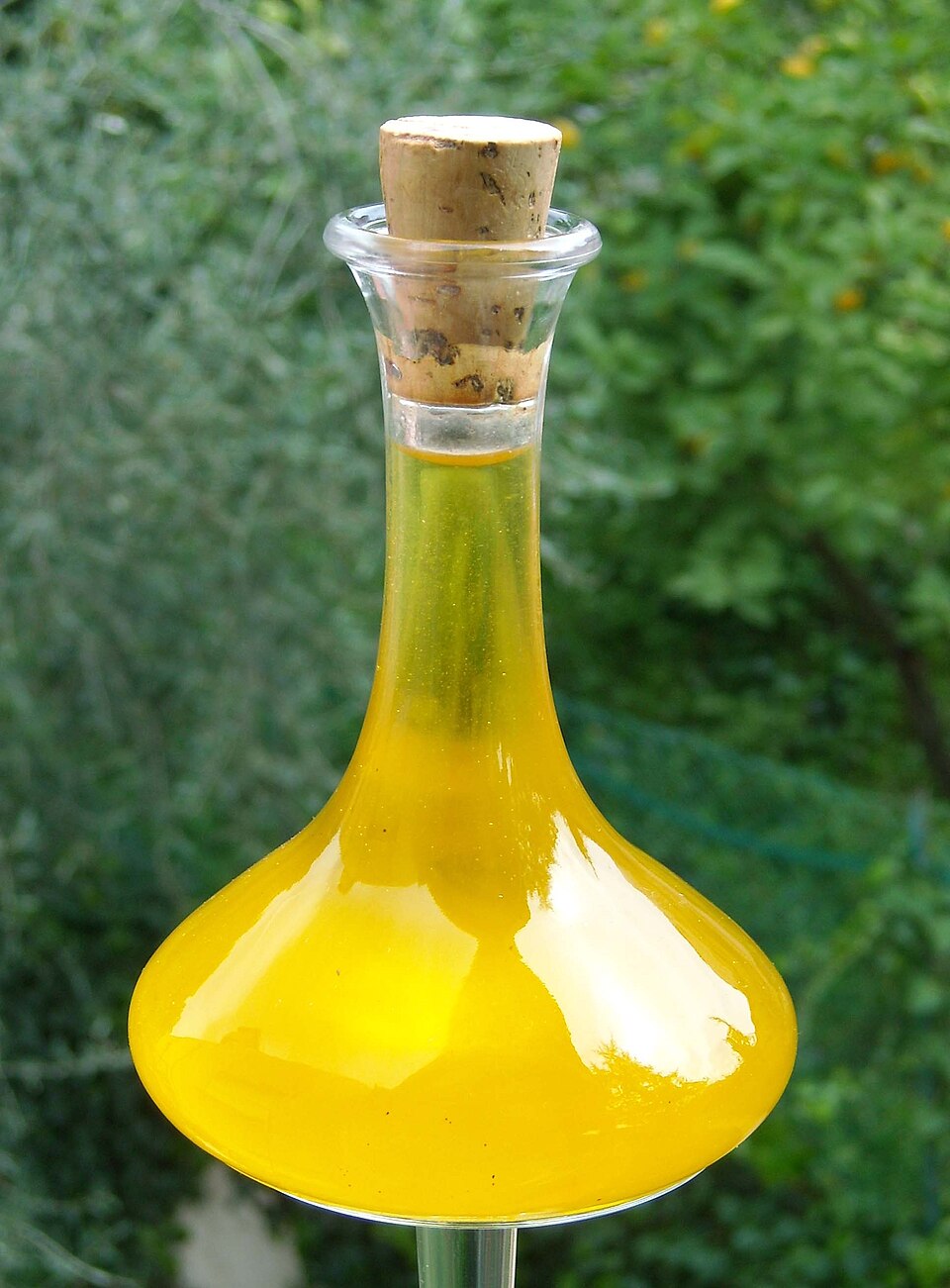
Olive Oil - 04Spoon the grated tomato and its juices over the rusks, dividing it evenly and letting it spread to the edges.Buy real barley rusks.Yiayia
- 05Crumble the mizithra over the top in rough curds.
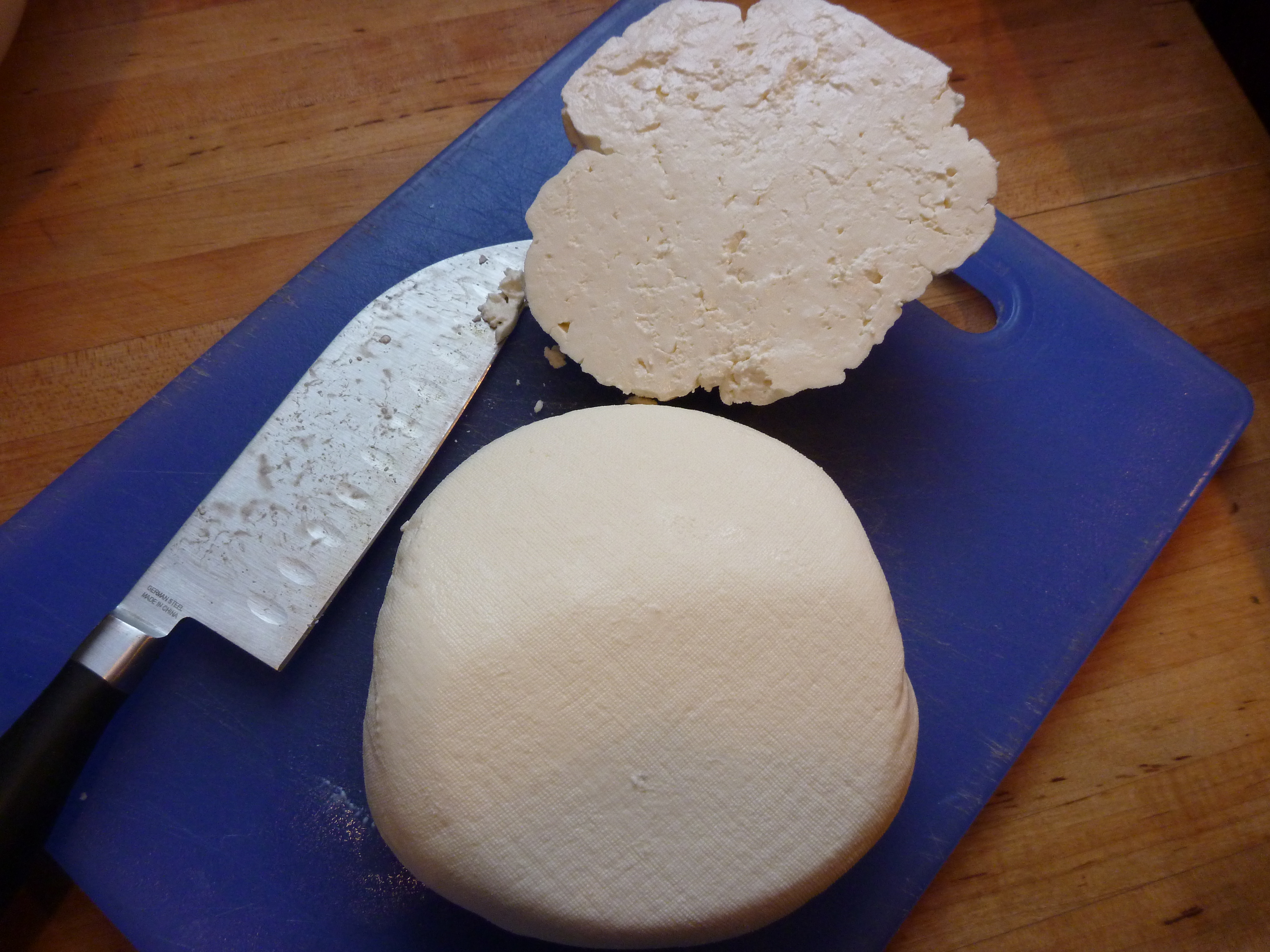
Mizithra - 06Scatter with olives and capers if using, rub the oregano between your palms over each rusk, and finish with a generous pour of olive oil and a pinch of sea salt.
- 07Serve immediately, while the rusk still has some bite.
Nutrition, per 1 rusk
- Calories
- 418
- Protein
- 12 g
- Carbs
- 38 g
- Fat
- 25 g
- Sat fat
- 7 g
- Fibre
- 6 g
These figures are calculated estimates based on the ingredients listed, not laboratory analysis. Actual values vary with brands, cuts and portion size.
Dakos is what happens when a food culture refuses to waste anything. Barley rusk, paximadi, was baked twice to survive months at sea or in a mountain store, and it is genuinely rock hard. Dakos is the method for making it edible again, and it turns out to be one of the best things anyone eats in summer.
It is a five-minute dish with two decisions in it. How wet to make the rusk, and how good your tomatoes and oil are. There is nowhere to hide on the second point.
Cretans will tell you it is not a Greek salad on a rusk and they are right. The tomato is grated rather than chopped, so it becomes a wet pulp that soaks downwards, and the cheese is soft and mild rather than a salty slab.
Key preparation steps
- Grate the tomatoes on a box grater, discarding the skins.
- Dampen the rusk briefly with water, then oil it.
- Pile on the tomato pulp with its juice.
- Top with crumbled soft cheese, oregano and a heavy pour of oil, and eat within twenty minutes.
How wet should the rusk be?
Briefly damp, not soaked. Hold the rusk under a running tap for two or three seconds a side, or sprinkle a tablespoon of water over it, and then leave it for five minutes.
The tomato is going to do most of the work. Grated tomato releases a lot of juice which soaks down into the rusk while it sits, so a rusk that was already saturated with water will collapse into porridge.
The target texture is a rusk that yields to a fork without crumbling, with a little resistance left at the centre. Cretans are quite particular about this and consider a fully soft dakos a failure.
Why grate the tomatoes?
Grating gives you pulp and juice rather than chunks, and both matter. The juice moistens the rusk from above and the pulp sits as a layer rather than rolling off.
Halve the tomatoes across the equator and grate the cut face on the coarse side of a box grater, holding the skin flat in your palm. The flesh comes away and you are left holding an empty skin, which you discard. It is a slightly alarming technique the first time and then it is obvious.
Season the grated tomato with salt and let it sit for a couple of minutes before it goes on.
Mizithra, or feta?
Fresh mizithra is the correct answer and is what makes it a Cretan dish. It is a soft, mild, slightly sweet whey cheese that crumbles into curds, and its mildness is deliberate: it lets the tomato and oil lead.
Feta is the usual substitute outside Greece and it works, but it is much saltier and firmer and it dominates. If you use feta, use less than you think and cut back the salt on the tomato.
Ricotta, drained well, is closer to mizithra in texture and mildness than feta is, and is a better substitute if the alternative is a salty supermarket feta.
Timing
Dakos is assembled and eaten, not made ahead. Twenty minutes is roughly the window: long enough for the juice to work into the rusk, short enough that it still has structure.
If you are serving it to guests, have everything prepared and assemble at the table. It is a fast enough job that this is not a burden.
Serve as a meze, a light lunch, or a starter. It is substantial, so one rusk per person is usually enough alongside anything else.
What matters in this dish
Buy real barley rusks
Wheat rusks and dried bread are not the same. Barley paximadi has a nuttier, denser quality and holds up under the tomato. Greek delis and larger supermarkets stock them.
The oil is an ingredient, not a finish
This dish uses a lot of olive oil, and a mediocre one will be obvious. Use the best Cretan oil you can get hold of.
Small rusks for a meze table
Mini rusks make excellent one-bite meze and can be assembled a few minutes before guests sit down.
Questions people ask about Dakos
What is a Cretan barley rusk?
Paximadi, a bread baked and then dried twice until rock hard so it keeps for months. It was food for sailors, shepherds and long winters, and it must be moistened before eating.
What is the difference between dakos and Greek salad?
Dakos is built on a barley rusk that soaks up the juices, uses grated rather than chopped tomato, and uses soft mild mizithra instead of a slab of feta. Horiatiki has no bread in it at all.
Can you make dakos ahead?
No. Assemble it within about twenty minutes of serving. Any longer and the rusk goes from pleasantly yielding to soggy.
What cheese should I use if I cannot find mizithra?
Well-drained ricotta is closer in texture and mildness than feta. If you use feta, use rather less than you would expect, because it is much saltier and will overwhelm the tomato.