Greek Meze and Appetisers · Cyprus · Grilled and Souvla · Mezedes and Ouzo
Grilled Halloumi Recipe (Cypriot Halloumi with Lemon and Mint)
Χαλλούμι hah-LOO-mee · Halloumi
In short
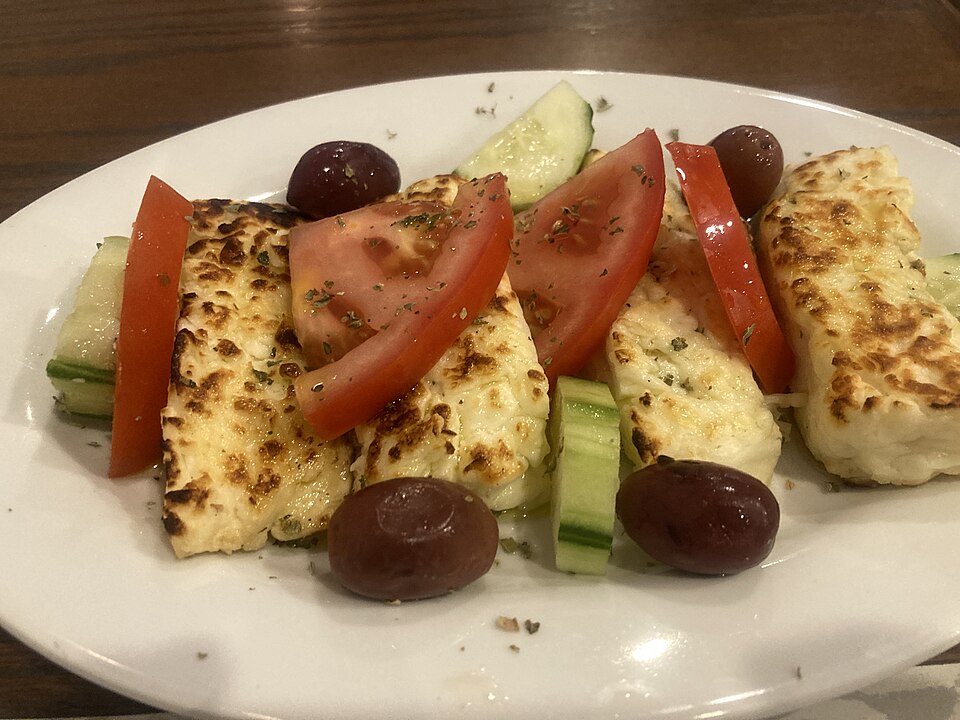
Halloumi is a Cypriot brined cheese with a high melting point, so it browns and softens without losing its shape. Grill thick slices in a dry hot pan for two minutes a side and serve immediately with lemon and dried mint.
Grilled Halloumi
- Prep
- 5m
- Cook
- 6m
- Total
- 11m
- Serves
- 4
- Level
- Beginner
Ingredients
Ingredients
Tick ingredients off as you go. Quantities rescale with the buttons above.
Method
- 01Cut each block of halloumi across into slices about 1 cm thick.No oil, hot pan.Yiayia
- 02If the cheese is very salty, soak the slices in cold water for 20 minutes first.
- 03Pat every slice thoroughly dry with kitchen paper. Surface moisture will steam instead of browning.
- 04Heat a non-stick or cast iron frying pan or a ridged griddle over a medium-high heat until properly hot. Add no oil.
- 05Lay the slices in the pan without crowding them and leave completely undisturbed for 2 minutes, until a deep golden crust has formed underneath.
- 06Turn once and cook the other side for a further 1 to 2 minutes.
- 07Move immediately to a warm plate. Squeeze lemon over generously, crush the dried mint between your fingers over the top, and grind over black pepper.
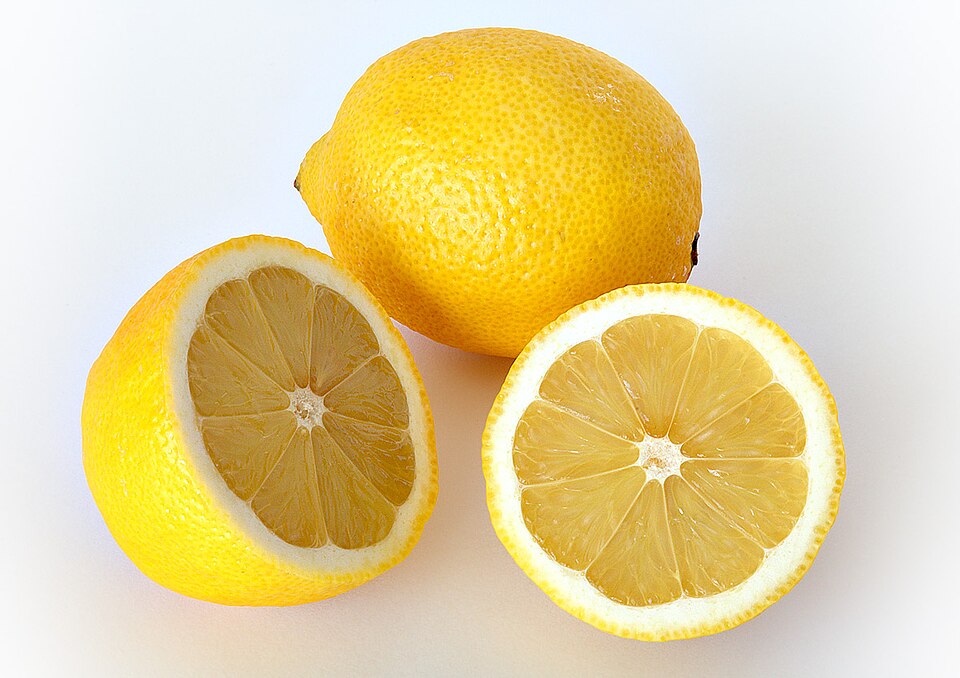
Lemon - 08Serve at once, while it is still soft. It firms up within a few minutes of leaving the pan.
Nutrition, per 125 g
- Calories
- 382
- Protein
- 26 g
- Carbs
- 3 g
- Fat
- 30 g
- Sat fat
- 20 g
- Fibre
- 0 g
These figures are calculated estimates based on the ingredients listed, not laboratory analysis. Actual values vary with brands, cuts and portion size.
Halloumi is Cypriot, it is protected, and it is made from a mixture of sheep and goat milk with the curd heated in whey before brining. That heating step is what gives it the high melting point, and the high melting point is the entire reason you can grill it.
The mint is not a modern garnish. Traditional halloumi is folded around a sprig of dried mint before brining, both as a preservative and for flavour, so mint and halloumi are a single idea in Cyprus rather than a pairing.
There is very little to this recipe, which is exactly why the details matter: thick slices, a properly hot dry pan, and getting it onto the plate immediately.
Key preparation steps
- Cut thick, about a centimetre.
- Pat completely dry.
- Dry hot pan, no oil, two minutes a side undisturbed.
- Lemon and dried mint straight away, and serve at once.
Do you need oil to fry halloumi?
No, and it is better without. Halloumi contains enough fat to release its own and it browns beautifully in a dry pan. Adding oil makes it greasy and can cause it to spit aggressively.
The pan does need to be properly hot before the cheese goes in, and it needs to be non-stick or well-seasoned cast iron. A cold pan means the cheese sticks and tears when you try to turn it.
Do not move it for the first two minutes. It will release cleanly once a crust has formed, and prodding it before that is what causes it to stick.
How thick should the slices be?
About a centimetre. Thinner and it dries out and goes tough before it has coloured; thicker and the outside burns before the middle has softened.
Cut across the block rather than lengthways so each slice has a decent surface area. Six to eight slices from a standard 250 g block.
Pat every slice dry with kitchen paper first. Halloumi is stored in brine and surface moisture steams rather than browns.
Why does halloumi squeak, and why does it go rubbery?
The squeak is the protein structure rubbing against tooth enamel, and it is a sign of a fresh, properly made halloumi rather than a fault.
The rubberiness is a timing problem. Halloumi is at its best for about three minutes after it leaves the pan. As it cools, the proteins tighten and it goes from soft and yielding to squeaky and firm.
There is no fixing this. Cook it last, plate it immediately, and put it on the table while people are already sitting down. Reheating does not bring it back.
Soaking, and what to serve it with
If your halloumi is very salty, and some brands are, soak the slices in cold water or milk for twenty minutes and pat dry. It takes the edge off without affecting the texture.
In Cyprus it appears at almost every meal: grilled with lemon as meze, raw in a village salad, fried alongside eggs for breakfast, and inside a souvla wrap. Watermelon and halloumi is the classic summer combination and works far better than it sounds.
Dried mint rather than fresh, crushed between the fingers over the hot cheese, and a hard squeeze of lemon.
What matters in this dish
No oil, hot pan
Halloumi releases its own fat. Oil just makes it greasy and encourages it to spit.
Cook it last
This is not a dish you can hold. Have everything else on the table before the cheese goes in the pan.
Save the offcuts
Ragged ends are excellent grated over a salad or fried hard and scattered on roasted vegetables.
Questions people ask about Halloumi
Why does halloumi not melt?
The curd is heated in whey during production, which denatures the proteins and raises the melting point. It softens and browns rather than flowing, which is what makes it grillable.
Do you need oil to fry halloumi?
No. It has enough fat of its own and browns better in a dry hot pan. Oil makes it greasy and causes spitting.
Why did my halloumi go rubbery?
It cooled down. Halloumi is soft for about three minutes after cooking and then tightens. Cook it last and serve it straight from the pan.
Is halloumi the same as feta?
No. Both are brined, but halloumi is Cypriot, has a high melting point and is made from sheep and goat milk with the curd heated in whey. Feta is Greek, crumbly and collapses when heated.