Greek Salads · The Dodecanese · No-Cook · The Summer Table
Kalymnos Barley Rusk Salad (Mermizeli)
Μερμιζέλι mer-mee-ZEH-lee · Mermizeli
In short
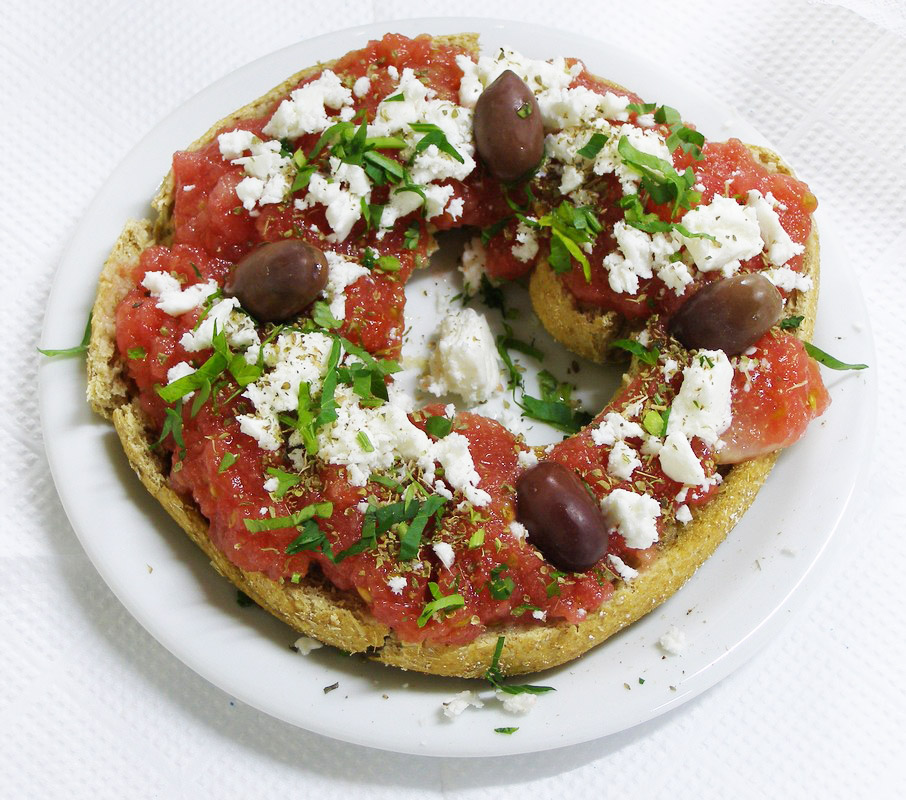
Mermizeli is the barley rusk salad of Kalymnos in the Dodecanese, made by breaking round barley kouloures into a bowl with chopped tomato, onion, cucumber, capers and olives, then topping it with a soft spreadable cheese such as kopanisti and a great deal of olive oil. It is closer to a village salad built on rusk than to a Cretan dakos, and no part of it is cooked.
Kalymnos Barley Rusk Salad
- Prep
- 20m
- Cook
- None
- Total
- 20m
- Serves
- 4
- Level
- Beginner
Ingredients
For the salad
To dress and finish
Tick ingredients off as you go. Quantities rescale with the buttons above.
Method
- 01Break the rusks by hand into rough walnut-sized pieces and put them in a wide shallow bowl.
- 02Flick a tablespoon of water over them, or pass them very briefly under a running tap, and toss.
- 03Add the tomatoes with all their juice, the onion, cucumber, capers, olives and caper leaves if using.
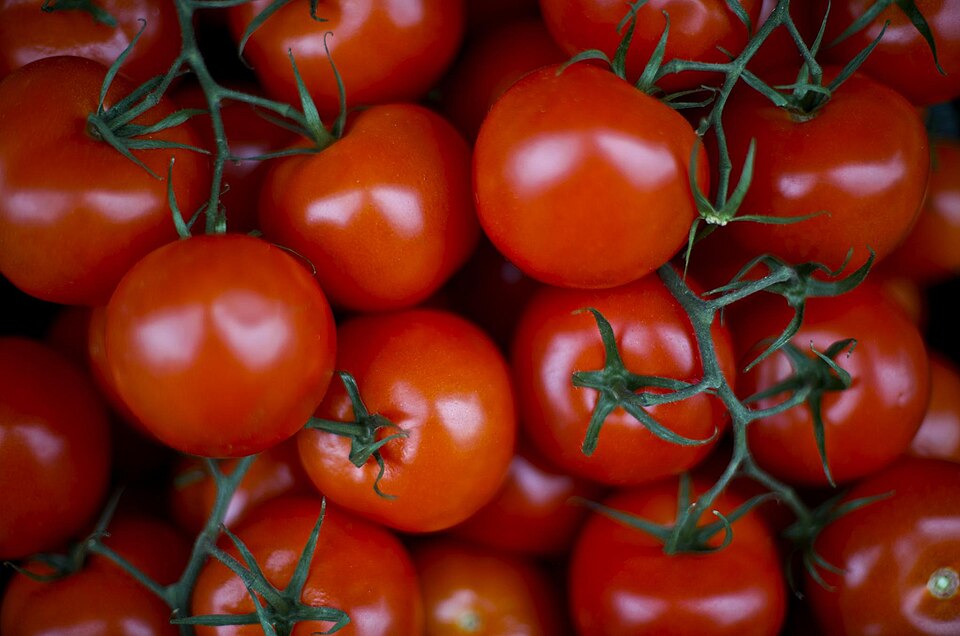
Tomato - 04Pour over the olive oil and the vinegar, season with salt and pepper, and turn everything gently with your hands.
- 05Spoon the soft cheese over the top in rough blobs rather than stirring it through.Do not stir the cheese in.Yiayia
- 06Crumble the oregano between your palms over the whole bowl and add a last thread of olive oil.
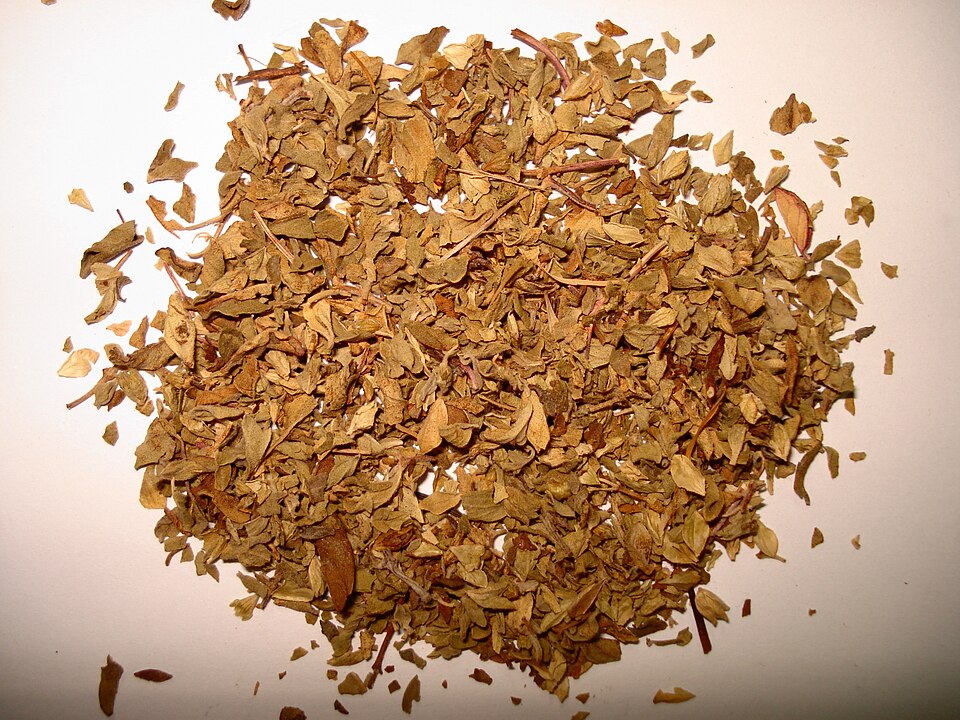
Oregano - 07Leave to stand at room temperature for 10 to 15 minutes before serving.
Nutrition, per 1 portion
- Calories
- 426
- Protein
- 11 g
- Carbs
- 34 g
- Fat
- 28 g
- Sat fat
- 7 g
- Fibre
- 5 g
These figures are calculated estimates based on the ingredients listed, not laboratory analysis. Actual values vary with brands, cuts and portion size.
Every Kalymnian taverna serves mermizeli and no two versions are quite the same. The frame is fixed: round barley rusks broken up, ripe tomato, onion, capers, olives, an enormous amount of olive oil and a soft island cheese over the top. Everything else is the cook's own.
It reads like a horiatiki until you eat it. The rusk goes in broken rather than whole and it sits underneath everything, so it drinks the tomato juice and the oil and softens into the salad rather than being a plate for it. That is what makes it a Kalymnian dish rather than a Cretan one.
The island details are worth chasing. Kalymnos grows caper bushes on its bare rock and uses the leaves as well as the buds, and the local wild oregano, called throumbi, is more savoury and less sharp than mainland rigani. Sardines from a tin are a common addition and turn the salad into a meal.
Key preparation steps
- Break barley rusks into rough pieces in a wide bowl.
- Add chopped tomato, onion, cucumber, capers and olives.
- Dress heavily with olive oil and vinegar.
- Top with soft cheese and oregano and let it stand.
What kind of rusk does mermizeli need?
Round barley kouloures, the thick ring-shaped rusks sold across the Dodecanese and Crete. Barley rather than wheat matters here, because barley rusk stays chewy as it absorbs rather than turning to paste.
Break them by hand into pieces roughly the size of a walnut. Do not cut them and do not crush them fine. Uneven pieces mean some are still crunchy at the end while others have gone soft, and that contrast is half the pleasure of the dish.
Should the rusk be soaked first?
Only just. A very quick pass under the tap, or a tablespoon of water flicked over the broken pieces, is enough to take the worst of the hardness off. The tomato and the oil do the rest.
Soaking properly is the one mistake that ruins mermizeli. A rusk that has drunk a cup of water has nothing left to absorb, so the tomato juice and the olive oil pool at the bottom of the bowl instead of going into the bread.
Which cheese goes on top?
Kopanisti is the island answer: a soft, sharp, faintly peppery spreadable cheese that is smeared over the top rather than crumbled. It is made across the Cyclades and Dodecanese and Greek delis stock it.
Fresh mizithra, anthotyro, or a soft feta mashed with a fork and a splash of oil all stand in well. What you want is something creamy enough to coat the rusk, which is why a hard dry cheese is the wrong choice here.
How long should mermizeli sit before serving?
Ten to fifteen minutes. That is enough for the rusk to take up the tomato juice and the oil while keeping some resistance in the middle of the larger pieces.
Dress it and leave it on the counter, not in the fridge. Cold flattens the tomato and stiffens the olive oil, and mermizeli is a dish that wants to be eaten at the temperature of a Kalymnian afternoon.
What matters in this dish
Use every drop of tomato juice
Chop the tomatoes on a board with a lip, or straight into the bowl, and tip the juice in with them. That juice is the main liquid the rusk has to work with.
Do not stir the cheese in
Kopanisti and mizithra are meant to sit on top in soft pockets so you get a creamy mouthful now and then. Stirred through, they coat everything greyly and disappear.
Rinse the capers
Salt-packed capers carry a lot of salt into a dish that already has olives, cheese and salty rusk. Rinse them and taste before adding any more salt.
Questions people ask about Mermizeli
How is mermizeli different from dakos?
Dakos is one whole rusk topped with grated tomato and fresh mizithra, eaten as a single portion. Mermizeli breaks the rusk up and tosses it through a full village salad of tomato, onion, cucumber, capers and olives, so it is served from a bowl.
Can I add fish to mermizeli?
Yes, and on Kalymnos many cooks do. Sardines or anchovies in oil are the usual addition, laid over the top at the end. It turns the salad into a light meal rather than a side.
What is throumbi?
The wild savory that grows on Kalymnos, used there in place of oregano. It is more herbal and less sharp than mainland oregano. If you cannot find it, dried Greek oregano is the standard substitute.
Can mermizeli be made ahead?
Assemble it no more than about twenty minutes before eating. Left longer the rusk turns soft the whole way through and the salad loses the contrast that makes it worth making.