Greek Desserts · The Mainland · Boiled and Simmered · Name Days
Greek Quince Spoon Sweet (Kydoni Glyko)
Κυδώνι γλυκό kee-THOH-nee glee-KOH · Kydoni glyko
In short
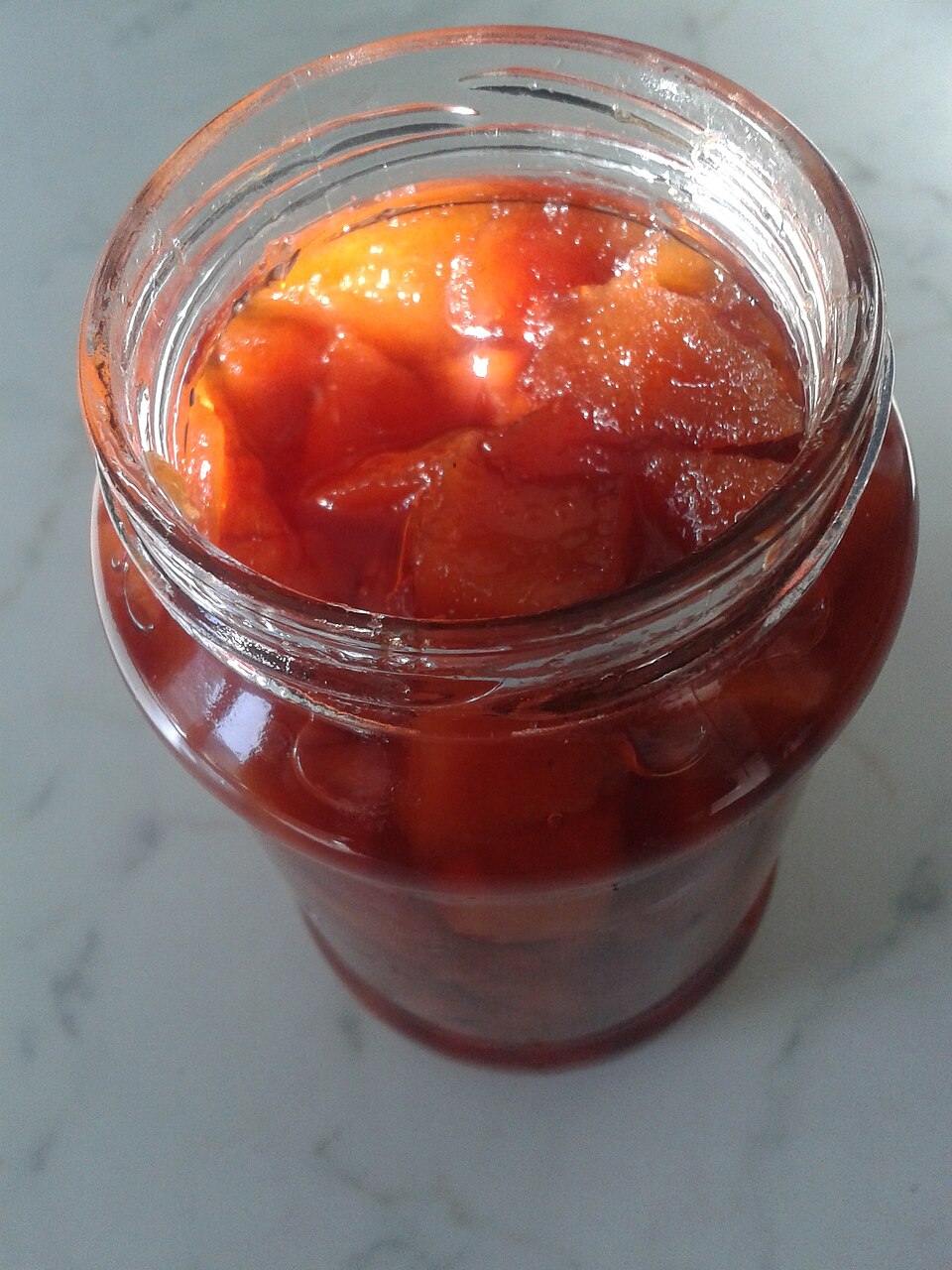
Kydoni glyko is quince slowly cooked in sugar syrup until the fruit turns a deep amber-red and the syrup thickens, one of the most classic and beloved Greek spoon sweets. Served in small dishes with a glass of water, or spooned over yogurt, it is real hospitality food with a genuine seasonal window each autumn.
Quince Spoon Sweet
- Prep
- 40m
- Cook
- 1h 30m
- Total
- 2h 10m
- Serves
- 16
- Level
- Intermediate
Ingredients
Ingredients
Tick ingredients off as you go. Quantities rescale with the buttons above.
Method
- 01Put the reserved quince peel and cores in a pot with the water. Simmer for 20 minutes, then strain, discarding the solids and keeping the liquid.Keep the peel and cores.Yiayia
- 02Put the quince slices, sugar, strained pectin liquid and lemon juice into a wide, heavy pot.
Lemon - 03Bring to a simmer over a medium heat, then reduce to low.
- 04Simmer gently, stirring occasionally, for 1 hour to 1 1/2 hours, until the quince has turned a deep amber-red and the syrup has thickened noticeably.
Quince - 05Spoon the hot quince and syrup into clean, sterilised jars and seal immediately.
- 06Cool completely before storing. Once opened, keep refrigerated.
Nutrition, per 2 tbsp with a few slices
- Calories
- 132
- Protein
- 0 g
- Carbs
- 34 g
- Fat
- 0 g
- Sat fat
- 0 g
- Fibre
- 1 g
These figures are calculated estimates based on the ingredients listed, not laboratory analysis. Actual values vary with brands, cuts and portion size.
Kydoni glyko is one of the most loved of all Greek spoon sweets, small preserved fruits or fruit pieces in thick syrup traditionally offered to guests on a little dish, alongside a glass of cold water and often a coffee, as a genuine gesture of hospitality rather than simply a dessert to be eaten alone.
Quince has a narrow autumn season and is essentially inedible raw, hard and astringent, but a long slow cook in sugar syrup transforms it completely, turning the pale flesh a deep amber-red and softening it into something tender and genuinely delicious, a transformation that is part of the appeal of making this preserve at home.
The colour change is a real, visible sign of doneness, not just a decorative bonus, and watching the quince slowly deepen from pale cream to rose to a full amber-red over the long simmer is one of the more satisfying things to watch happen in a Greek kitchen.
Key preparation steps
- Peel and slice quince, keeping the peel and cores for pectin.
- Simmer the peel and cores separately to extract natural pectin.
- Cook the quince slices slowly in sugar syrup with the pectin liquid.
- Simmer until deep amber-red and the syrup has thickened.
Using the whole fruit
Peel and core the quince, cutting the flesh into slices or small wedges, but keep the peel and cores rather than discarding them, since they carry a genuine amount of natural pectin that helps the syrup set properly. Simmer the peel and cores in water for twenty minutes, then strain and keep this liquid to use in the syrup.
The long, colour-changing simmer
Cook the quince slices in sugar with the strained pectin liquid and a little lemon juice, at a gentle simmer, for a genuinely long time, an hour to ninety minutes, watching the colour change from pale cream through rose and eventually to a deep amber-red, which is the visible sign that both the flavour and the set are properly ready.
This is not a process to rush by turning up the heat, since a fast, hard boil can catch and burn the sugar before the colour has properly developed, and the whole appeal of this spoon sweet is exactly that deep, jewel-like colour.
Jarring and serving
Once thickened and deeply coloured, spoon the quince and its syrup into clean, sterilised jars while still hot, sealing immediately. Serve traditionally in small dishes with a spoon and a glass of cold water on the side, or spoon it generously over thick strained yogurt for a genuinely good dessert.
What matters in this dish
Keep the peel and cores
They carry real natural pectin that helps the syrup set properly. Simmering them separately first extracts it before it goes into the main pot.
Do not rush the colour change
A fast, hard boil can burn the sugar before the deep amber-red colour, the real sign of doneness, has developed. Keep the heat gentle throughout.
Sterilise the jars properly
This preserve is meant to keep for months unopened, and starting with properly sterilised jars is essential for that.
Questions people ask about Kydoni glyko
Why does quince turn red when cooked?
A natural chemical change in the fruit's compounds during long, slow cooking in sugar syrup causes the colour to deepen from pale cream through rose to a genuine amber-red, and it is a real, visible sign that the spoon sweet is properly ready.
Can you eat quince raw?
Not really. Raw quince is hard, astringent and largely unpalatable, which is exactly why it is almost always cooked, whether into a spoon sweet, a paste, or a slow braise.
How long does kydoni glyko keep?
Unopened and properly sealed in sterilised jars, it keeps for many months in a cool, dark place. Once opened, keep it refrigerated and use within a few weeks.