
Fruits
Quince
Κυδώνι · Kydoni
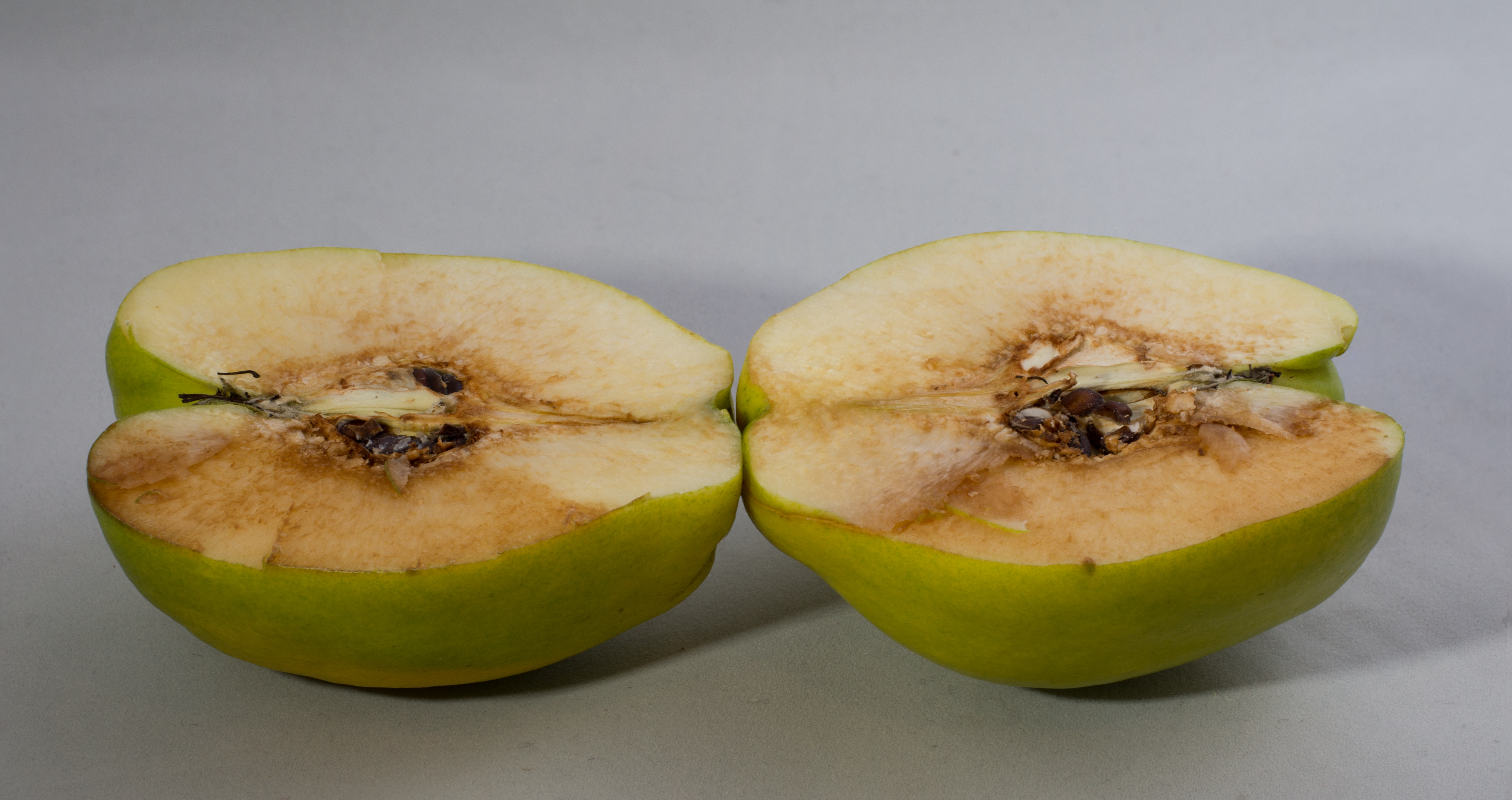
Quince has an old claim on Greece: the Romans called it the Cydonian apple after Kydonia, the ancient city where Chania on Crete now stands. The fruit has a narrow autumn season and is essentially inedible raw, hard, dry and astringent in a way no amount of ripening fixes, which is why every traditional use of it involves long, slow cooking in sugar or in a braise.
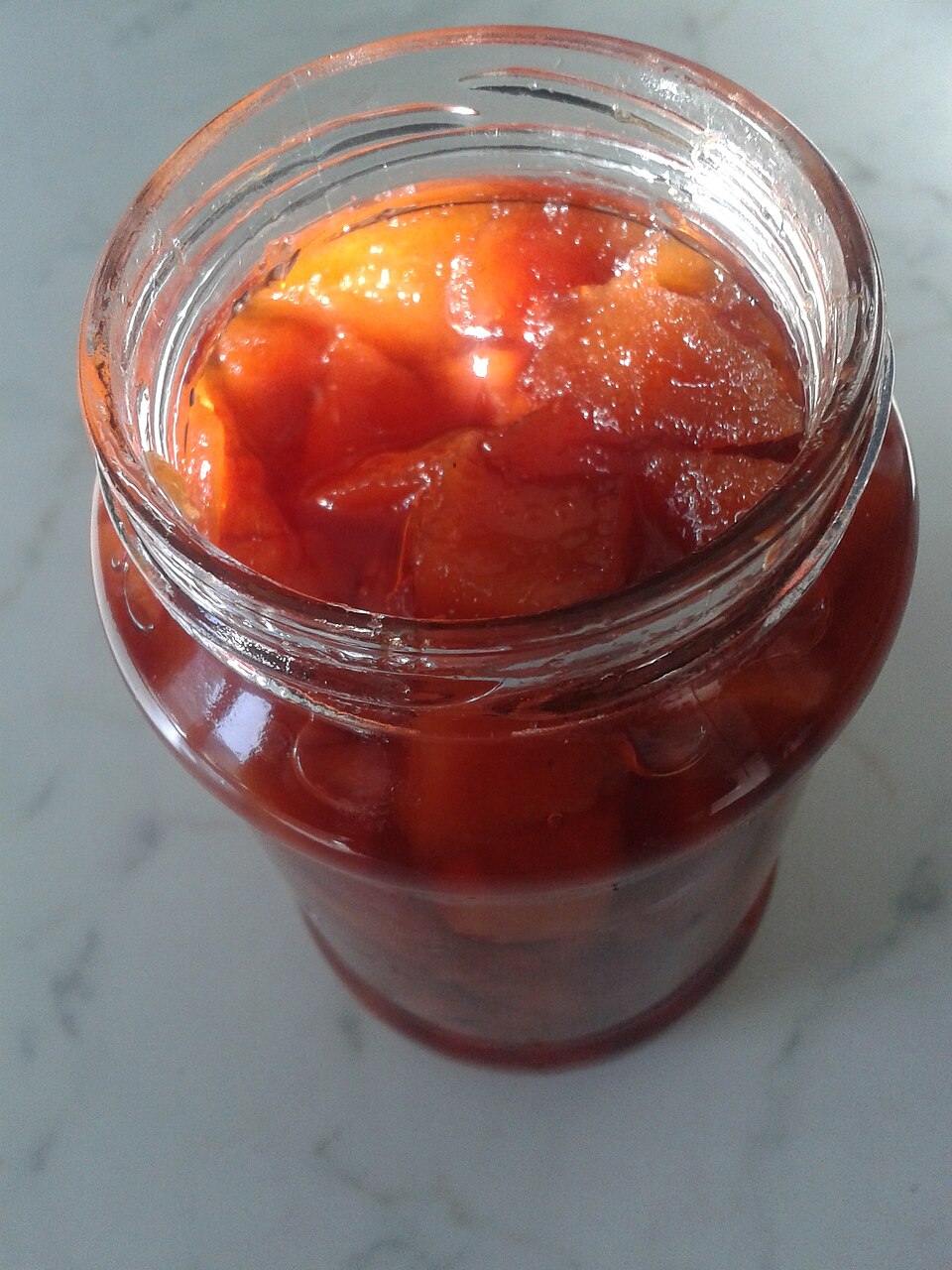
Kydoni glyko, quince simmered in syrup until it turns from pale cream through rose to a deep amber red, is one of the best known Greek spoon sweets, offered to a guest on a small dish with a glass of cold water. Quince also goes into savoury cooking, cut into wedges and cooked with pork or lamb, where its tartness cuts through the fat of a long braise.
Buy fruit that is firm, heavily fragrant and yellow rather than green, and keep the peel and cores when you prepare it: they hold a great deal of pectin, and simmering them separately gives a liquid that helps the syrup set. Cut quince browns within minutes, so drop the slices into lemon water, and expect the flesh to stay grainy if the cook is cut short.
Recipes with quince
1 recipe on the site using it.
Get one proper Greek recipe a week
No round-ups, no filler, no fifteen-ingredient shortcuts. One dish, written out in full, with the reasoning included.
The signup form is not connected yet, so there is nothing here that would quietly lose your address. Email contact@kalliopiskitchen.com and you go on the list by hand.