Greek Breakfast Recipes · The Mainland · No-Cook · The Summer Table
Greek Strained Yogurt with Fresh Fruit (Giaourti me Frouta)
Γιαούρτι με φρούτα yah-OOR-tee meh FROO-tah · Giaourti me frouta
In short
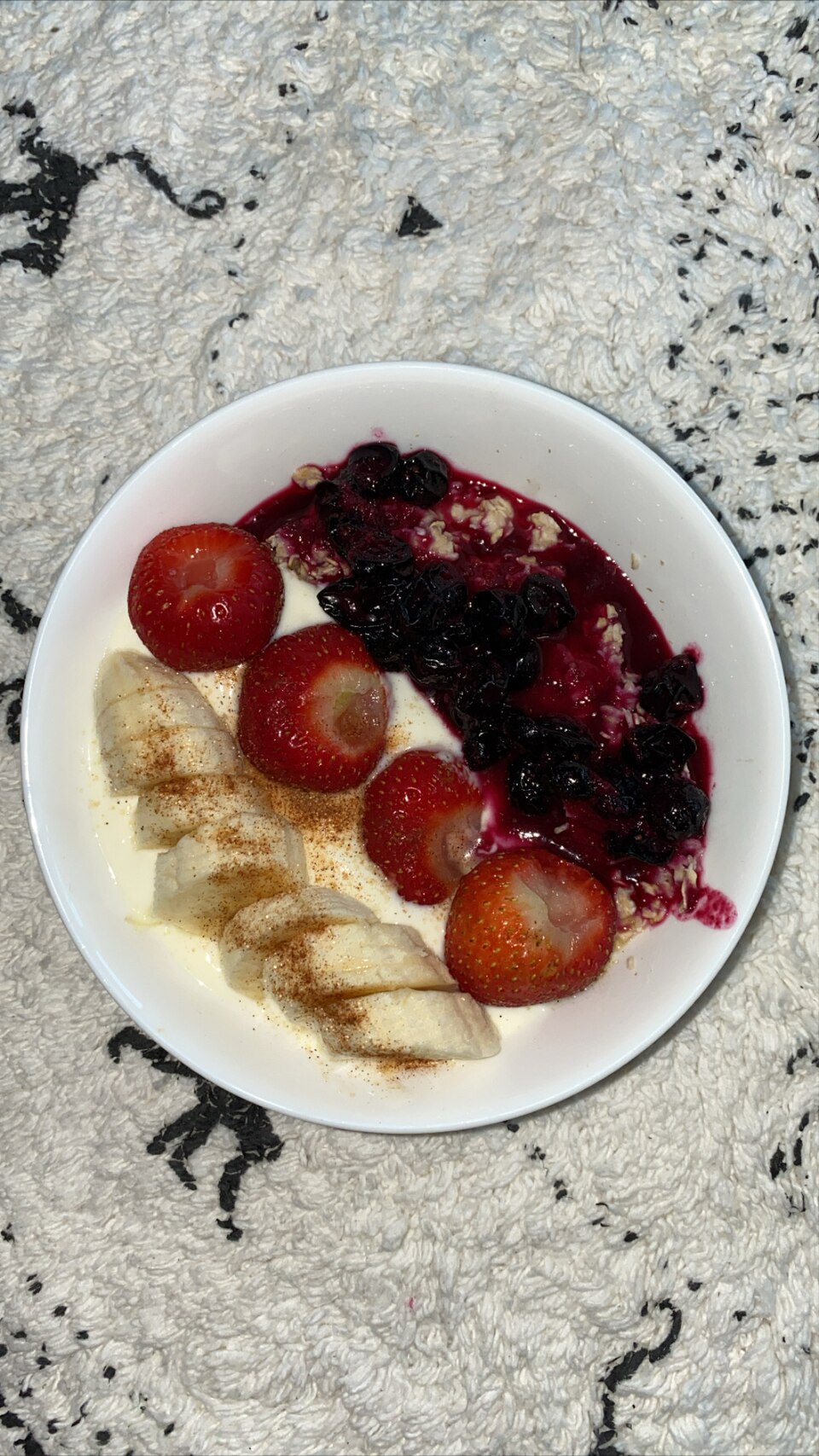
Giaourti me frouta is thick, strained Greek yogurt topped with fresh seasonal fruit and a light drizzle of honey, an everyday breakfast built entirely around whatever fruit happens to be genuinely good at the time. It is a lighter, fresher cousin of the walnut and honey version.
Strained Yogurt with Fresh Fruit
- Prep
- 10m
- Cook
- None
- Total
- 10m
- Serves
- 1
- Level
- Beginner
Ingredients
Ingredients
Tick ingredients off as you go. Quantities rescale with the buttons above.
Method
- 01Spoon the yogurt into a bowl.
- 02Slice or halve the fruit and arrange over the yogurt.
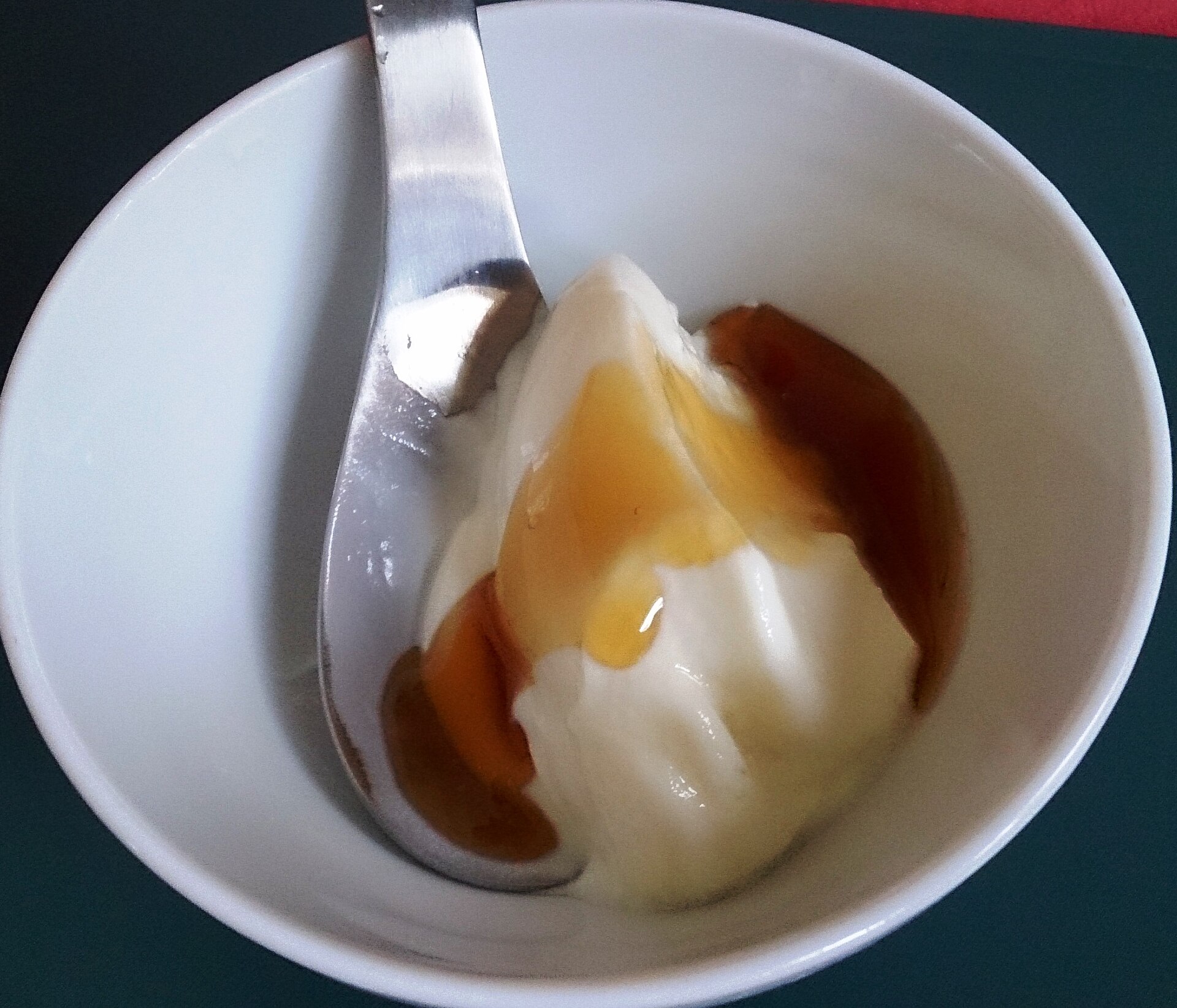
Greek Yogurt Choose fruit that is properly ripe.Yiayia - 03Drizzle with the honey and serve immediately.
Nutrition, per 1 bowl
- Calories
- 186
- Protein
- 10 g
- Carbs
- 24 g
- Fat
- 6 g
- Sat fat
- 3 g
- Fibre
- 2 g
These figures are calculated estimates based on the ingredients listed, not laboratory analysis. Actual values vary with brands, cuts and portion size.
Where giaourti me meli kai karydia leans on honey and walnuts as its whole flavour, this version puts fresh fruit at the centre instead, and it changes completely depending on the season: peaches and figs in high summer, grapes and pears into autumn, citrus through the winter months.
The technique, if it can even be called that, is simply choosing fruit that is properly ripe and good, since thick strained yogurt is honest and unforgiving of a mediocre or underripe piece of fruit sitting on top of it.
This is real everyday breakfast food, quick enough for any morning, and it is worth treating the fruit choice with the same seriousness as the honey in the walnut version, since it is doing just as much of the work.
Key preparation steps
- Spoon thick, strained yogurt into a bowl.
- Slice or halve properly ripe seasonal fruit.
- Arrange over the yogurt.
- Finish with a light drizzle of honey.
Choosing the fruit
Whatever is genuinely at its best: ripe peaches, figs and apricots in summer, grapes and pears moving into autumn, oranges and mandarins through winter. The fruit should smell fragrant and give slightly to gentle pressure, since underripe fruit brings little sweetness or flavour to sit against the yogurt's tang.
The yogurt base
Thick, full-fat, strained Greek yogurt is what this dish is built on, exactly as with the honey and walnut version, since a thin, unstrained yogurt cannot hold sliced fruit properly and turns watery underneath it.
Finishing
A light drizzle of honey, less than you might use with walnuts alone, since the fruit itself brings real sweetness, ties the dish together. Serve immediately, since sliced fresh fruit is at its best right after cutting rather than sitting for a long stretch on top of the yogurt.
What matters in this dish
Choose fruit that is properly ripe
Thick yogurt is unforgiving of an underripe, flavourless piece of fruit sitting on top of it.
Use less honey than the walnut version
The fruit itself brings real sweetness, so a lighter hand with the honey keeps the dish from becoming cloying.
Serve it fresh
Sliced fruit is at its best right after cutting rather than left to sit on the yogurt for a long stretch.
Questions people ask about Giaourti me frouta
What fruit works best with Greek yogurt?
Whatever is genuinely in season and at its ripest, fragrant, giving slightly to gentle pressure. Summer stone fruit and figs, autumn grapes and pears, winter citrus, all work well in their own season.
Can you use frozen fruit?
Fresh, ripe fruit is preferred for both texture and flavour, though thawed frozen berries stirred through gently are a reasonable substitute outside their fresh season.
Is this dish healthy?
Yes, it is a genuinely balanced combination of protein, fibre and natural sugars, often cited as a classic simple example of the traditional Mediterranean diet.