Greek Drinks · Peloponnese · No-Cook · Christmas
Patras Cinnamon and Clove Liqueur (Tentoura)
Τεντούρα ten-DOO-rah · Tentoura
In short
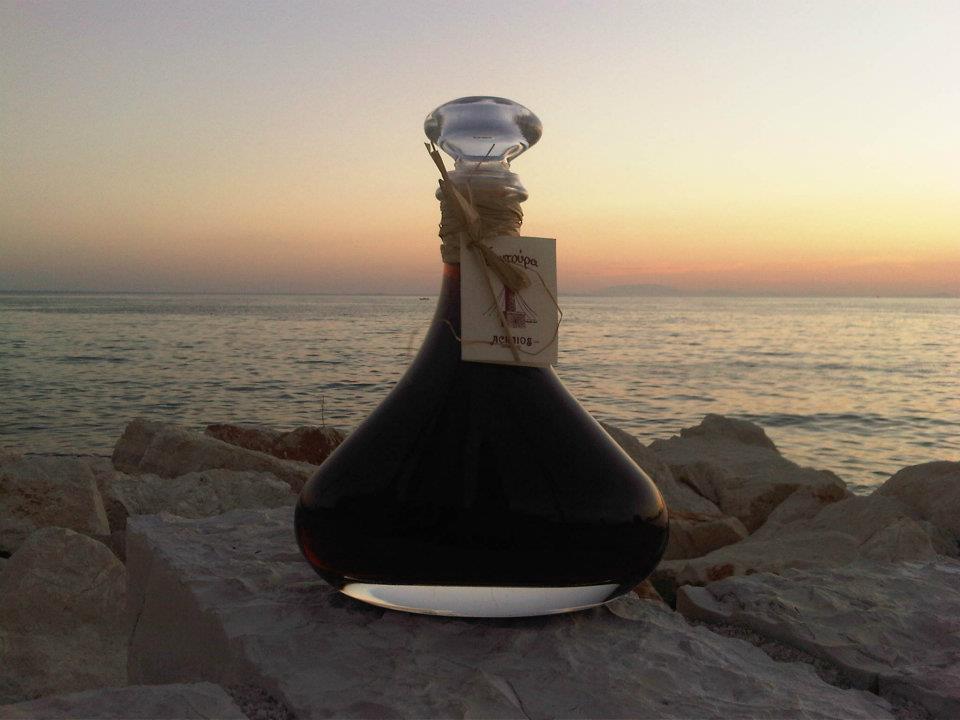
Tentoura is a spiced liqueur from Patras in the Peloponnese, made by steeping cinnamon bark, cloves, nutmeg and citrus peel in a neutral spirit or tsipouro for several weeks, then straining and blending it with a lightly caramelised sugar syrup. It is served very cold in small glasses as a digestif, and its dark red-brown colour comes from the caramel rather than from any dye.
Patras Cinnamon and Clove Liqueur
- Prep
- 30m
- Cook
- 15m
- Total
- 45m
- Serves
- 20
- Level
- Intermediate
Ingredients
For the infusion
For the caramel syrup
Tick ingredients off as you go. Quantities rescale with the buttons above.
Method
- 01Put the cinnamon, cloves, nutmeg and citrus peels into a clean 1 litre jar and pour over the spirit. Seal.
- 02Keep the jar somewhere dark at room temperature for 3 to 4 weeks, shaking it every few days.
- 03Strain the infusion through a fine sieve lined with muslin into a jug, pressing the spices gently. Discard the solids.
- 04Put 100 g of the sugar in a heavy pan over medium heat and let it melt without stirring until it is the colour of dark honey, about 5 minutes.
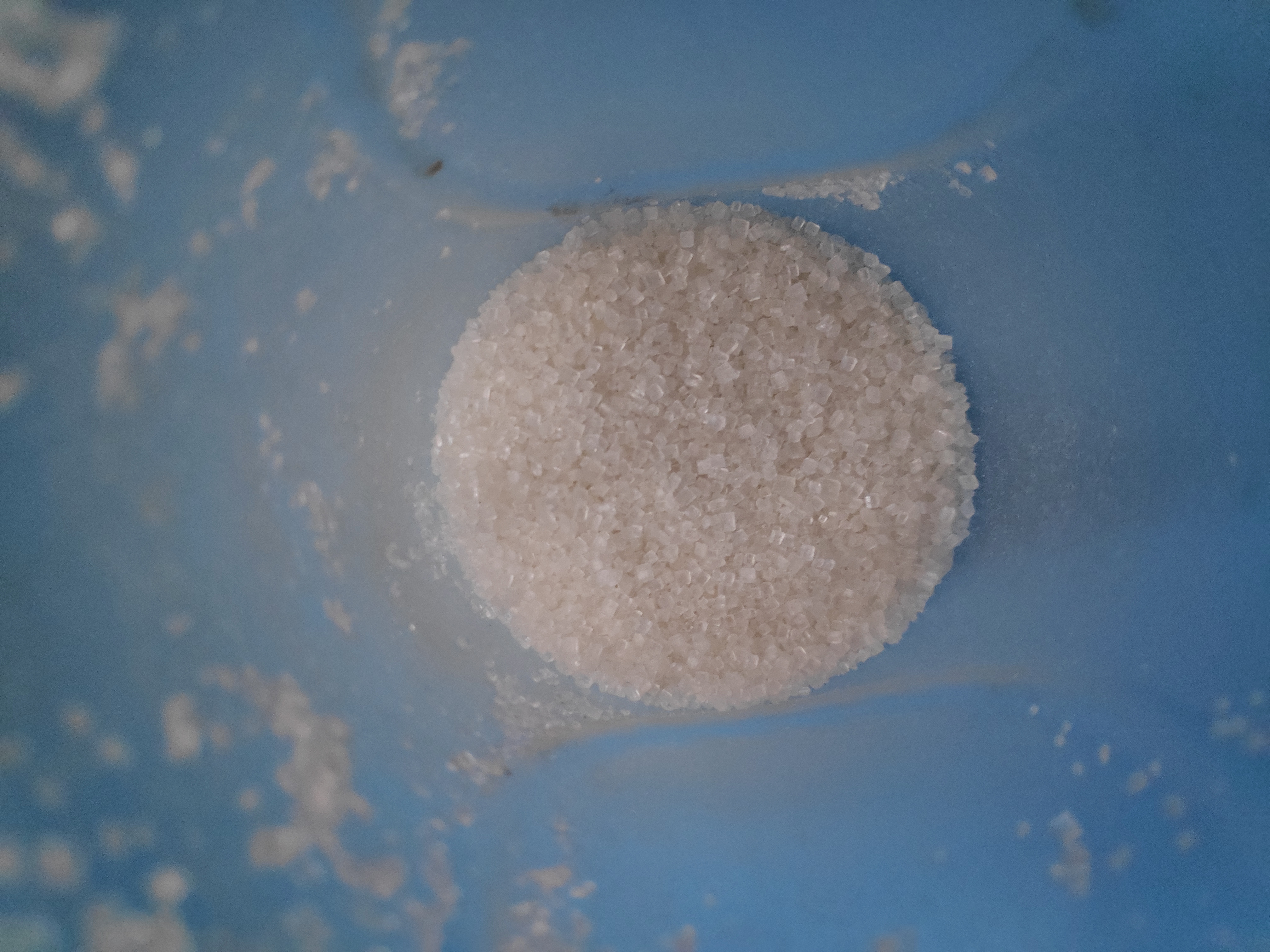
Sugar - 05Stand back and add the water. It will hiss and set solid for a moment. Add the remaining sugar and stir over low heat until everything has dissolved.
- 06Take the syrup off the heat and cool it completely to room temperature.Cool the syrup completely.Yiayia
- 07Combine the strained infusion and the cool syrup, bottle, and rest for at least a week before drinking.
- 08Serve very cold, in small glasses.
Nutrition, per 50 ml glass
- Calories
- 148
- Protein
- 0 g
- Carbs
- 20 g
- Fat
- 0 g
- Sat fat
- 0 g
- Fibre
- 0 g
These figures are calculated estimates based on the ingredients listed, not laboratory analysis. Actual values vary with brands, cuts and portion size.
Tentoura belongs to Patras the way ouzo belongs to Lesbos. It has been made in the city for centuries, and older Patrinoi called it moschovolithra, roughly the fragrant one, which tells you what the spice load is like before you have even opened the bottle.
It is a maceration rather than a distillation, which is why it can honestly be made at home. Cinnamon bark, cloves, nutmeg and strips of citrus peel sit in spirit for three to four weeks until the alcohol has pulled everything out of them, and then a caramel syrup does the sweetening and the colouring at once.
The finished liqueur is drunk very cold in small glasses after a meal, and in Patras it also goes into coffee. Made properly it should smell overwhelmingly of cinnamon and taste warm rather than hot, with the clove sitting behind the cinnamon rather than in front of it.
Key preparation steps
- Steep spices and citrus peel in spirit for three to four weeks.
- Strain the infusion carefully through muslin.
- Make a lightly caramelised sugar syrup and cool it.
- Blend, rest for a further week, and serve very cold.
What spirit should I steep the spices in?
Tsipouro is the traditional and the best-tasting base, because its grape character sits well under the spice. A clean, unflavoured vodka at around forty percent works perfectly well and gives a more neutral result that lets the cinnamon speak.
Do not use anything already flavoured, and do not use a spirit below thirty-seven percent. Alcohol is the solvent doing the extraction here, and a weak base pulls the spice out slowly and incompletely.
How long does the maceration need?
Three weeks is the minimum and four is better. Shake the jar every few days and keep it somewhere dark at room temperature, since light degrades the aromatics you are trying to capture.
You can taste it from about day ten onwards. When the liquid smells strongly of cinnamon and the clove is clearly present but not sharp, it is ready. Going much past five weeks starts to pull bitterness out of the citrus pith and the clove.
Why is the syrup caramelised?
The colour of tentoura comes from caramel, not from the spices and not from anything added. Taking part of the sugar to a light amber before dissolving the rest gives the liqueur its red-brown depth and a faint bitterness that keeps it from being cloying.
Stop the caramel while it is the colour of dark honey. Taken further it turns genuinely bitter, and in a liqueur this sweet there is nothing to hide it behind.
How should tentoura be served?
Straight from the freezer, in small glasses, after food. It is a digestif and the portion is meant to be small. In Patras it is also poured over crushed ice, and a splash into an espresso is a local habit worth copying.
Give it at least a week after blending before you drink it seriously. The spirit and the syrup need time to marry, and a tentoura tasted the day it is mixed tastes like two things in a glass rather than one.
What matters in this dish
Peel the citrus with no pith
Use a vegetable peeler and take only the coloured layer. Pith is where the bitterness lives, and over four weeks in spirit it will find its way into the finished bottle.
Cool the syrup completely
Adding warm syrup to the infusion drives off the aromatics you have just spent a month extracting. Wait until it is properly at room temperature.
Rest it before judging it
Tentoura is noticeably rougher in its first week and rounds out over a month. Bottle it, forget it, and taste it again later.
Questions people ask about Tentoura
What does tentoura taste like?
Cinnamon first and most, with clove and nutmeg behind it, a citrus lift and a caramel sweetness. It is warm rather than hot, and considerably more aromatic than most spiced liqueurs.
How strong is homemade tentoura?
Roughly half the strength of the spirit you started with, because the syrup nearly doubles the volume. Starting from a 40 percent base gives you something in the region of 20 percent.
How long does it keep?
Indefinitely in a sealed bottle, and it improves for the first few months. The alcohol and sugar together preserve it, so a cool dark cupboard is all it needs.
Can I make it less sweet?
Yes. Reduce the sugar to 300 g and keep the water the same for a drier, more spirit-forward result. Do not cut it much further or the caramel colour and body go with it.