Greek Breakfast Recipes · Crete · No-Cook · The Summer Table
Rusk with Honey and Walnuts (Paximadia me Meli kai Karydia)
Παξιμάδια με μέλι και καρύδια pahk-see-MAH-thyah meh meh-LEE keh kah-REE-thyah · Paximadia me meli kai karydia
In short
Paximadia me meli kai karydia is barley rusk, briefly moistened with water to take the edge off its hardness, then drizzled generously with honey and scattered with crushed walnuts. It is the sweet breakfast use of the same dry rusk that goes savoury in dakos, eaten for genuinely different reasons at a different time of day.
Rusk with Honey and Walnuts
- Prep
- 5m
- Cook
- None
- Total
- 5m
- Serves
- 1
- Level
- Beginner
Ingredients
Ingredients
Tick ingredients off as you go. Quantities rescale with the buttons above.
Method
- 01Run the rusk briefly under cold water, or dip it for a few seconds, until dampened throughout.A few seconds of water is enough.Yiayia
- 02Let it sit for 1 to 2 minutes to soften evenly.
- 03Drizzle generously with honey, warming it briefly first if crystallised.
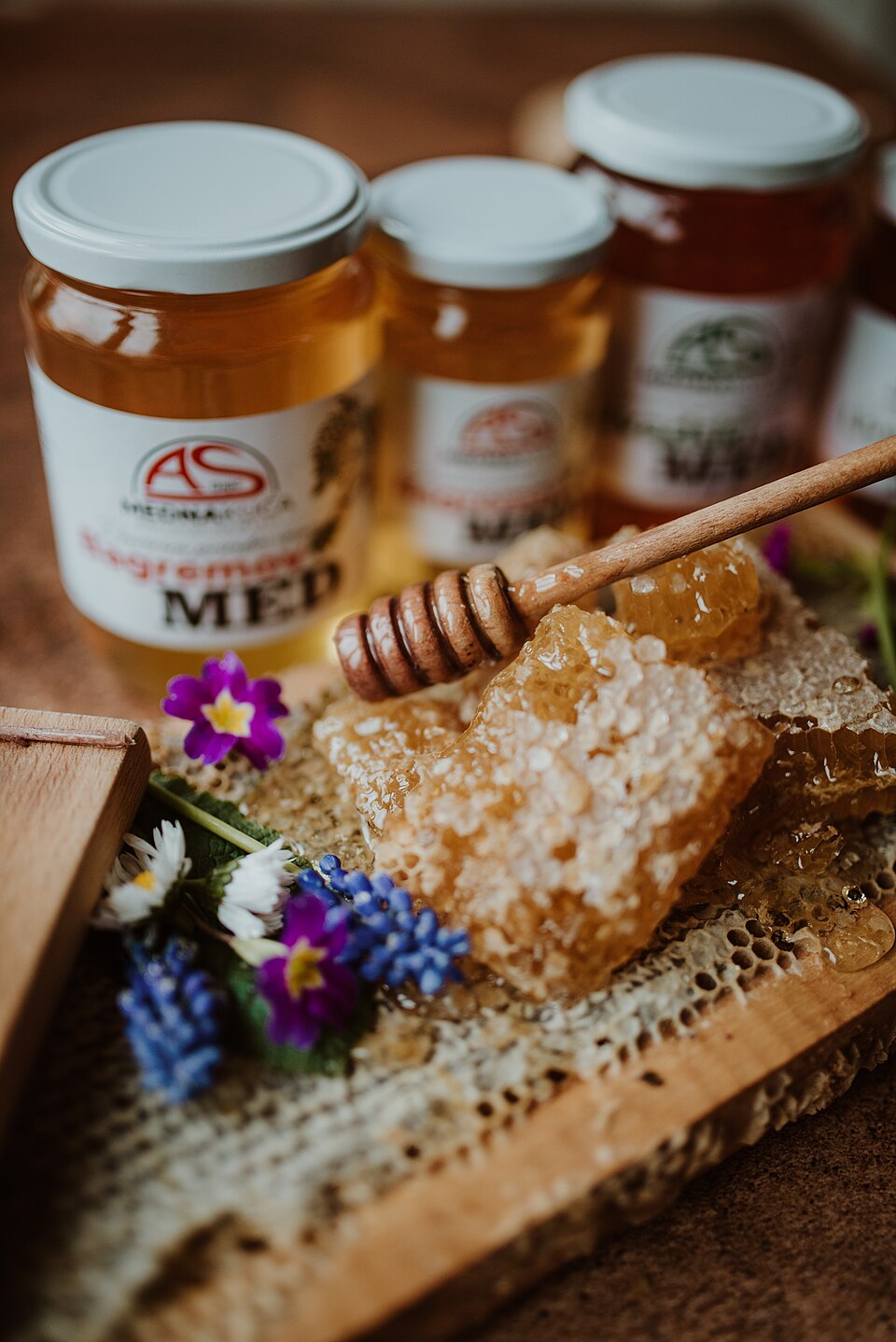
Honey - 04Scatter with the crushed walnuts and eat immediately.
Nutrition, per 1 portion
- Calories
- 268
- Protein
- 6 g
- Carbs
- 34 g
- Fat
- 12 g
- Sat fat
- 1 g
- Fibre
- 3 g
These figures are calculated estimates based on the ingredients listed, not laboratory analysis. Actual values vary with brands, cuts and portion size.
Paximadia, the twice-baked barley rusk that appears constantly across Cretan and wider Greek island cooking, most famously as the base of dakos, has an equally common, entirely different life as a sweet breakfast, moistened lightly and finished with honey and walnuts rather than tomato and feta.
The rusk itself is exactly the same product either way, hard enough that it needs to be baked twice specifically so it keeps for months without spoiling, a genuinely old solution to storing bread through a season when fresh baking was not always possible.
This could not be a simpler breakfast, just water, honey and walnuts, but it depends entirely on wetting the rusk correctly, enough to soften without turning it to mush, which is the one real skill this dish quietly demands.
Key preparation steps
- Briefly wet a whole barley rusk with water.
- Let it soften for a minute without oversoaking.
- Drizzle generously with honey.
- Scatter with crushed walnuts.
Wetting the rusk correctly
Run the whole rusk briefly under a cold tap, or dip it for a few seconds in a shallow bowl of water, just enough to dampen it throughout without leaving it sitting in water, which would turn it soft and soggy rather than pleasantly chewy. A few seconds is genuinely enough, since the rusk is porous and absorbs moisture fast.
Letting it settle
Let the dampened rusk sit for a minute or two before adding anything, which allows the moisture to distribute evenly through the rusk rather than sitting only on the surface while the centre stays hard.
Finishing
Drizzle generously with a good, characterful honey, warmed briefly if it has crystallised, and scatter with roughly crushed walnuts. Eat immediately while the rusk still has some pleasant chew left, since it continues to soften the longer it sits.
What matters in this dish
A few seconds of water is enough
The rusk is porous and absorbs moisture fast. Leaving it soaking turns it to mush rather than pleasantly softened.
Let it rest before eating
A minute or two lets the moisture spread evenly through the rusk rather than staying only on the surface.
Eat it promptly
It continues to soften the longer it sits, so this is not a dish to prepare far ahead.
Questions people ask about Paximadia me meli kai karydia
What is paximadi?
A twice-baked barley or wheat rusk, hard enough to keep for months without spoiling, a traditional solution across Greek islands for storing bread through seasons when fresh baking was not always practical.
Is this the same rusk used in dakos?
Yes, exactly the same product, used here sweet with honey and walnuts rather than savoury with tomato and feta, showing how the same pantry staple serves two very different roles.
Can you use regular bread instead of paximadi rusk?
Not really, with the same effect. The rusk's specific dry, twice-baked texture, softened briefly with water, is what gives this dish its particular chew, which ordinary bread cannot replicate.