Greek Desserts · The Mainland · Boiled and Simmered · Name Days
Kollyva Recipe (Greek Memorial Wheat)
Κόλλυβα KOH-lee-vah · Kollyva
In short
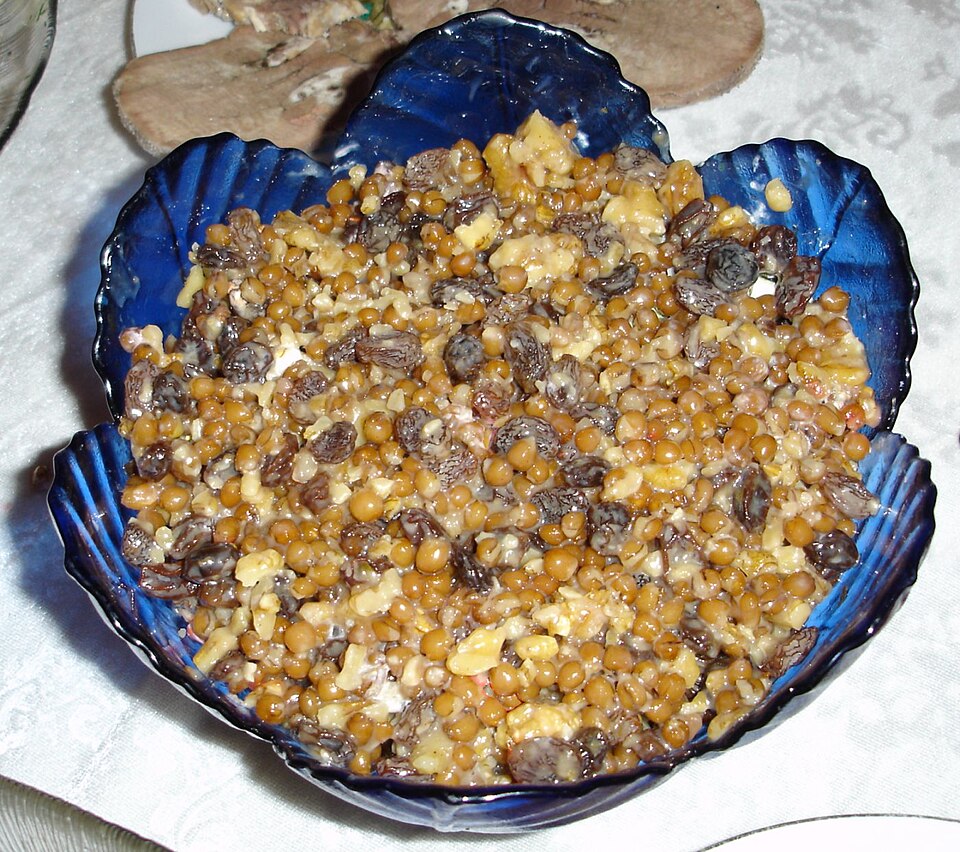
Kollyva is boiled whole wheat berries mixed with pomegranate seeds, chopped nuts, sesame, raisins and cinnamon, dusted with icing sugar, traditionally prepared for Orthodox memorial services and blessed in church before being shared among mourners. The wheat itself carries genuine symbolic weight, representing resurrection and eternal life.
Kollyva
- Prep
- 45m
- Cook
- 1h 30m
- Total
- 2h 15m
- Serves
- 20
- Level
- Intermediate
Ingredients
Ingredients
Tick ingredients off as you go. Quantities rescale with the buttons above.
Method
- 01Drain the soaked wheat and boil in plenty of fresh water for 1 1/2 to 2 hours, until tender.
- 02Drain thoroughly and spread on a clean tea towel to dry for several hours, or overnight.
- 03Mix the dried wheat with the pomegranate seeds, walnuts, sesame seeds, raisins and cinnamon.
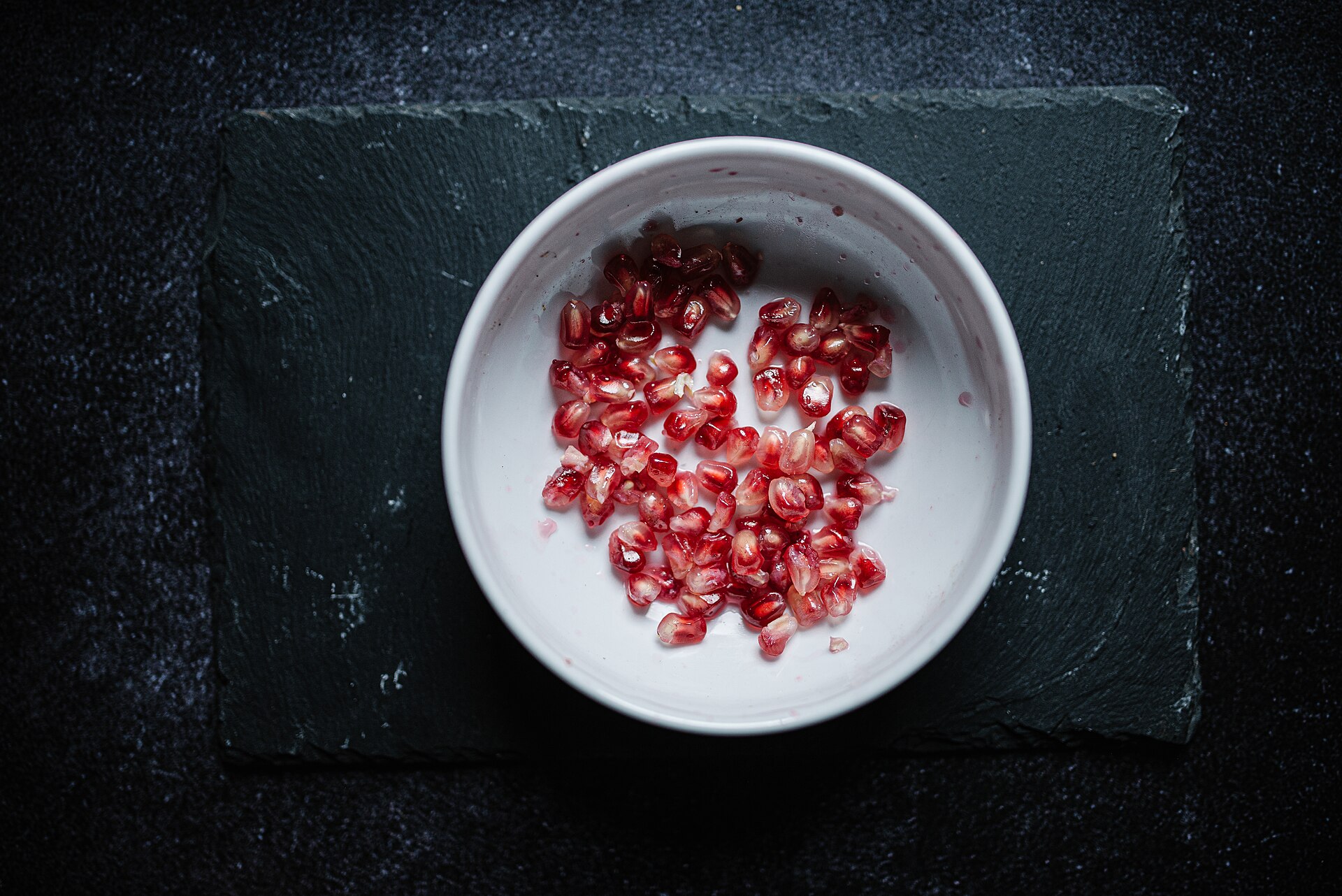
Pomegranate - 04Press the mixture firmly and evenly into a large tray or platter.
- 05Cover the surface generously with the icing sugar.
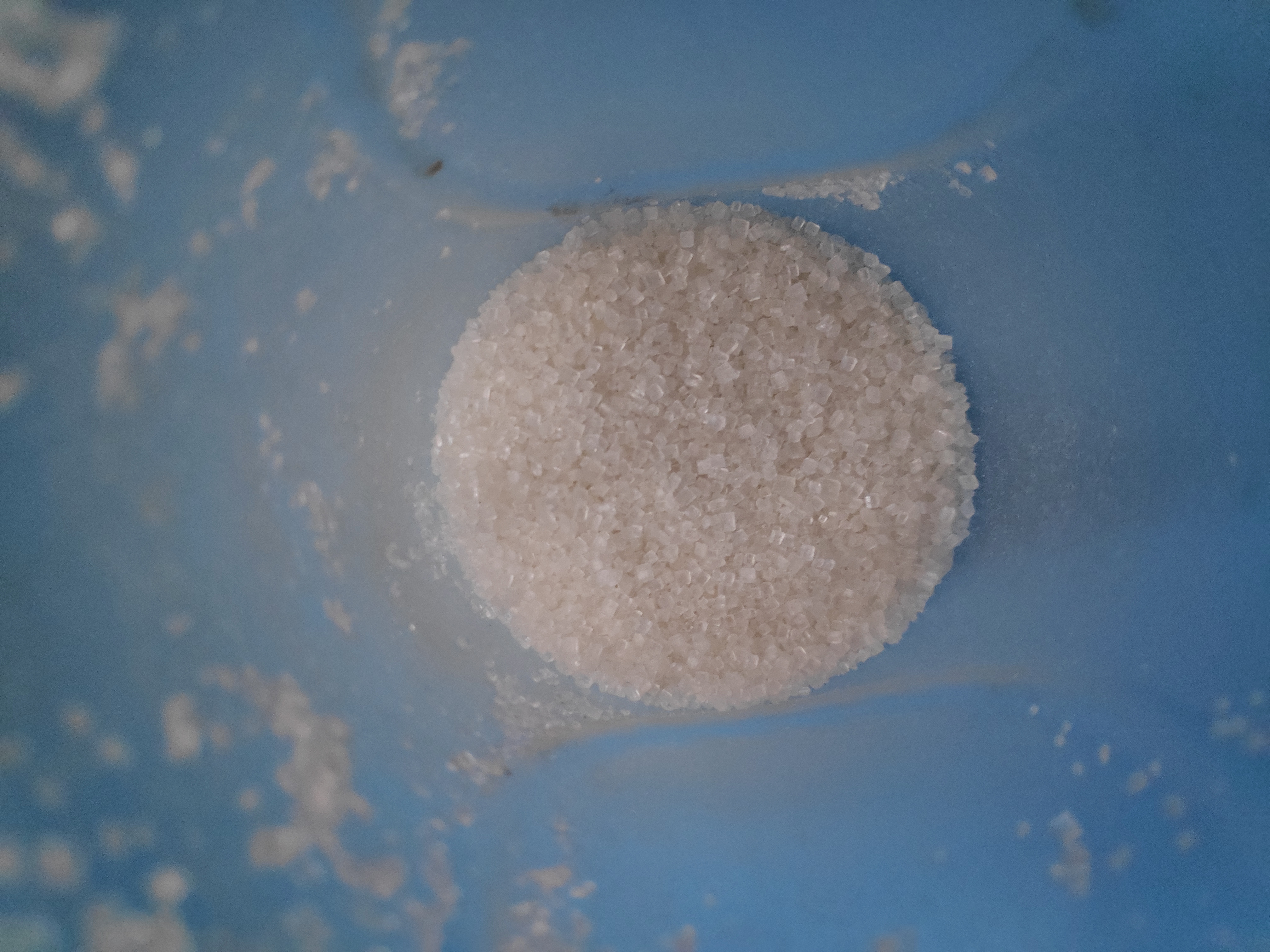
Sugar Follow family or church custom for decoration.Yiayia - 06Mark a cross shape on top using a stencil or careful piping, and decorate further as you like.
Nutrition, per 1 portion
- Calories
- 168
- Protein
- 4 g
- Carbs
- 28 g
- Fat
- 6 g
- Sat fat
- 1 g
- Fibre
- 3 g
These figures are calculated estimates based on the ingredients listed, not laboratory analysis. Actual values vary with brands, cuts and portion size.
Kollyva carries genuine religious and symbolic weight that most dishes on this site do not, prepared specifically for Orthodox memorial services held at set intervals after a death, and its central ingredient, whole boiled wheat berries, is chosen deliberately: a wheat grain must first be buried in the ground and appear to die before it sprouts into new life, a direct symbol of resurrection within Orthodox tradition.
The finished dish is blessed by a priest during the memorial service before being shared among those attending, and it is traditionally decorated on top with a cross shape picked out in icing sugar, pomegranate seeds or silver dragees, depending on family and regional custom.
This is not an everyday dessert, and making it carries real weight and intention behind it, though the technique itself, boiling wheat until tender and mixing with pomegranate, nuts and warm spices, is genuinely straightforward.
Key preparation steps
- Soak and boil whole wheat berries until tender.
- Drain thoroughly and dry.
- Mix with pomegranate, nuts, raisins and cinnamon.
- Press into a tray and decorate with a cross of icing sugar.
Preparing the wheat
Soak whole wheat berries overnight, then boil in plenty of water for around ninety minutes to two hours, until genuinely tender, similar to testing a grain of rice. Drain thoroughly and spread out on a clean tea towel to dry for several hours, or overnight, since excess moisture is the main enemy of a properly finished kollyva.
Mixing the filling
Mix the dried, tender wheat with pomegranate seeds, chopped walnuts, toasted sesame seeds, raisins and a generous amount of ground cinnamon, seasoning the whole mixture with warmth and sweetness in equal measure. Some families add a little grated orange zest or ground clove alongside the cinnamon.
Assembling and decorating
Press the mixture firmly and evenly into a large tray or platter, and cover the entire surface with a generous layer of icing sugar, traditionally marked with a cross using a stencil or careful piping, sometimes further decorated with silver dragees, almonds or pomegranate seeds arranged around the edge.
What matters in this dish
Dry the wheat thoroughly before mixing
Excess moisture is the main enemy of a properly finished kollyva, making it soggy rather than holding together well.
This dish carries real symbolic meaning
The wheat represents resurrection within Orthodox tradition, since a grain must be buried and appear to die before sprouting into new life.
Follow family or church custom for decoration
The cross of icing sugar is traditional, but the exact decorative details vary by family and region, and it is worth following what your own tradition calls for.
Questions people ask about Kollyva
What is kollyva used for?
It is prepared specifically for Orthodox memorial services held at set intervals after a death, blessed by a priest during the service and then shared among those attending.
Why is wheat used specifically?
A wheat grain must be buried in the ground and appear to die before it sprouts into new growth, making it a direct, deliberate symbol of resurrection within Orthodox Christian tradition.
Is kollyva eaten on any other occasion?
It is specifically associated with memorial services and is not typically made as an everyday dessert, given the genuine religious significance behind it.