Greek Main Courses · The Cyclades · Crete · Baked · Easter
Greek Roast Goat with Lemon (Katsikaki Lemonato)
Κατσικάκι λεμονάτο kah-tsee-KAH-kee leh-moh-NAH-toh · Katsikaki lemonato
In short
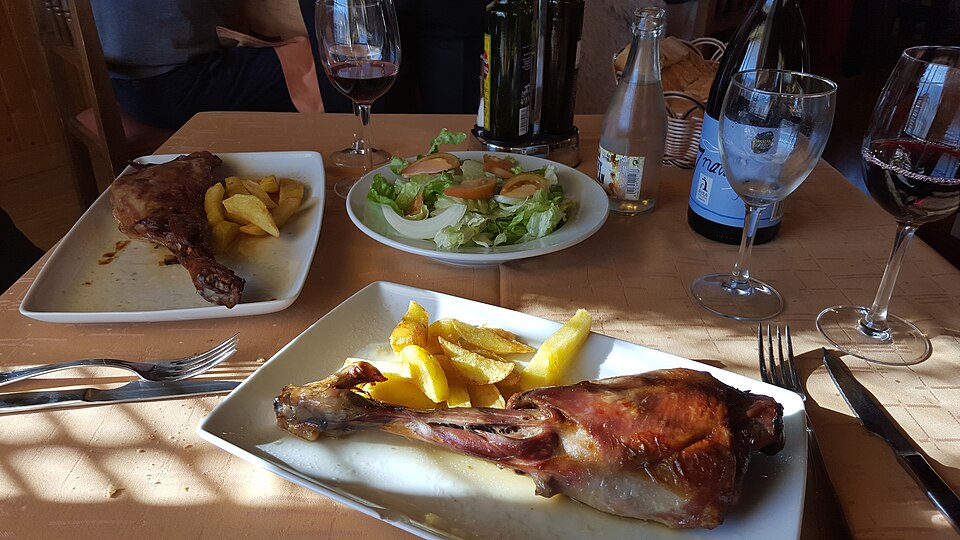
Katsikaki lemonato is young goat, roasted slowly with lemon, garlic and oregano until it falls from the bone, following the exact same technique as arnaki lemonato but built around goat rather than lamb. It is a genuine, traditional alternative on many Greek islands, where goat has long been just as common as lamb.
Roast Goat with Lemon
- Prep
- 25m
- Cook
- 3h 15m
- Total
- 3h 40m
- Serves
- 6
- Level
- Intermediate
Ingredients
Ingredients
Tick ingredients off as you go. Quantities rescale with the buttons above.
Method
- 01Whisk the olive oil, lemon juice, garlic and oregano together. Rub thoroughly over the goat, season well, and marinate in the fridge for at least a few hours, or overnight.
- 02Bring the goat to room temperature 30 minutes before cooking. Heat the oven to 160C fan 140C.
- 03Brown the goat on all sides in a hot pan or under a hot grill for a few minutes, until well coloured.
- 04Transfer to a roasting tray, pour in the hot stock, and cover tightly with foil.
- 05Roast for 2 hours 30 minutes to 3 hours, basting occasionally, until the meat is completely tender and pulls easily from the bone.Ask for kid goat specifically.Yiayia
- 06Uncover for the final 20 to 30 minutes to let the outside colour further.
- 07Rest under loose foil for 15 minutes before carving. Serve with the reduced pan juices.
Nutrition, per 1 portion
- Calories
- 412
- Protein
- 44 g
- Carbs
- 3 g
- Fat
- 24 g
- Sat fat
- 9 g
- Fibre
- 0 g
These figures are calculated estimates based on the ingredients listed, not laboratory analysis. Actual values vary with brands, cuts and portion size.
Lamb dominates most outside perceptions of Greek Easter, but goat is genuinely just as traditional across many islands, particularly the Cyclades and Crete, where herding goat has long been at least as common as sheep, and katsikaki, young goat, appears on the table with exactly the same regularity as lamb in these regions.
The method here is identical to arnaki lemonato, lemon, garlic and oregano rubbed into the meat, a long covered roast at a moderate temperature to break down the tougher connective tissue goat can carry, since the two animals respond to slow, wet cooking in much the same way.
Goat has a slightly stronger, more mineral flavour than lamb, which some households and diners specifically prefer, and it is worth trying on its own terms rather than treating it simply as a lamb substitute.
Key preparation steps
- Marinate a goat leg or shoulder in lemon, garlic and oregano.
- Brown briefly for colour.
- Roast covered at a moderate temperature for a long, unhurried time.
- Rest before carving and serving with the pan juices.
Choosing the cut
A whole young goat leg or shoulder, bone-in, is traditional, and goat generally needs a slightly longer cooking time than the equivalent cut of lamb to become properly tender, since its meat can carry a bit more connective tissue. Ask a butcher specifically for kid goat, katsikaki, which is more tender than older goat meat.
The marinade and browning
Rub the goat thoroughly with olive oil, lemon juice, crushed garlic and dried oregano, marinating for at least a few hours or overnight, then brown briefly in a hot pan or under a hot grill before the long roast begins, exactly as with arnaki lemonato, to build real surface colour and flavour.
The long, covered roast
Roast covered at a moderate temperature, around 160C, with a little stock in the tray, for a genuine three hours or slightly more, basting occasionally, until the meat pulls apart easily. Uncover for the final twenty to thirty minutes to let the outside colour further, then rest before carving and serving with the reduced pan juices.
What matters in this dish
Ask for kid goat specifically
Katsikaki, young goat, is considerably more tender than older goat meat and is the right choice for this dish.
Goat can need slightly longer than lamb
It sometimes carries a bit more connective tissue, so check for fork-tender doneness rather than trusting the time alone.
Brown it before the slow roast
This builds real surface flavour that the covered, low roast alone would not develop.
Questions people ask about Katsikaki lemonato
Is goat traditionally eaten at Greek Easter?
Yes, genuinely, particularly across the Cyclades and Crete, where goat herding has long been at least as common as sheep, making katsikaki just as traditional an Easter main as lamb in these regions.
Does goat taste like lamb?
It is related but has its own character, generally a little stronger and more mineral in flavour than lamb, which some diners specifically prefer rather than treating it as a substitute.
How is katsikaki lemonato different from arnaki lemonato?
The method and seasoning are identical, lemon, garlic and oregano with a long covered roast, but this version uses goat rather than lamb, which can need a little longer in the oven to become fully tender.