
Cooking guide
How to Work With Phyllo Pastry Without It Cracking
In short
Phyllo dries out within minutes of being exposed to air, so keep the stack covered with baking paper and a damp cloth and work one sheet at a time. Thaw it overnight in the fridge, never at room temperature, and brush every single sheet with fat.
What is phyllo pastry?
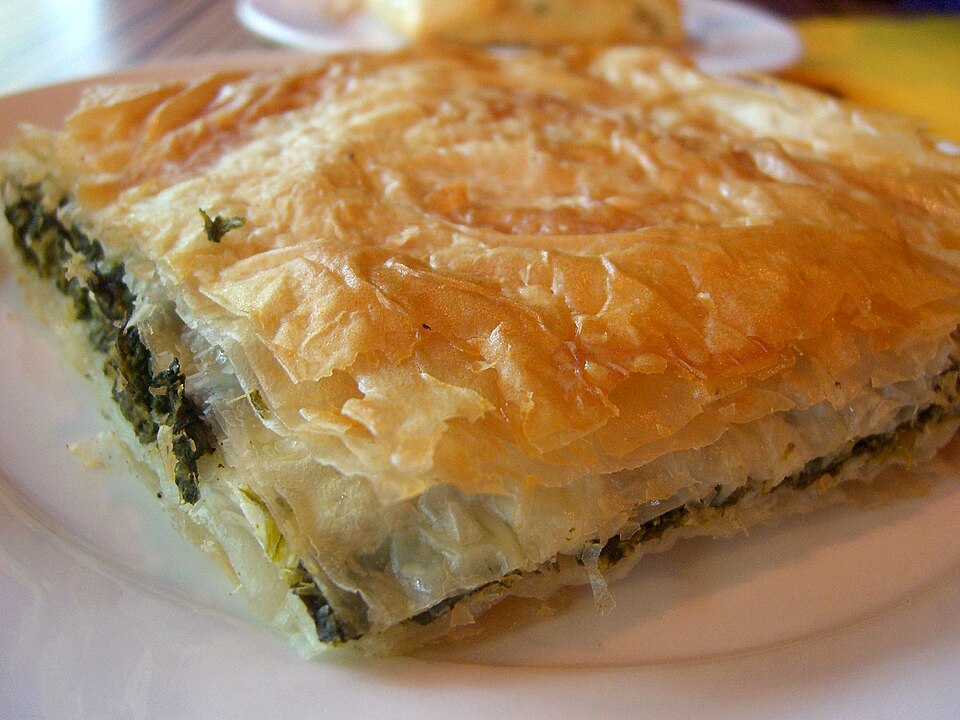
Phyllo, from the Greek word for leaf, is an unleavened dough rolled or stretched until it is almost transparent. It contains flour, water, a little oil and vinegar or lemon juice, and nothing else. There is no fat laminated into the dough itself, which is what separates it from puff pastry.
Because there is no fat in the dough, the fat has to go between the sheets. That is not a refinement, it is the entire mechanism. Brushed layers puff apart into distinct leaves in the oven. Unbrushed layers glue together into a tough sheet of pasta.
How do you thaw frozen phyllo?
Overnight in the fridge, still sealed in its packaging, and then an hour on the counter still sealed before you open it. That is the whole method and shortcuts do not work.
Thawing at room temperature or, worse, in a microwave produces condensation inside the packet. The sheets absorb that moisture, stick to each other, and then tear into strips the moment you try to separate them. There is no recovery from this.
A packet that has been frozen, partially thawed and refrozen is usually beyond saving. If the sheets feel stiff and crackly rather than supple, expect them to shatter.
How do you stop phyllo drying out while you work?
Unroll the whole stack onto a clean surface, cover it with a sheet of baking paper, and lay a lightly dampened tea towel over that. Take one sheet at a time and replace the covering each time.
The baking paper matters. A damp cloth laid directly onto phyllo transfers water into the top sheet and turns it to paste within a couple of minutes. The paper acts as a barrier and lets the humidity do its work without wetting the pastry.
Work at a reasonable pace but do not panic. Have your filling made, your fat melted and your dish greased before you open the packet.
Butter or olive oil?
Olive oil is the older, more common choice in Greek homes, and the only option during fasting periods. It gives a crisper, drier, slightly savoury pastry. Butter gives a richer, more golden and flakier result and is what most bakeries use.
Clarified butter is better than whole butter for anything with a long bake, such as baklava, because the milk solids in whole butter scorch. A half-and-half mix of melted butter and olive oil is an excellent default: it browns like butter and crisps like oil.
Whatever you use, keep it warm and liquid. Cold fat drags and tears the sheets.
How many layers, and does a tear matter?
For a savoury pie, six to eight sheets on the base and six to eight on top is a reliable structure. For baklava, work in blocks of four to eight with filling between.
A torn sheet is not a problem. Lay it down flat, patch the tear with the offcut, brush over it and carry on. Once baked it is completely invisible. The only thing that shows is a sheet that was not brushed.
Do not fold thick wads of overhanging pastry into the corners. Trim to the dish, or you will bake hard doughy lumps at the edges.
Storing leftover phyllo
Roll the remaining sheets back up in their original plastic, seal it tightly, and refrigerate for up to two weeks. Refreezing thawed phyllo is possible but the sheets are noticeably more fragile the second time.
Leftover offcuts are useful. Scrunch them, brush with butter and bake as a topping for a gratin, or layer them into a small pie.
Questions people ask
Why does my phyllo pastry crack and tear?
It has dried out, or it was thawed too fast. Keep the stack under baking paper and a damp cloth while you work, and always thaw frozen phyllo overnight in the fridge rather than on the counter.
Do you have to butter every layer of phyllo?
Yes. Phyllo has no fat in the dough, so the fat between the sheets is what separates them into leaves. Unbrushed layers fuse into a single tough sheet.
Can you use puff pastry instead of phyllo?
You can make a good pie with it, but it is a different thing. Phyllo gives a dry, shattering, many-layered texture; puff gives a rich, buttery lift. Substitute if you must, but do not expect the same result.
Is phyllo pastry vegan?
The pastry itself usually is, since it is flour, water, oil and acid. Check the packet, and remember that what you brush it with decides the answer for the finished dish.