
Cooking guide
Nistisima: Greek Fasting Food and Why It Is Europe's Oldest Vegan Cooking
In short
Nistisima are foods permitted during Orthodox fasting periods: no meat, dairy, eggs or fish with backbones, and on stricter days no olive oil or wine either. Because Greeks fasted for roughly half the year, the tradition produced an extensive body of vegan cooking centuries before the word existed.
What nistisima actually means
Nistisimo means fasting food, from nisteia, fasting. The rules exclude meat, poultry, dairy and eggs throughout, and fish with backbones on most fasting days. Shellfish, molluscs and octopus are permitted, which is why they appear so often in Greek cooking.
On stricter days, chiefly Wednesdays and Fridays and the most solemn days of Lent and Holy Week, olive oil and wine are also excluded. This is the harder discipline and it produced a genuinely distinct body of recipes, described as anelaio, without oil.
How much of the year is a fasting period?
Observed fully, somewhere between 180 and 200 days. Great Lent runs for forty days before Easter plus Holy Week. There is a fast before Christmas of forty days, one before the Dormition in August of fifteen days, and one for the Holy Apostles in summer of variable length. On top of that, most Wednesdays and Fridays through the year.
That is the crucial fact for understanding Greek food. A cuisine where roughly half the calendar excluded animal products did not treat plant cooking as a compromise. It developed it properly, and the results are the ladera dishes, the pulse dishes, the pies made with oil rather than butter, and most of the vegetable repertoire.
What to cook
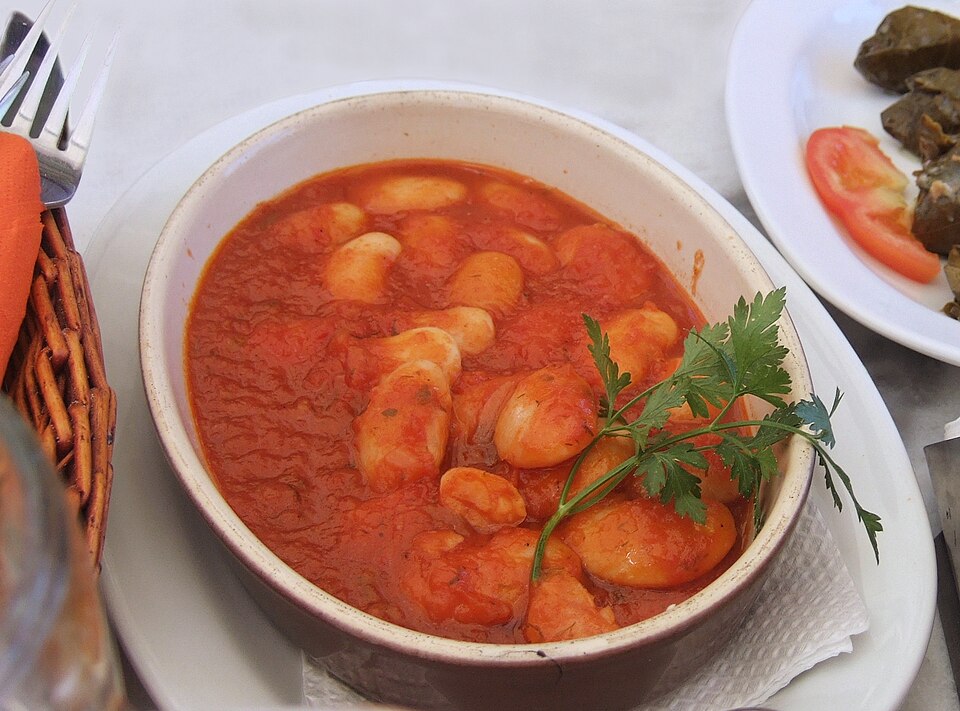
The ladera family first: gigantes plaki, fasolakia, briam, imam bayildi, and stuffed vegetables made with rice rather than mince. All of these are naturally vegan.
Then the pulses: fasolada, fakes, revithia, and the split pea puree called fava. These carried Greek households through every fasting period and remain among the best things in the cuisine.
Then greens: horta, boiled and dressed with oil and lemon, and the pies made with wild greens and no cheese. And seafood: octopus, squid, mussels, cuttlefish.
For desserts, halva made with semolina and oil, and the whole family of syrup cakes that use oil instead of butter.
Cooking nistisima without olive oil
The strictest days are the genuine challenge, and the traditional answers are worth knowing. Vegetables are boiled or steamed and dressed with lemon and vinegar rather than oil. Tahini takes over as the fat source, which is why tahini soup, tahinosoupa, exists and why halva made with tahini is a Lenten staple.
Olives, nuts and avocado in modern practice provide richness. Bread, olives and boiled greens sound austere and are, but the tradition treats that austerity as the point rather than as a deprivation to be worked around.
Questions people ask
Is Greek fasting food the same as vegan?
Nearly, with one exception: shellfish, molluscs and octopus are permitted on most fasting days because they have no backbone. Excluding those, nistisima cooking is functionally vegan and considerably older than the term.
Why is octopus allowed during Greek fasting?
The tradition distinguishes between animals with backbones and those without. Octopus, squid, mussels and other shellfish fall on the permitted side, which is why they feature so heavily in Lenten cooking, particularly on Clean Monday.
What is Clean Monday and what is eaten?
Kathara Deftera marks the start of Great Lent. The traditional table is entirely nistisimo: lagana flatbread, taramosalata, olives, pickled vegetables, halva and shellfish, eaten outdoors, usually while flying kites.
Can you eat olive oil during Greek Lent?
On most days yes, but the strictest days exclude it. Those days rely on tahini, nuts and olives for fat instead, which is why tahini-based soups and halva are so strongly associated with Lent.