
Cooking guide
Greek Cheeses Explained: Feta, Kefalotyri, Graviera and the Rest
In short
Feta is the essential Greek cheese: a protected designation product made from sheep's milk with up to thirty percent goat, brined in barrels or tins. Kefalotyri and graviera are the hard grating and frying cheeses, and mizithra and anthotyro are the fresh soft ones.
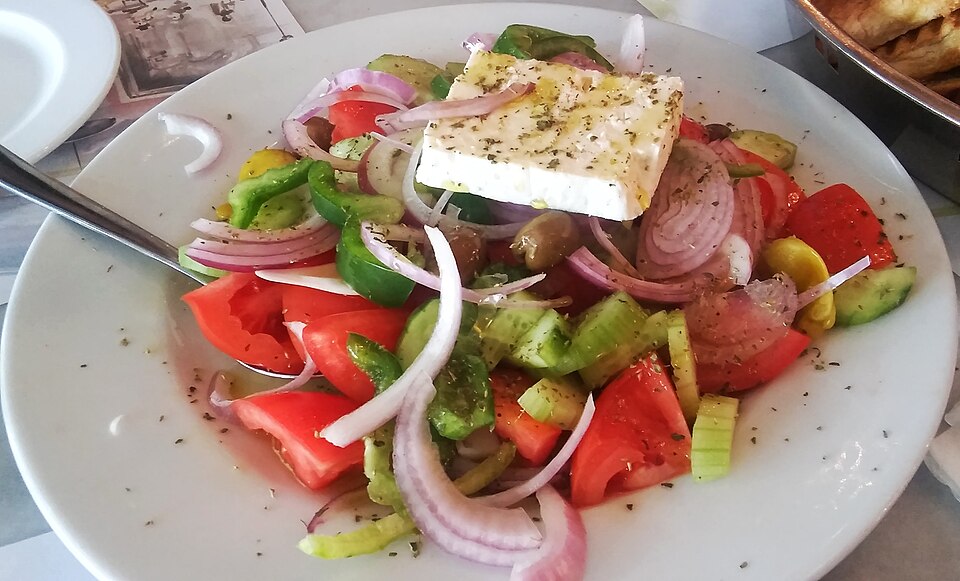
Feta
Feta has protected designation of origin status, which means it can only be made in specified regions of Greece, from sheep's milk with no more than thirty percent goat's milk, and ripened in brine. Cow's milk white cheese sold as feta-style is a different product and behaves differently in cooking.
Buy it in a block in brine rather than pre-crumbled. Crumbled feta is drier, saltier and usually lower quality. If it is too salty for you, soak the block in milk or water for twenty minutes before use.
In cooking it does two jobs: it seasons, and it provides pockets of soft salty richness that do not melt away. That is why it is crumbled by hand into pies rather than grated.
The hard cheeses: kefalotyri, graviera, kefalograviera
Kefalotyri is hard, sharp and very salty, made from sheep or goat milk. It is the grating cheese for pastitsio and moussaka bechamel, and the classic choice for saganaki because it holds its shape while going molten inside. Pecorino romano is the closest substitute.
Graviera is Greece's answer to gruyere, nuttier and sweeter than kefalotyri, and excellent both for eating and cooking. Cretan graviera is the most highly regarded. Gruyere or a young pecorino substitute well.
Kefalograviera sits between the two and is arguably the best all-rounder if you want to buy one hard Greek cheese.
The fresh cheeses: mizithra, anthotyro, manouri
Mizithra is a fresh whey cheese, soft, mild and slightly sweet, used in Cretan pies and scattered over dakos. It is also sold dried and aged, at which point it becomes a hard grating cheese and a completely different ingredient. Ricotta is the usual substitute for the fresh version.
Anthotyro is similar, softer and milder still, and is what goes into many cheese pies alongside feta to soften the salt.
Manouri is richer, made from the whey of feta production with cream added, and is excellent baked or served with honey as a dessert.
What to substitute when you cannot find them
For feta, a good sheep's milk Bulgarian or Turkish white brined cheese is the closest. Cow's milk supermarket feta will work but is blander and firmer.
For kefalotyri, use pecorino romano. For graviera, gruyere. For mizithra or anthotyro, ricotta, drained if it is wet. For kasseri, a young provolone or a mild fontina.
The one substitution that does not work is cheddar, for anything. It has the wrong acidity and the wrong melting behaviour, and it will make the dish taste like something else entirely.
Questions people ask
What is the best substitute for feta?
A sheep's milk brined white cheese from Bulgaria or Turkey is closest in both flavour and texture. Cow's milk versions sold as feta-style are firmer and blander but will do at a pinch.
Why is my feta so salty?
Feta is ripened in brine, and salt levels vary between producers. Soak the block in fresh water or milk for twenty to thirty minutes and it will mellow considerably without losing its character.
Can you freeze feta?
You can, but the texture goes crumbly and grainy on thawing. Frozen feta is fine cooked into a pie or a baked dish, but do not use it in a salad.
Which Greek cheese is best for saganaki?
Kefalotyri is the classic, with graviera and kasseri also common. All three are firm enough to hold together in the pan while going soft inside. Feta will not work, it collapses.