
Cooking guide
How to Make Avgolemono Without It Curdling
In short
Avgolemono splits when egg meets liquid that is too hot, too fast. Beat the eggs until frothy, whisk in the lemon juice first, then take the pan off the heat and add hot liquid to the eggs a ladleful at a time while whisking. Never let it boil afterwards.
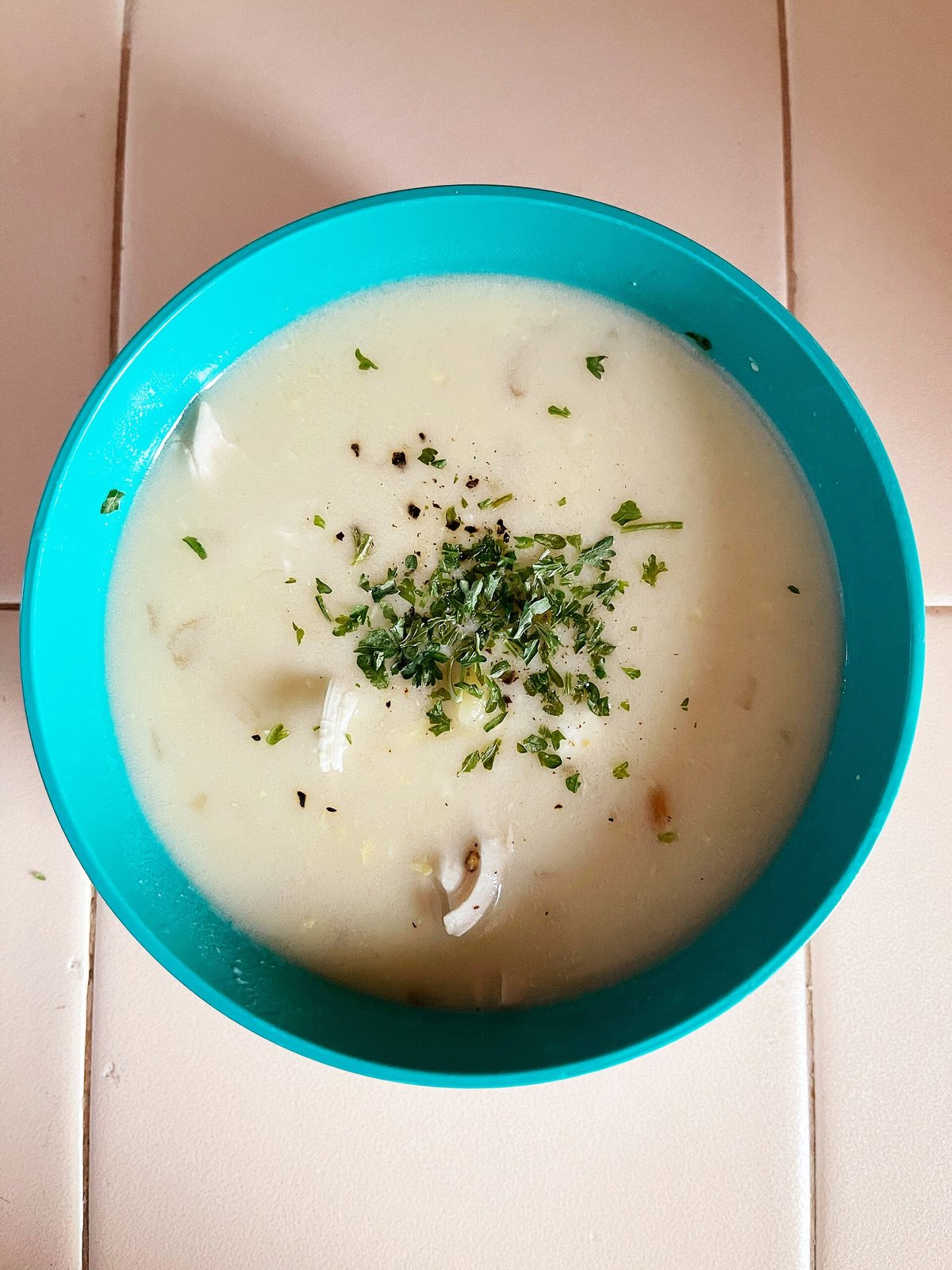
What is avgolemono?
Avgolemono is not a dish, it is a technique: a liaison of beaten egg and lemon juice used to thicken and enrich a liquid. It is one of very few classical thickeners that uses no flour, no starch and no cream, and it gives a texture nothing else quite reproduces, glossy and light rather than heavy.
It appears throughout Greek cooking. Chicken and rice soup is the famous one, but the same technique finishes lamb fricassee, pork with celery, stuffed vine leaves, meatball soup, artichokes and poached fish.
Why does avgolemono curdle?
Egg proteins set at around 70C. Simmering liquid is at 95C or above. Pour beaten egg straight into that and it sets instantly into threads, which is delicious in an entirely different soup and a disaster here.
Tempering solves it by raising the temperature of the egg mixture slowly, so the proteins are diluted and dispersed by the time they meet the bulk of the hot liquid. The acid in the lemon juice helps too, by partially denaturing the protein in a controlled way that raises the temperature at which it will set.
The method, step by step
Beat the eggs hard for a full two minutes, until pale and visibly increased in volume. Air makes the emulsion more stable and this step is routinely skipped.
Whisk the lemon juice into the eggs and combine completely before any hot liquid goes near them.
Take the pan off the heat and let it stop bubbling. Two minutes standing is enough.
Whisking the eggs constantly with one hand, add hot liquid a small ladleful at a time with the other. Do at least four or five additions. By the end the bowl should feel properly hot, not warm.
Pour the tempered mixture back into the pan in a steady stream, stirring. Do not return it to the heat. If it must be hotter, warm it very gently and stop well short of a simmer.
Whole eggs or yolks only?
Whole eggs give a lighter, frothier result. Yolks alone give a richer, more velvety, more stable sauce, because yolks contain the lecithin that does the emulsifying while whites mostly just set.
Whole eggs plus one or two extra yolks is the practical compromise and is what most of the recipes on this site use. If you are nervous, lean towards more yolks: they are considerably more forgiving.
Rescuing a split avgolemono
Mostly you cannot, and it is more honest to say so than to promise a fix. Once the egg has set into visible threads, the texture is gone.
If it has only just begun to look grainy, taking it off the heat immediately and whisking hard can sometimes bring it back. Blending it will make it smooth but flat and slightly foamy. A better use of a split batch is to accept it as a rustic egg-drop version, which still tastes good.
Prevention is the whole game here. Off the heat, slowly, whisking constantly.
Questions people ask
Can you reheat a dish finished with avgolemono?
Only gently, and never to a boil. Warm it over low heat, stirring, and stop as soon as it is hot enough to eat. Boiling will set the egg and turn the sauce grainy.
Can avgolemono be frozen?
No. The emulsion separates on thawing and cannot be brought back. Dishes finished with avgolemono keep two days in the fridge and should be eaten within that.
Can you make avgolemono with cornflour?
Some cooks add a teaspoon of cornflour to the egg mixture as insurance, and it does make it more forgiving. It is not traditional and it slightly dulls the texture, but for a first attempt it is a reasonable safety net.
How much lemon should avgolemono have?
More than most written recipes suggest. It should taste clearly of lemon, not faintly. Start with the juice of two lemons for six servings, then taste and add more off the heat.