Greek Drinks · The Mainland · No-Cook · Taverna Night
Mastiha Liqueur Serving Guide (Chios Mastic Liqueur)
Μαστίχα mah-STEE-hah · Mastiha
In short
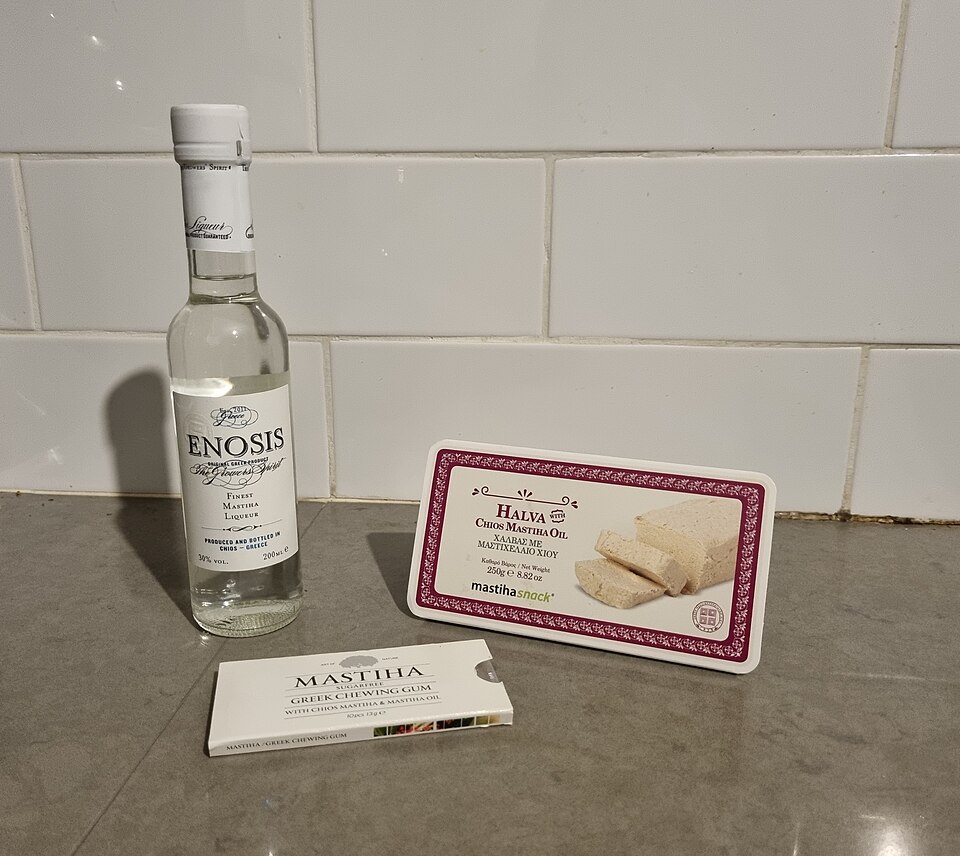
Mastiha is a Greek liqueur flavoured with mastic resin, a substance harvested exclusively from mastic trees grown on the island of Chios, giving it a distinctive, slightly piney, resinous sweetness quite different from ouzo's anise. It is properly served well chilled, either neat as a small digestif or over ice.
Mastiha Liqueur Serving Guide
- Prep
- 5m
- Cook
- None
- Total
- 5m
- Serves
- 4
- Level
- Beginner
Ingredients
Ingredients
Tick ingredients off as you go. Quantities rescale with the buttons above.
Method
- 01Keep the bottle of mastiha chilled, ideally in the freezer.Keep it properly cold.Yiayia
- 02Pour into small chilled glasses.
- 03Serve neat or over a little ice.
- 04Sip slowly as an after-dinner digestif.
Nutrition, per 1 small glass, 30ml
- Calories
- 88
- Protein
- 0 g
- Carbs
- 8 g
- Fat
- 0 g
- Sat fat
- 0 g
- Fibre
- 0 g
These figures are calculated estimates based on the ingredients listed, not laboratory analysis. Actual values vary with brands, cuts and portion size.
Mastic resin, harvested by hand exclusively from a specific variety of tree grown on the island of Chios, gives mastiha liqueur a flavour genuinely found nowhere else, slightly piney, faintly sweet and resinous, quite distinct from the anise that defines ouzo despite both being clear or pale Greek spirits often confused with each other by newcomers.
The mastic itself is harvested as small hardened tears of resin, historically valuable enough that Chios held something close to a monopoly on its production for centuries, and mastiha liqueur is one of the more accessible ways to actually taste this genuinely unusual ingredient.
This is a sweeter, gentler liqueur than ouzo, meant to be served properly chilled and sipped as a small digestif after a meal, rather than diluted with water the way ouzo typically is.
Key preparation steps
- Chill the bottle thoroughly, ideally in the freezer.
- Pour into small chilled glasses.
- Serve neat, cold, or over ice.
- Sip slowly as an after-dinner digestif.
What mastic actually is
Mastic is a resin that seeps from small cuts made in the bark of a specific mastic tree variety, grown almost exclusively in the southern villages of Chios, where it hardens into small, brittle tears that are harvested by hand. It has been prized for centuries, used in everything from chewing gum's ancestor to traditional medicine, and mastiha liqueur is a genuine way to taste this specific, geographically limited ingredient.
How mastiha differs from ouzo
Where ouzo is defined by anise and traditionally diluted with water until it clouds, mastiha carries a completely different flavour profile, piney and resinous rather than liquorice-like, and it is not typically diluted the same way, since its character comes through better served simply cold rather than cut with water.
Serving it properly
Chill the bottle thoroughly, ideally kept in the freezer between uses, since mastiha is genuinely best served very cold, and pour into small glasses, either neat or over a little ice. Sip slowly as a digestif after a meal, rather than as a quick shot, letting the resinous sweetness linger.
What matters in this dish
Keep it properly cold
Mastiha is genuinely best served very chilled, unlike some spirits that are fine at room temperature.
Do not dilute it like ouzo
Mastiha's character comes through best served simply cold, not cut with water the way ouzo traditionally is.
Serve it as a digestif
It is properly enjoyed slowly after a meal, in small glasses, rather than as a quick round of shots.
Questions people ask about Mastiha
What is the difference between mastiha and ouzo?
Both are Greek spirits often confused by newcomers, but ouzo is flavoured with anise and traditionally diluted with water, while mastiha is flavoured with mastic resin from Chios, giving a piney, resinous sweetness, and is typically served simply chilled rather than diluted.
What is mastic resin?
A resin harvested from a specific tree variety grown almost exclusively on the Greek island of Chios, hardening into small tears that have been prized for centuries for their distinctive flavour and traditional medicinal use.
How should mastiha be served?
Well chilled, ideally kept in the freezer between uses, poured into small glasses, neat or over a little ice, and sipped slowly as an after-dinner digestif.