Grains and Pulses
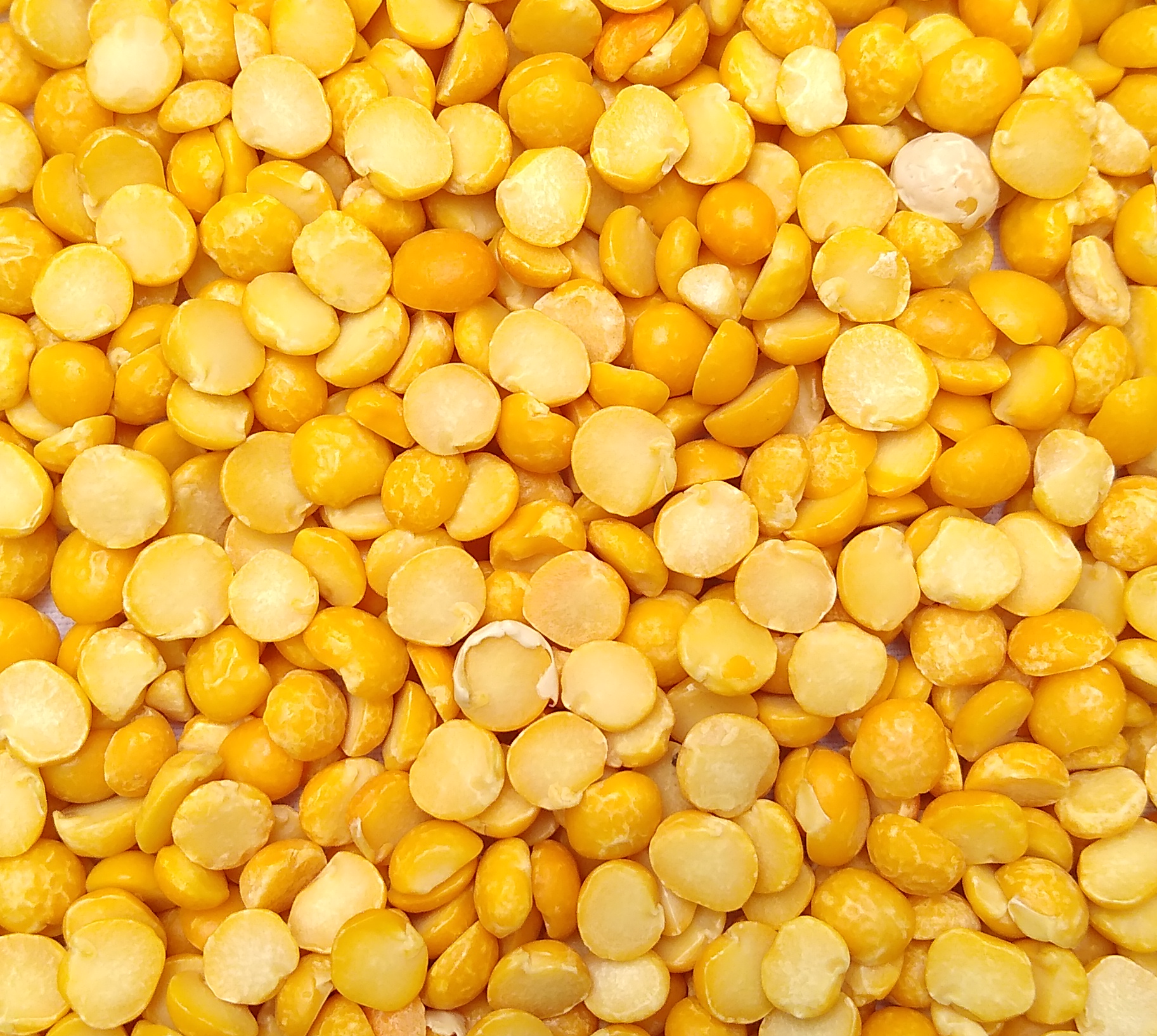
Yellow Split Peas
Φάβα · Fava
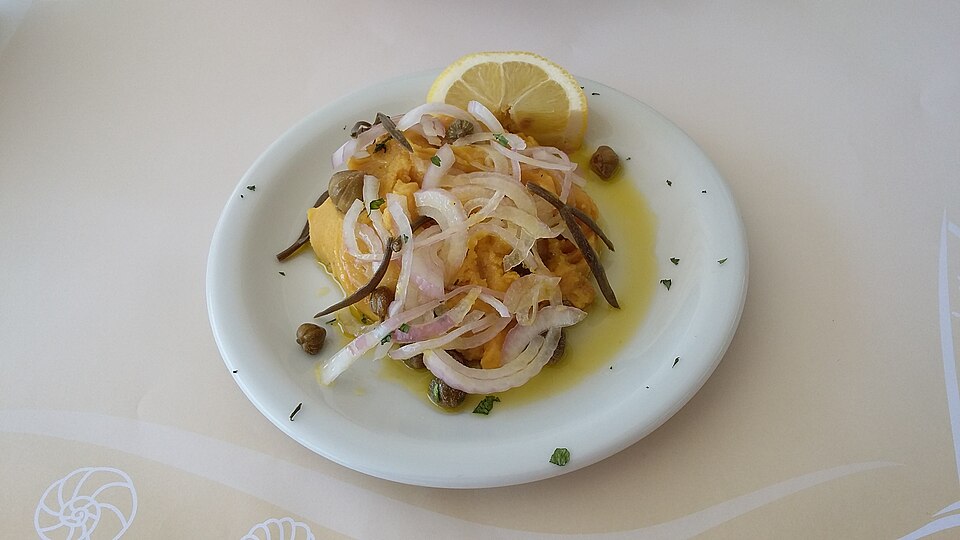
Fava in Greece means a smooth yellow puree of split peas served warm in a shallow dish, pooled with olive oil and topped with raw chopped onion, capers and lemon. It never means broad beans, which is a genuine source of confusion for anyone arriving from Italian cooking, where fava is the broad bean itself. The Greek dish and the Greek word both belong to the split pea.
Santorini complicates this pleasantly. The island's protected fava is not a split pea at all but Lathyrus clymenum, a drought-tolerant legume grown on volcanic ash for centuries, sweeter and finer than the ordinary yellow split pea and priced accordingly. Fava pantremeni, married fava, tops the puree with onions caramelised slowly in oil and is the standard taverna version across the Cyclades.
The cooking is simple and easily rushed. Split peas go into cold water with an onion and nothing else, the grey foam is skimmed off as it rises, and they are stirred until they collapse into a puree, with salt added only at the end. The mixture sets firm as it cools, so it is loosened with warm water or oil just before it goes to the table.
Recipes with yellow split peas
2 recipes on the site using it.
Get one proper Greek recipe a week
No round-ups, no filler, no fifteen-ingredient shortcuts. One dish, written out in full, with the reasoning included.
The signup form is not connected yet, so there is nothing here that would quietly lose your address. Email contact@kalliopiskitchen.com and you go on the list by hand.