Fruits
Pomegranate
Ρόδι · Rodi
Pomegranate carries genuine symbolic weight in Greek culture beyond its use as an ingredient: a whole pomegranate is traditionally smashed on the doorstep at midnight on New Year's Day, and the fruit's abundant seeds are read as a wish for abundance and good fortune through the coming year. Vasilopita cake labels and packaging still often carry a pomegranate motif for exactly this reason.
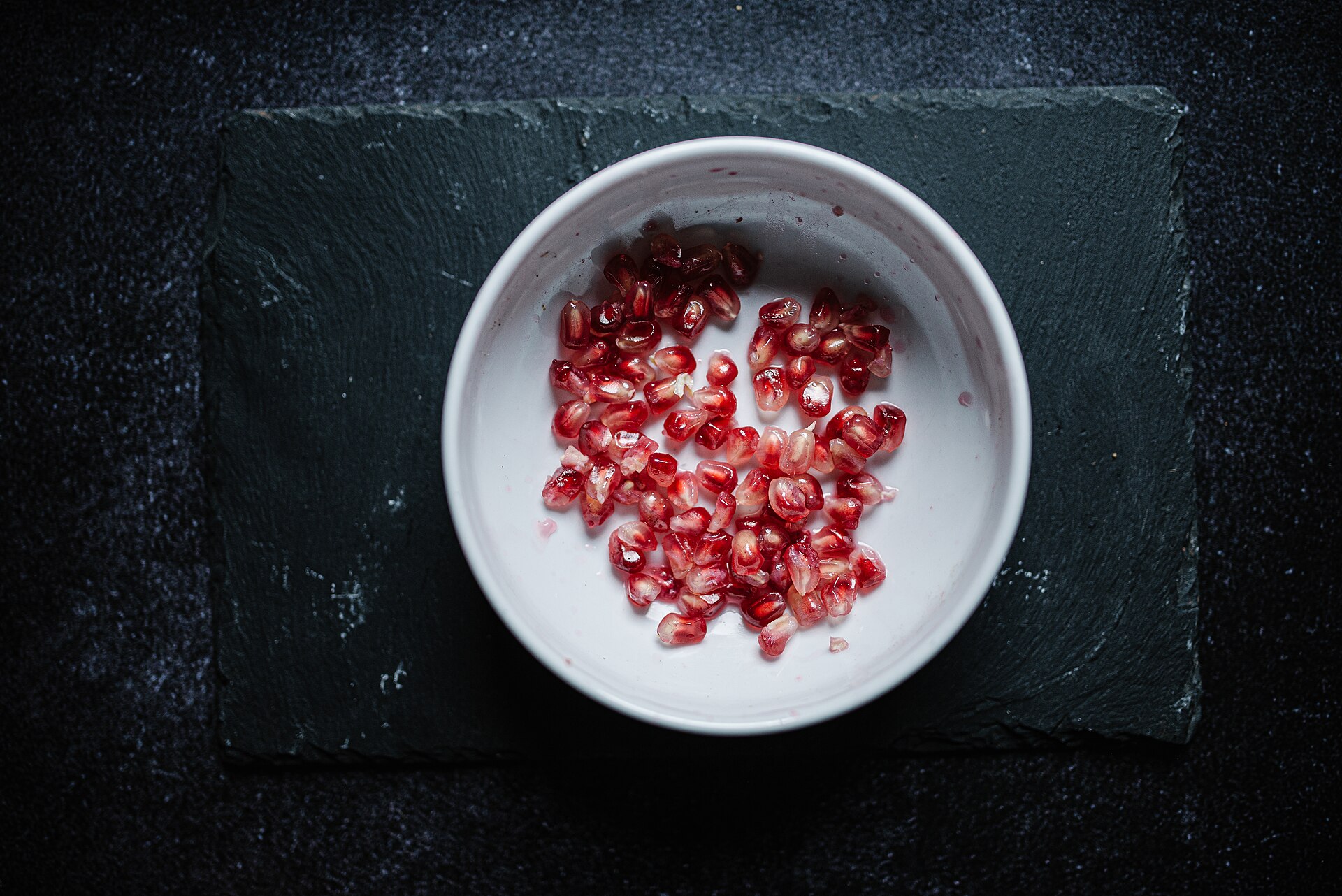
In the kitchen its seeds, called arils, are used mostly as a garnish rather than a cooked ingredient, scattered raw over salads, dips and desserts for their bright colour and a burst of tart sweetness that plays well against richer, fattier foods. They are rarely cooked into a dish, since heat destroys both their colour and their crisp texture.
A thickened pomegranate syrup or molasses, more common in Middle Eastern cooking, appears in some regional Greek dishes with historical Asia Minor or Cypriot connections, though it is a less central pantry item in mainland Greek cooking than the fresh fruit's seeds are.
Photo: Bright red pomegranate seeds arranged in a white bowl on a dark surface suitable for culinary presentation.jpg by Shixart1985, CC BY 2.0.

Recipes with pomegranate
1 recipe on the site using it.