
Fish and Seafood
Sea Bass
Λαβράκι · Lavraki
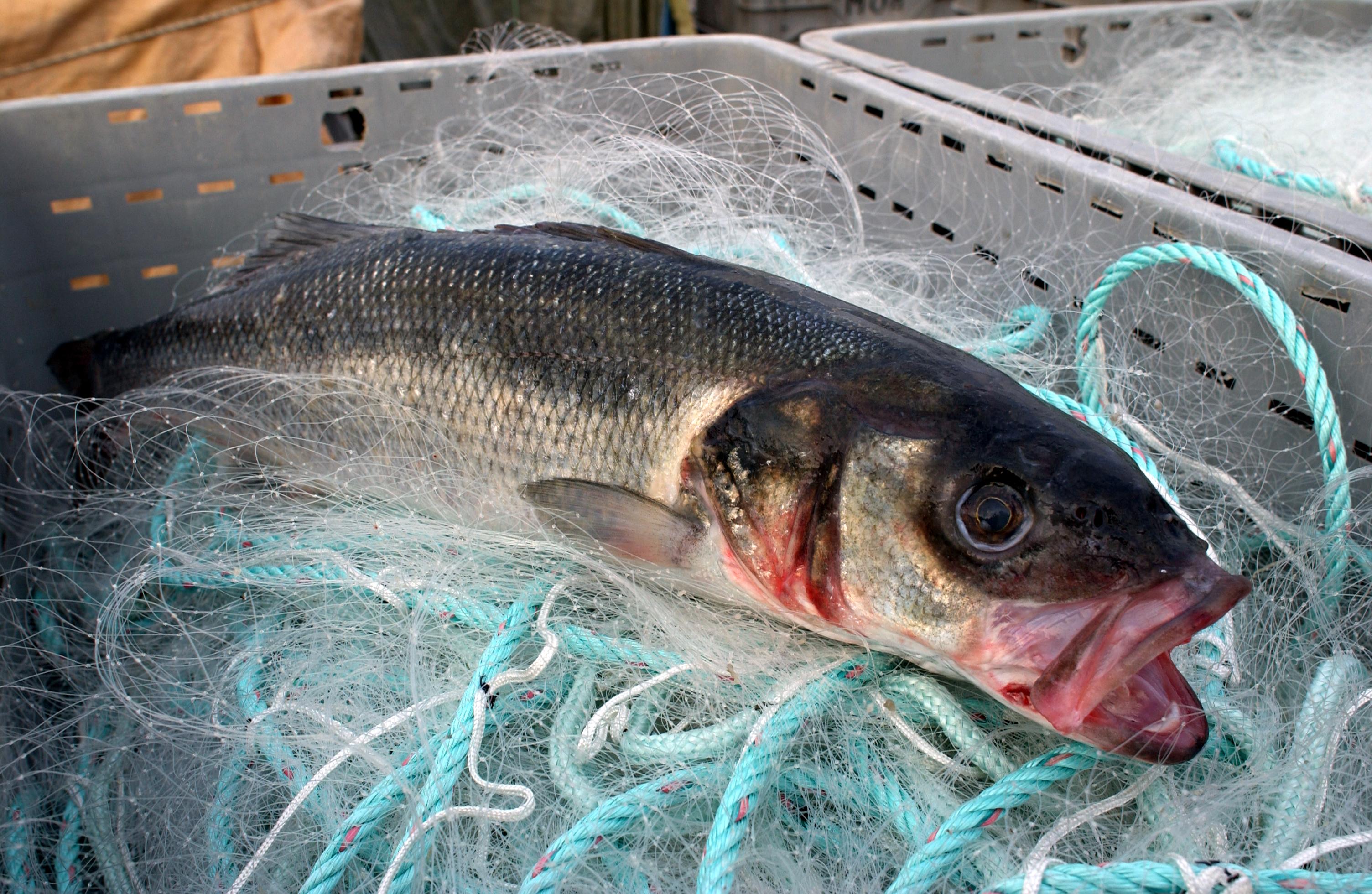
Lavraki is one of the two fish, alongside tsipoura, that a Greek taverna will almost always have on the ice, and most of what is sold now is farmed rather than caught wild. Greece is among the largest producers of farmed sea bass anywhere, which is why a whole one at a reasonable price has become an ordinary weeknight option rather than a special occasion fish.
It is nearly always cooked whole and on the bone, either grilled over charcoal or baked plaki style with sliced tomato, onion and potato in the same dish. The dressing is ladolemono, olive oil and lemon juice whisked together with a little oregano, and it goes over the fish while the flesh is still hot so that it soaks in rather than sitting on the surface.
Wild lavraki has firmer flesh and a leaner body than the farmed fish, and costs several times as much. Either way the main risk is overcooking. Sea bass is done the moment the flesh at the thickest part of the back lifts cleanly away from the backbone, and a couple of minutes past that point turns it dry and cottony with no way back.
Recipes with sea bass
1 recipe on the site using it.
Get one proper Greek recipe a week
No round-ups, no filler, no fifteen-ingredient shortcuts. One dish, written out in full, with the reasoning included.
The signup form is not connected yet, so there is nothing here that would quietly lose your address. Email contact@kalliopiskitchen.com and you go on the list by hand.